Compiled by Bruce Rickard
The author, Thomas Newkirk, writes about ‘owning the passages that speak to us.’ He says,
“We can learn to pay attention, concentrate, devote ourselves to authors. We can slow down so we can hear the voice of texts, feel the movement of sentences, experience the pleasure of words…and own passages that speak to us.”
Thomas Newkirk ‘The Art of Slow Reading’
My Book Notes are just that, ‘owning the passages that speak to me.’ By recording the words and sentences that capture my attention I am ensuring that they are not lost to me and will continue to challenge and inspire.
My Book Notes are not a summary of the text. I am not attempting to condense what the writer is wanting to communicate, nor am I providing an outline.
My Book Notes are not a review of the text. I am not analysing what has been written, nor am I making a comment.
I’m pleased to share with you My Book Notes and hope you might be motivated to consider reading the books for yourself. All the books listed have contributed to my thinking and enjoyment so come with my tick of approval.
Featured:
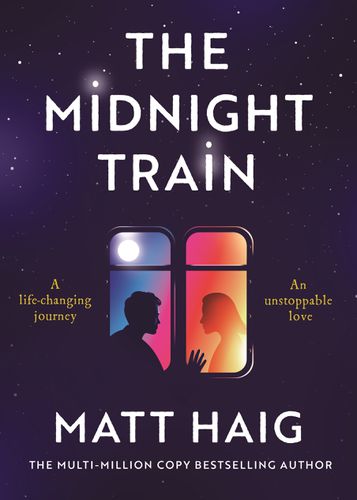
The Midnight Train
Matt Haig
ISBN: 1837262829
Category: Fiction & Literature
Themes: Love, Marriage, Friendship, Bookshops, Reading, Ambition, Success, Trauma, Death
Date: August 2026
Rating: ♥ ♥ ♥ ♥
My Book Notes:
A Saturday in April. The sky was blue, the breeze light, and birdsong could be heard above the distant traffic. One of these bright, cool days that sprinkled hope throughout spring.
* * * * * * *
He had been having piano lessons for two years, ever since he had seen an advert in the window of the music shop. His doctor had told him of the importance of learning new things now he was in his eighties, and he looked forward to his weekly lessons.
* * * * * * *
Music had a way of threading through decades like nothing else. A song after all, was a needle pulling the thread of time, stitching disparate moments into something whole. It was bittersweet. The needle could hurt. And this piece had too many memories.
* * * * * * *
Sometimes you have to let your heart break in order to stay alive.
* * * * * * *
I feel as fragile as a leaf in the wind right now.
* * * * * * *
Agnes Bagdale loved books, and loved people, and believed that life could be improved by having more people read more mystery novels. Besides this, or because of this, she had an almost supernatural ability for pairing the right person with the right books.
* * * * * * *
Books, Agnes once said, are mirrors for the soul. So, if you catch a glimpse of someone’s soul, you will know the mirror for them.
* * * * * * *
His mother went to the kitchen and tipped out her purse. And then with great worry and care and trembling hands, she meticulously put every single coin, even every halfpenny and farthing, into separate piles to be counted.
* * * * * * *
His last few decades of life had been quite structureless and lonely. He had floated to earth like a sycamore seed. And he imagined that to navigate something as wild as death needed someone who knew the rules.
* * * * * * *
Books are there to be read, said Agnes (his mother). And a good rule for a bookshop is to let people fall in love with books. Not that you have followed any of the rules I have told you.
* * * * * * *
Well, this boy is not a customer, Arthur explained. He is a browser. That is why I got rid of the chairs, Mother. We do not want people just sitting there reading.
* * * * * * *
The bookshop was a happy mess that followed some very strict thinking. Rules should be there to help. To let things live. You don’t have rules. You just have a grouchy temperament, Arthur (son). You need to read more.
* * * * * * *
A book can contain infinite emotion, but when you have finished you close it and put it back on the shelf… What choice do we have except to, well, accept? … that it is always hard. In places.
* * * * * * *
And Maggie’s face flinched just a little, as if some of his pain had splintered and shot through the air just by saying it. She was then and always as incapable of hiding emotions on her face as a river was able to hide the ripples from a fallen stone.
* * * * * * *
There were days in life that rolled by and were never really thought of again. And then there were days that were so beloved or important that they contained inside them everything that came after. Russian-doll days, that were always inside the expanding future.
* * * * * * *
Wilbur didn’t read because he wanted a good job. Though he absolutely did want a good job, when the time arrived. But no. He read because stories gave him room to grow beyond the world he was given. They helped him feel as if the lives he read about intertwined with his own, like threads in an ever-expanding rope. Stories made him strong.
* * * * * * *
Stories were his playground. They were his freedom. Through them he could imagine himself a rich man, an adventurer, a hero, a villain, or simply incredibly well-fed. Depending on the tale, he could picture himself surviving hardship or living in greatness. They gave him room to exist beyond the red bricks and restricted life of Glossop Road.
* * * * * * *
Time and meaning were not shared out equally. Some personal eras were relatively empty. The temporal equivalent of air. And then you would come across a day- or even a minute – and it would have a whole decade’s worth of weight. It would be everything. It would have the power to change life.
* * * * * * *
It became clear that a big reason books and comics and films and music exist is to give people a way to talk about things without talking about them.
* * * * * * *
This world is full of folk who look but never see. I am looked at a hundred times a day. But not many see. Thanks for seeing, lad. Keep that, lad. Stay seeing…
* * * * * * *
Memories were no more the real event than flags were their nations.
* * * * * * *
I have no special talents. I am only passionately curious.
* * * * * * *
She was always that person. The one who was just in tune. The one who knew that life was easier if you cared about people. She just made life more natural.
* * * * * * *
He felt a total love, uncluttered by time or life’s many obstacles.
* * * * * * *
He missed the person he had once been. And the goodness that had existed inside him, as natural as the green in grass.
* * * * * * *
Rules may look boring, but they are there in every novel and painting. They keep things whole.
* * * * * * *
Life is too fragile to deconstruct it all the time.
* * * * * * *
To live life well you need to know when to ignore what is expected of you. Even if it means breaking the rules.
* * * * * * *
He was an empty vessel always waiting for some validation to be poured inside.
* * * * * * *
Success is just the distance you travel from where you started.
* * * * * * *
‘The deadliest traps are laid by no one but ourselves.’ (The Long Goodbye – Raymond Chandler)
* * * * * * *
He just wanted to keep everyone together, because all he had known since their dad died was a sense of pulling apart.
* * * * * * *
It was a tragedy of life that you had to die before you could truly see the whole of someone.
* * * * * * *
Nothing ever just happened. Even the most reckless action was a consequence of what had gone before, just as every loud mistake in the world was the product of some quiet and secret pain.
* * * * * * *
He saw how much he had been shaped and conducted by his youth. The striving for a success he thought he needed to justify his existence. And the struggle with a love he didn’t think he deserved.
* * * * * * *
The tragedy was like a magnet. Even then, right at the start. It pulled everything into its field. And that is how it stayed, throughout Wilbur’s life.
* * * * * * *
There was a lot he wasn’t letting himself feel. And he hadn’t quite worked out the point of living. But at least he wasn’t ruling out the possibility there was one.
* * * * * * *
The existence of tragedy in your life does not mean your whole life has to be that way.
* * * * * * *
The trouble with life is we do things because we should. We act for outside eyes.
* * * * * * *
If you love someone they don’t really leave. They live in your mind. You keep them alive.
* * * * * * *
I feel free when I draw. There is a moment, when you really get into it, and you aren’t consciously thinking about it. You are just doing it.
* * * * * * *
It feels brave just to live sometimes.
* * * * * * *
It took him every single atom of strength he had not to tell her what he felt about her. Not to tell her that he needed her in his life. It was hard to fight for a relationship that didn’t yet exist.
* * * * * * *
Sometimes everything you need isn’t so far from where you start.
* * * * * * *
He had made their love into a blanket and burrowed deep under it.
* * * * * * *
In his late twenties, he was brave enough to truly love. For the world’s centre to be outside his body. For his contentment to be dependent on someone else’s. That was the gamble of it, but also the beauty of it. Love had made the world real and helped him move from internal woes to external cares.
* * * * * * *
They talked and talked, as though a relationship was really just a conversation that never wants to end.
* * * * * * *
Love is a garden. You have to keep tending it.
* * * * * * *
Gardening, Alfred said eventually. That’s what helps me. Looking after things. Even simple things.
* * * * * * *
He always thought that to succeed in life you just had to keep spinning. Like a sycamore seed on the wind. And that the faster you span the further you would reach. That, provided you kept accelerating, you could outrun scarcity, outrun your past, outrun your nightmares.
* * * * * * *
He guarded his words as if they were money that would be spent once spoken.
* * * * * * *
It was so strange, the past. How close and distant it was at the same time.
* * * * * * *
The world grows old around art. But the art is still as powerful and fresh as it always was.
* * * * * * *
There are many ways to betray yourself in life. Some obvious – like thieving and fighting and getting chased by police – and some subtle. Some betrayals look very much like success.
* * * * * * *
Even love was weak against the desire to avoid pain. Because what was love but another door into it. Better to keep those doors closed.
* * * * * * *
Work gave him meaning and he had loved it. But work – to the excesses he had done it – was also a way to live without living. A way to transfer emotions over to something less personal, something with lower stakes.
* * * * * * *
He had used work to accelerate his existence, to soften life’s jagged edges into a blur.
* * * * * * *
To live fully, that was the best way to die.
* * * * * * *
To look around, that was the best way to slow down.
* * * * * * *
Most common regrets of the dying: Wishing they hadn’t worked so hard; The courage to be yourself; The courage to express your feelings.
* * * * * * *
Love was the thing that hurt, and business was the opposite. It was an addiction.
* * * * * * *
This world is full of folk who look but never see.
* * * * * * *
It is ironic, he told him, that it only takes a moment to die, but a whole lifetime to learn how to live.
* * * * * * *
I feel as fragile as a leaf in the wind right now.
* * * * * * *
The thing with love is that it can feel so eternal that it can be mistaken for something that will be around for ever. Like a rock formation. Or the sky. But love is like every other human thing – it withers without attention.
* * * * * * *
And what is the opposite of love… Not hate. It’s pointless ambition.
* * * * * * *
A life without pain is not on the menu, lad. A life of avoiding pain becomes a life defined by pain. Pain and regret.
* * * * * * *
My wife used to say I was scared of stillness.
* * * * * * *
Running away from sadness had been his whole problem. That was how he had shrunk a life while pretending to expand it. That was how he became a failure pretending it was a success.
* * * * * * *
The only way to learn is to live.
* * * * * * *
Slow and steady. If only he had lived like that… Reaching out to those he loved. Making amends. Not scared of falling into the nettles of emotion.
* * * * * * *
You wanted to feel powerful enough not to be hurt. But you couldn’t stop that.
* * * * * * *
Time turns houses into museums, and lovers into strangers, and songs into sadness.
* * * * * * *
I always knew. Ever since you turned down a free book in the bookshop, I knew you had your own mind.
* * * * * * *
At some point, you had to trust your own feelings over logic, if logic added nothing to the argument except incomprehension.
* * * * * * *

