A model for faith communities in troublesome times
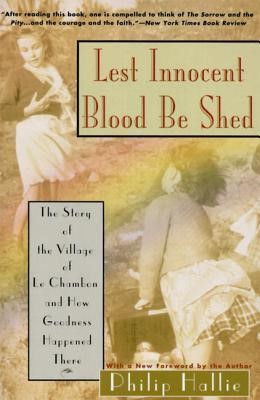
Lest Innocent Blood Be Shed – Philip Hallie
Published in 1979, Lest Innocent Blood Be Shed is a moving and remarkable study of courage and heroic resistance to the Nazis as shown by the people of Le Chambon, a small Huguenot town in Southern France.
Le Chambon’s active but non-violent refusal to accept the invincibility of evil and brute power earned it the title ‘City of Refuge’ and its pastor André Trocmé a Medal of Righteousness from Israel.
Formative Years:
André Pascal Trocmé was born Easter 1901 in Saint-Quentin in Picardy, the north-east region of France. His mother, formerly Paula Schwerdtmann, was born in Germany of German parents and ancestry. His father was Paul Eugéne Trocmé, a descendent of an old Huguenot family. In his early youth André was to find his German relatives far warmer and more attractive than the Huguenot kinfolk of his severe French father.
André’s father was a successful manufacturer of lace. Their house in Saint-Quentin had a dozen bedrooms, and because of his father’s unexplained order, its second floor was to remain remote for him until he was thirteen years old. As a child he played in a large yard surrounded by high stone walls. His early years of schooling were spent at home with private tutors. One of the most striking impressions of his youth was the feeling of separation from others due to his father’s wealth and rigid demands.
André’s childhood was marred by a tragic event, a trauma that had lasting implications. Two months after his tenth birthday his family went on a trip to their country home. His father insisted on driving the car. A small vehicle occupied the centre of the road, denying his father the opportunity to pass. His father grew increasingly angry and impatient, deaf to the entreaties of his family to slow down. He tried to manoeuvre around the smaller vehicle, lost control, and rolled the car. His wife was thrown from the vehicle and lay on the road covered in dust. Three days later she was declared clinically dead.
His mother’s untimely death brought home to him the preciousness of her life. But what of his father, the man morally responsible for her death? Andre still loved his father and offered him forgiveness.
Principles:
- Human life is priceless. It bears the image of God.
- There is nothing to be gained from the vicious circle of revenge.
Theological and Practical Training:
During the First World War, André became a member of the Union of Saint-Quentin. The union was a Protestant organisation of young people. They conducted their own services, talking about the Bible, and sharing their personal struggles. André flourished in this supportive environment. He no longer had to hide his deep fears or regrets. The walls of his childhood, which kept him apart, were beginning to crumble.
After the war, the Trocmé family moved to Paris, where André studied theology at the University of Paris. It was there he met Edouard Theis (he would later share in the pastoral work in Le Chambon), and joined an international pacifist organisation, the Fellowship of Reconciliation and began working with groups of poor people.
Having won a scholarship to Union Theological Seminary in New York City, he decided to go to America to study the Social Gospel that was dominant there. André found it shallow, lacking a key element – an intimate relationship with God. He believed God alone shaped a person’s conscience, bringing clarity of thought and purpose.
In the autumn of 1925 André met Magda Grilling. He noticed her candour and the simple-hearted intelligent way she addressed people. Their relationship blossomed. On the morning of April 18, 1926, he asked her to marry him, saying ‘I shall be a Protestant pastor, and I want to live a life of poverty. I am a conscientious objector, and that could mean prison as well as all sorts of difficulties.’ She accepted him and his radical views. They sealed their promise to marry with a prayer he uttered aloud as they walked on the rocks of the Palisades.
Principles:
- Our usefulness to God is dependent on our knowing Him; understanding His nature and being committed to His purposes.
- A Christian marriage is not a convenience. It is a partnership – walking together in solidarity, ready to face whatever comes your way.
A Dedicated Pastor:
On returning to France the couple worked in various parishes including a year in Maubeuge, an industrial city in northern France, and six years in Sin-Le-Noble near the Belgium border. They gravitated to the poor, hard-working industrial workers and liked nothing better than to sit and read and talk in people’s homes, sometimes praying on their knees together.
One of the small groups that he worked with was called the Men’s Circle. A discussion on the Sermon on the Mount led those present to fall to their knees as God’s Spirit convicted them their failures and weakness. They sensed a unity they had not known before, looking at each other with new eyes, without defensiveness, shyness, or pride.
The Reformed Church took exception to Trocmé’s preaching on non-violence. He decided to take his cause somewhere that would be more sympathetic to his beliefs and less visible to church authorities.
In 1938 he became pastor to the Protestants of Le Chambon, a remote village surrounded by rugged mountains, on a high plateau that was difficult to reach. He moved into the presbytery with his wife and four children, a daughter and three sons.
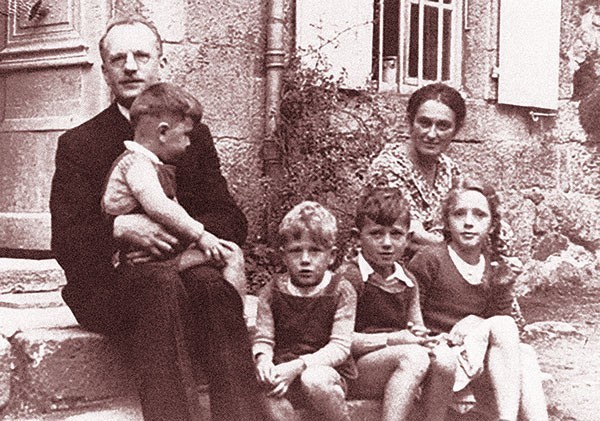
André Trocmé chose ‘the road less travelled’ in keeping with the history of the Huguenots, a besieged minority who strived to keep its moral and religious vitality against great adversity.
He was a passionate man, a person empowered by his devotion to Jesus. His wife described him as ‘a turbulent stream,’ always changing, sweeping all before him. He was courageous, creative, insightful, and practical. He was ‘the soul of Le Chambon,’ – the quickening spirit, the warming force in that grey little village during those poverty stricken and dangerous years. He led not by command but by contagion.
Pastor André Trocmé
‘He led not by command but by contagion.’
Trocmé inspired an intimate community of people – praying together and finding in their love for each other and for God the passion and the will to extinguish indifference and solitude. Their struggle was against a world of violence, betrayal, and indifference.
Trocmé admonished his congregation with these words,
‘Tremendous pressure will be put on us to submit passively to a totalitarian ideology… The duty of Christians is to use the weapons of the Spirit to oppose the violence that they will try to put on our consciences. … We shall resist whenever our adversaries demand of us obedience contrary to the orders of the gospel. We shall do so without fear, but also without pride and without hate.’
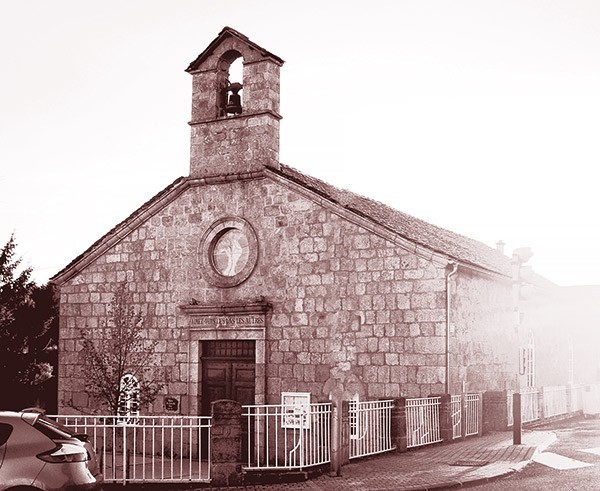
Over the door of the temple, where residents of Le Chambon gathered for worship, were the words, ‘Love one another.’
Principles:
- A pastor’s calling is to inspire unity, to encourage devotion to Jesus, and to create a people who love unconditionally and submit to the leading of God’s Spirit.
- Faith communities are called to embody the love of God by waring against hatred and violence, not with acts of aggression, but by welcoming the oppressed and taking responsibility for their safety and well-being.
A Responsive Community:
From 1940 to 1944, the people of Le Chambon and surrounding villages undertook a remarkable act of resistance: they shielded as many as 5,000 people, including about 3,500 Jews, from the Nazi forces occupying France and the collaborationist French government in Vichy.
The spirit of Le Chambon in those years was a strange combination of openness and concealment, of a yearning for truth and of a commitment to secrecy. They were as open as love permits in a terrible time. Trocmé said to the Vichy Government in 1942:
‘These people came here for help and for shelter. I am their shepherd, and a shepherd does not forsake his flock.’
Le Chambon became known as a place of refuge. Villagers didn’t leave their gates to look for the oppressed; but they stood ready to take responsibility for the people sent to them.
Homes, shops, boardinghouses, and even public buildings became hiding places for the refugees who began arriving in hordes when word got out that Le Chambon offered sanctuary. When the Nazis or their French collaborators made sweeps through the area, the Jews were taken away to the countryside and hidden on the farms. Most remarkably, the villagers kept their secrets to themselves, never once exposing the activities of their friends and neighbours to Occupation officials.
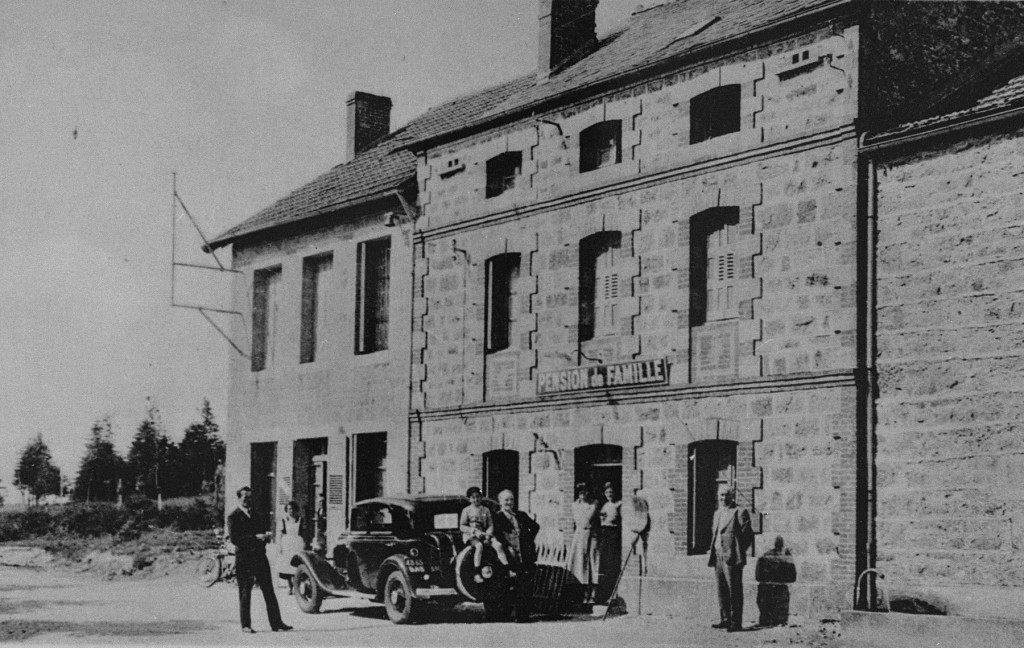
Staff and students at the high school forged identification and ration cards for the refugees, and other villagers risked their lives to smuggle these displaced persons across the Swiss border.
Principles:
- Faith communities are to be aware of their obligation to help the weak, even if it means disobedience to the strong.
- Faith communities are to prioritise life over death; mercy over judgement; showing respect for the life and integrity of the person(s) being helped.
Strategic Networks:
In the winter of 1940, André Trocmé established contact with the American Friends Service Committee (Quakers) in Marseille. Trocmé was burdened for the thousands of Jews corralled in internment camps in southern France. He established a working relationship with Burns Chalmers, a leading American Quaker. They met in a café in Nimes once a month to discuss how they might provide further assistance to the refugees. The most pressing issues related to internees who were unfit for work and the many Jewish children left behind following the deportation of their parents.
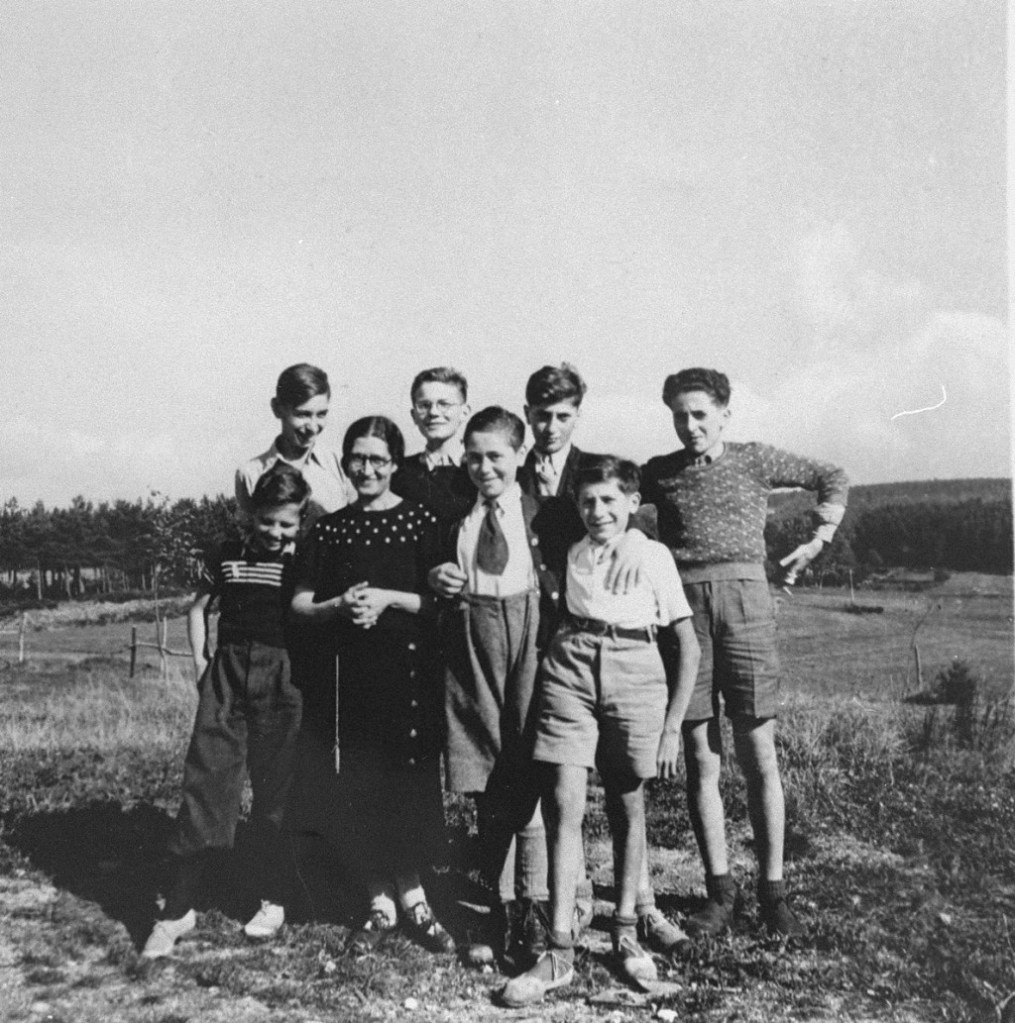
With the support of his leadership group in Le Chambon, Trocmé declared their readiness to provide a safe place, to welcome all who came. He recruited his cousin, Daniel, to set up group homes for the children. They would receive an education alongside the Chambonnaise children.
Principles:
- Effective leaders recognise the value of working with other organisations who share a common passion and belief.
- Faith communities are to give precedence to the establishment of places of refuge, offering shelter for people at risk.
A Miracle:
Long after Lest Innocent Blood Be Shed was published, Philip Hallie was still asking himself this question: ‘Why were the Jews of Le Chambon spared?’ There didn’t appear to be a logical reason. The Nazis were relentless in their pursuit of the Jews. They would stop at nothing.
One day Hallie posed the question to a friend on the faculty of Wesleyan University. He was a distinguished mathematician, a cool-headed, circumspect thinker. His answer stunned Hallie. He said, ‘It was a miracle.’
Le Chambon was indeed a miracle, and the news of God’s miraculous care for his people needs to be shared and remembered.
Principles:
- God’s protection is available to all who look to him. He will never disappoint those who fully rely on him.
- God will supply all our needs, regardless of how impossible the situation my appear.
Summary:
A Model for Faith Communities in Troublesome Times
Leadership:
- A pastor’s calling is to inspire unity; to encourage devotion to Jesus; to create a people who love unconditionally and submit to the leading of God’s Spirit.
- Effective leaders recognise the value of working with other organisations who share a common passion and belief.
Relationships:
With each other –
- A Christian marriage is not a convenience. It is a partnership – walking together in solidarity, ready to face whatever comes your way.
- ‘Love One Another’
With God –
- Our usefulness to God is dependent on our knowing Him; understanding His nature and being committed to His purposes.
Belief:
- Creation – Human life is priceless. It bears the image of God.
- Forgiveness – There is nothing to be gained from the vicious circle of revenge.
Commitment:
- To embody the love of God by waring against hatred and violence, not with acts of aggression, but by welcoming the oppressed and taking responsibility for their safety and well-being.
- To be aware of our obligation to help the weak, even if it means disobedience to the strong.
- To prioritise life over death; mercy over judgement; showing respect for the life and integrity of the person(s) being helped.
- To give precedence to the establishment of places of refuge, offering shelter for people at risk.
God’s Promises:
- God’s protection is available to all who look to him. He will never disappoint those who fully rely on him.
- God will supply all our needs, regardless of how impossible the situation my appear.


Brilliant summary , very real and meaningful today as always . Thanks Bruce
LikeLike