What is a portrait?
‘Portraits have been used to show the power, importance, virtue, beauty, wealth, taste, learning, or other qualities of the sitter.’
Tate Gallery
Michael Rodrigues says,
‘A portrait is a representation of a particular person that sets out to capture a recognisable likeness and engage with the sitter’s identity.’
Rodrigues suggests that two ideas sit at the centre of portraiture.
- Likeness — the recognisable record of how someone looked, which mattered enormously before photography, when a painted, drawn, or sculpted portrait was the only way to preserve a face.
- Inner Essence — the personality, mood, status, and psychology the artist reads into the subject.
Angela Edwards believes portraiture allows artists to encapsulate the essence of a subject, presenting not only their physical likeness but also a vivid exploration of their inner world.
She says,
‘Portraiture goes beyond mere representation, aiming to delve into the subtleties of human emotion and expression exposing vulnerabilities, joys, sorrows, and contemplations.’
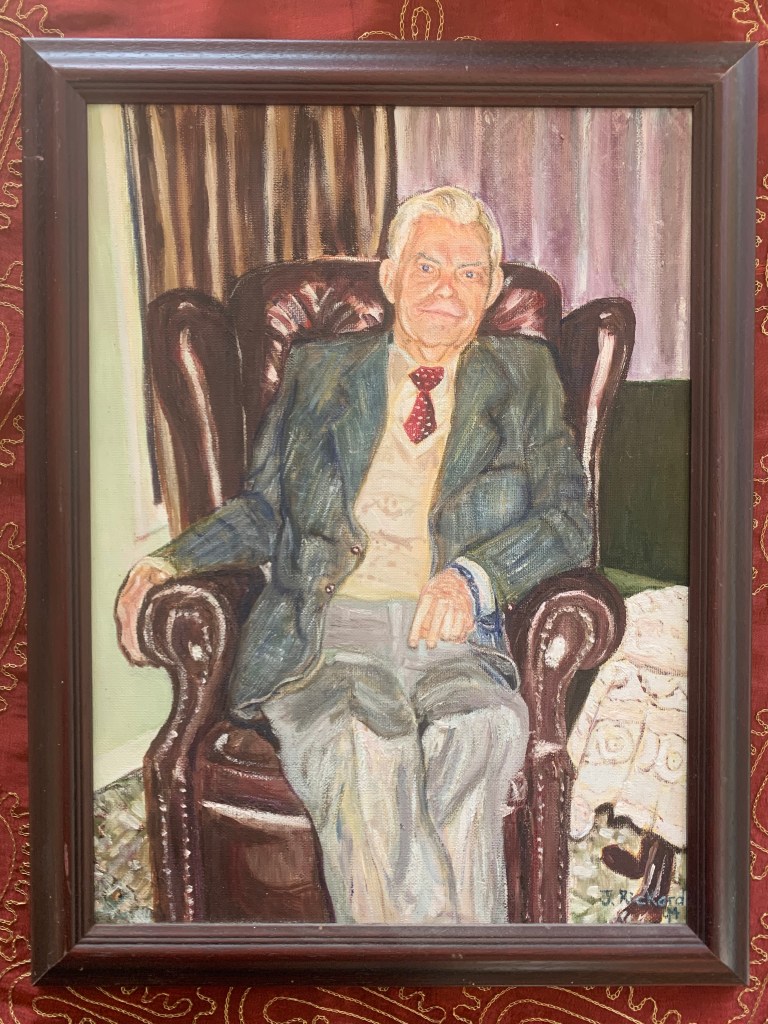
The portrait of my father, Leonard Gladstone Rickard, painted by my wife, is how I remember him in his latter years. Born in 1907, his life spanned two World Wars and the Great Depression. My father served in the army, reaching the rank of Major. Much of his work related to vehicle testing. During his retirement, he had a small market garden, selling produce to the local community. He also spent many hours visiting the elderly.
When I look at my father’s face, I see gratitude for his family, contentment for his work/life achievements, peace in knowing his Creator God, and resignation that the end is drawing nearer – that some activities are no longer physically possible and some dreams will go unfulfilled.
In May 2019, my wife and I travelled to the United Kingdom. While staying in Edinburgh we visited the Scottish National Portrait Gallery. The building itself is a work of art, featuring intricate carvings and a stunning Great Hall.
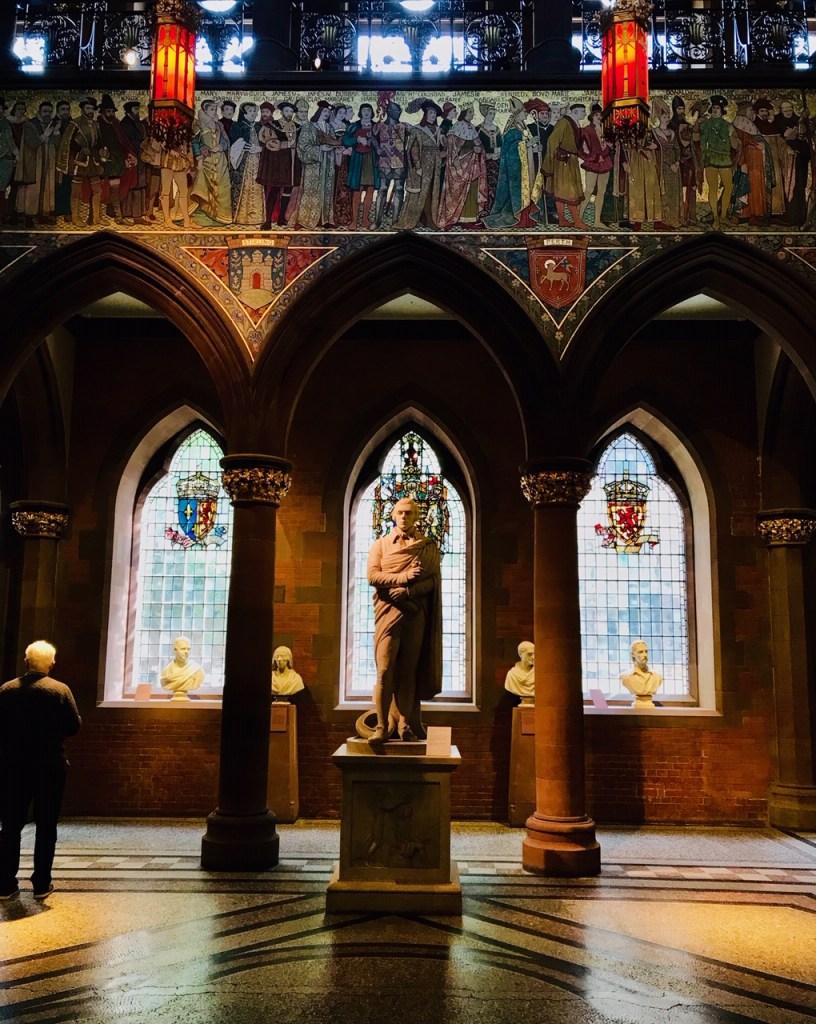
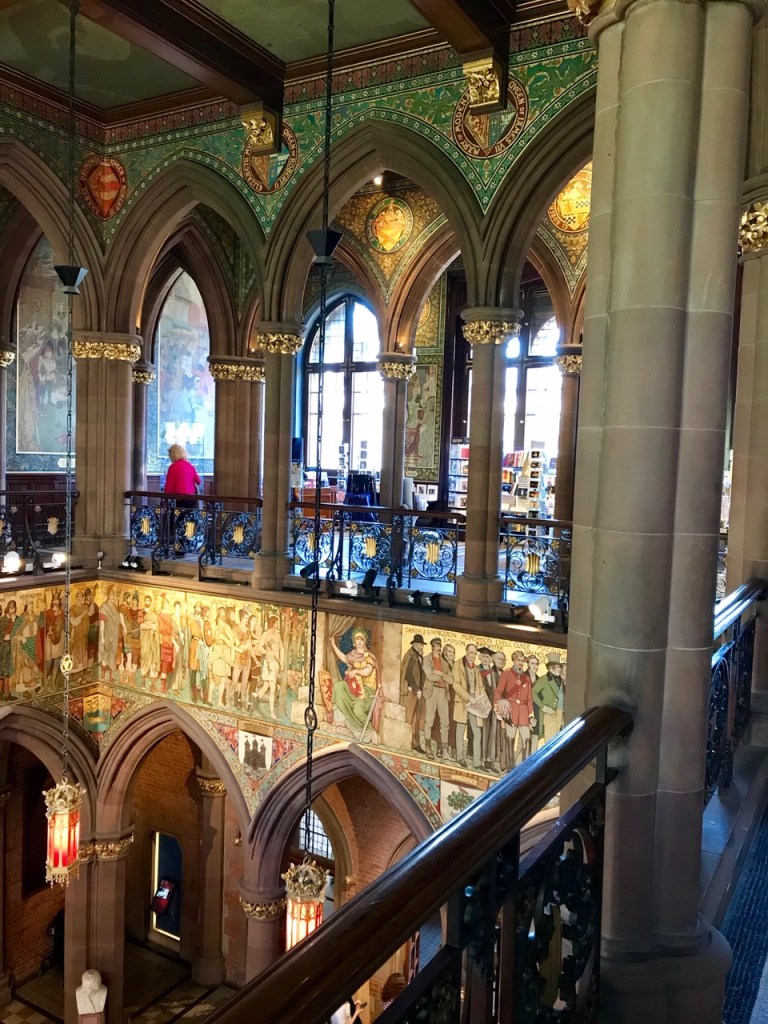
The gallery showcases Scotland’s history through the faces of its heroes, villains, and everyday people. The gallery boasts over 3,000 paintings and sculptures.
The faces of its heroes:
Eric Liddell (1902-1945)
by Eileen Soper – oil on canvas, painted in 1925
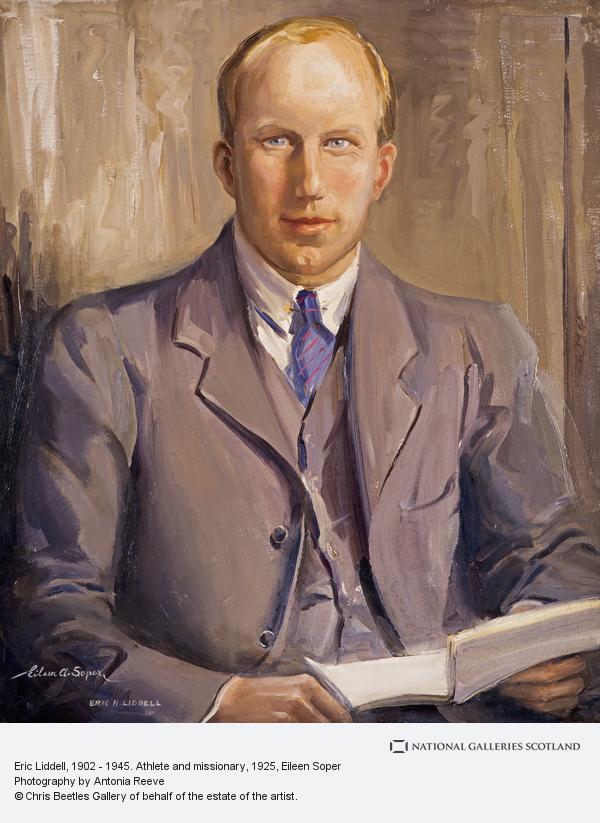
Eric Liddell remains one of the most inspiring of Olympic athletes. He is remembered equally for his fame as a sportsman and his work as a missionary.
He won two medals in the Paris Olympic Games of 1924, most famously the gold in the 400 metres which he ran in a world-record time of 47.6 seconds and a bronze in the 200 metres. Although the favourite to win the 100 metres in Paris, Liddell chose not to run in the event on religious grounds as the heats were on a Sunday.
His genuine extraordinary moral courage was evident in his missionary work in China. Prior to the Japanese invasion, Eric had taken his wife and three children to safety in Canada. On his return he was sent to the Weihsien internment camp. He was a prisoner of war for 694 days before dying of a brain tumour.
When I look at Eric Liddell’s face, I see a quiet confidence and steely determination that enabled him to triumph in athletics and in ‘the race of life.’ I see light in his eyes, an inner radiance, ‘a spark of divinely inspired purpose,’ evidence of God’s presence within.
Sir Winston Churchill (1874-1965)
by Sir James Guthrie – oil or canvas painted about 1919
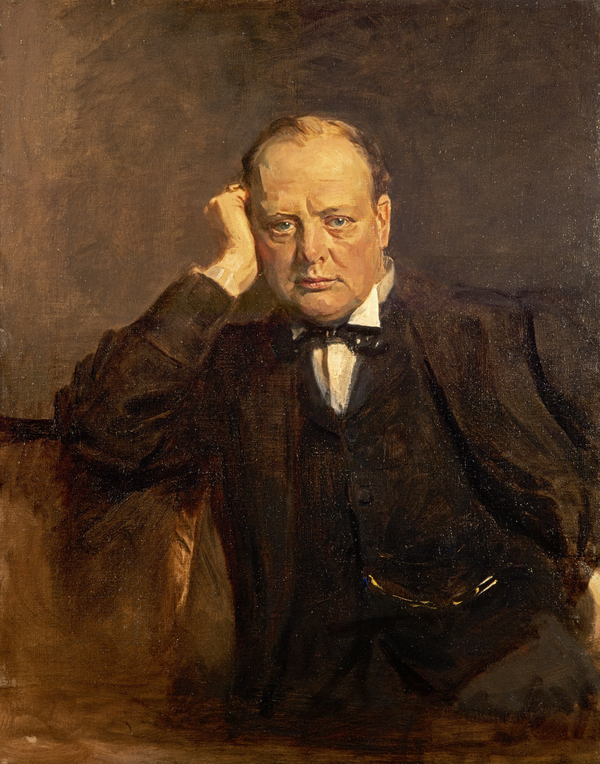
Winston Churchill was a Member of Parliament for Dundee from 1908–22. This portrait was completed shortly after the First World War, in which Churchill served as First Lord of the Admiralty and Minister of Munitions.
A major contribution to the outcome of the war was his part in the introduction of the tank.
At the end of the war, Churchill argued successfully for the setting up of a war graves commission – enshrining the principle that, in death, there would be no differentiation by rank, all would be honoured equally.
When I look at Winston Churchill’s face, I see contentment that the war is over and the enemy defeated. I see hope that the future might offer peace and a return to normality. I see belief that a country united, is more than able to meet every challenge.
Portraiture is not without its scandals:
According to the Tate Gallery, an understanding exists between the painter and the sitter that the finished product be an interpretive likeness, favourable in its representation. We read,
‘Portraits have almost always been flattering, and painters who refused to flatter tended to find their work rejected.’
The portrait that was rejected:
Sir Winston Churchill (1874-1965)
by modernist painter Graham Sutherland (1954)
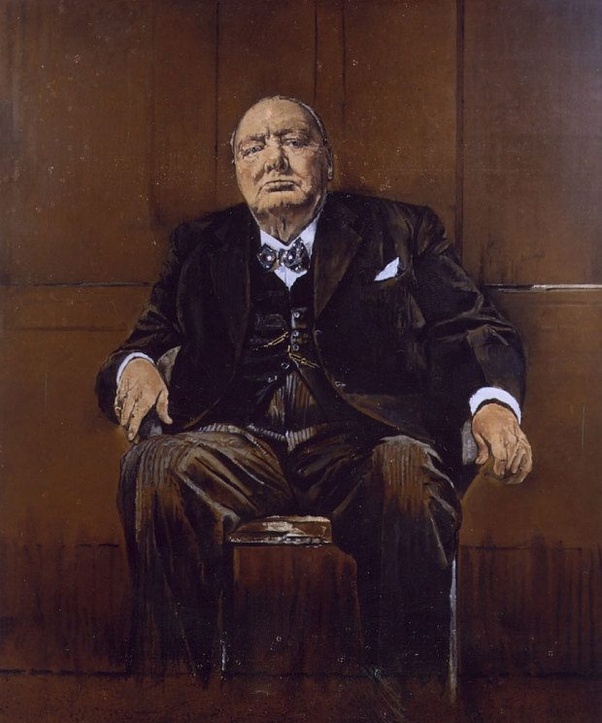
In June 1954 the “Churchill Joint Houses of Parliament Gift Committee” decided on the presentation of a portrait and who should receive the commission.
Graham Sutherland accepted the commission, and a fee of 1,000 guineas (£40,000 in today’s money). The Gift Committee laid down the strict requirement that Churchill appear in normal parliamentary dress.
Churchill enjoyed Sutherland’s company, suggesting they paint each other and take a sketching trip together in the south of France. He gave the artist three sittings.
For Sutherland the hardest part of the portrait was capturing the correct expression. He had noted Churchill’s expression was mercurial as each passing emotion registered quickly and deeply. He was also a notoriously restless sitter.
30 November 1954
It is Churchill’s 80th birthday. In London, both Houses of Parliament have assembled in Westminster Hall to celebrate the occasion. They present him with the gift of a portrait, paid for by parliamentary subscription. They intend it to remain with him for his lifetime, and then to hang in the Palace of Westminster.
Churchill looks at the portrait and remarks, with a combination of presence, timing, and a successful masking of emotion:
‘The portrait is a remarkable example of modern art. It certainly combines force and candour. These are qualities which no active Member of either House can do without or should fear to meet.’
In truth, Churchill loathed it, calling it unflattering and cruel. He had always preferred heroic or romanticised depictions.
In his defence, Sutherland later explained in 1961,
‘For better or worse, I am the kind of painter who is governed entirely by what he sees. I am at the mercy of my sitter. What he feels, or shows at the time, I try to record.’
What Sutherland saw and captured clashed with Churchill’s perception of himself. Sutherland chose not to flatter Churchill but to portray his vulnerability – his age (a matter of great sorrow to him), weight, and weariness (the emotional cost of the war and the physical challenge of rebuilding the nation).
Within a year, the painting was gone. Clementine Churchill arranged for its quiet destruction, believing it was too cruel to display.
Theo of Golden:
A novel by Allen Levi
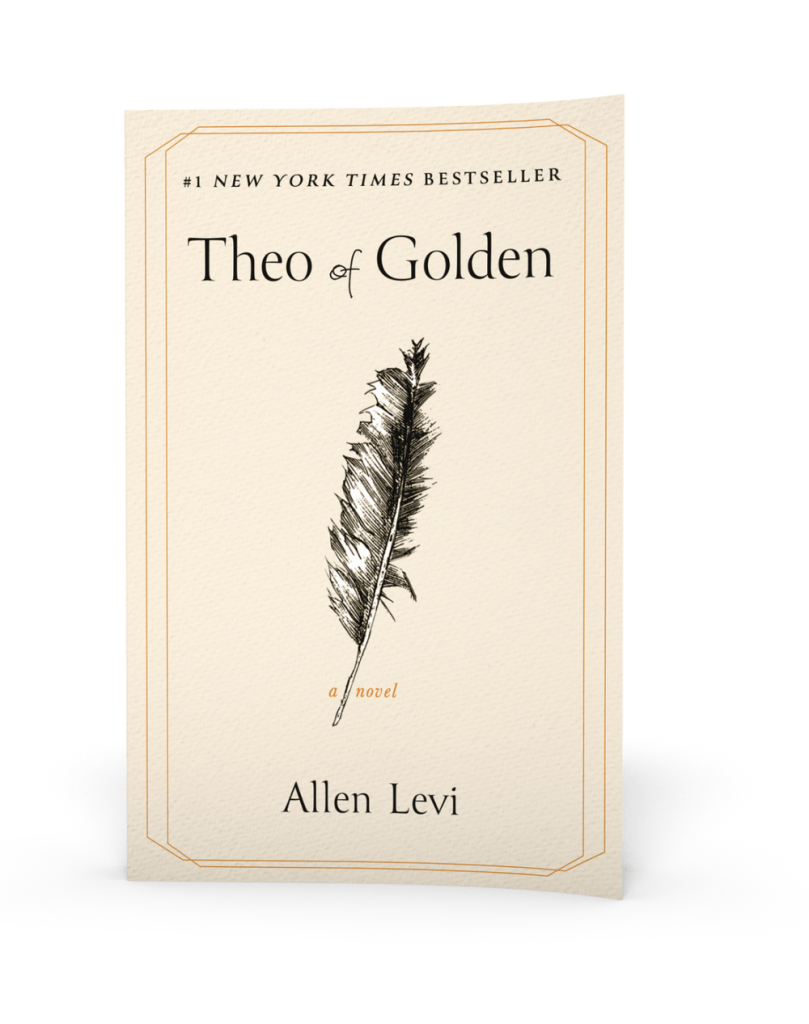
Gamez Theophilus Zilavez is an 86-year-old man, born in Pinhão, a small village in northern Portugal. He arrives in the fictitious southern town of Golden one spring day with a heather green hat and a Portuguese accent.
Theo’s motto for life is based on the words of William Wordsworth.
‘The best portion of a good person’s life is the little, nameless, unremembered acts of kindness and love.’
Theo gets to know the people in his community, to listen to their stories, and to respond to their needs, both material and spiritual. Sometimes he does so secretly, sometimes face to face, sometimes with a handwritten note. He shows the locals how intentional kindness can redeem brokenness.
There is sadness in Theo’s life. His grief is multi-layered. As Theo becomes more at home in Golden his grief begins to find a way out. Rather than avoid his suffering Theo allows it to fuel his tenderness; he insists his heart is not so much tender as broken, and that living honestly with sadness is a kind of gift. He elaborates further,
‘There is no virtue in advertising one’s sadness. But there is no wisdom in denying it either. And there is the beautiful possibility that great love can grow out of sadness if it is well-tended. Sadness can make us bitter or wise. We get to choose.’

While exploring his surrounds and searching out what Golden has to offer, Theo discovers The Chalice, a local coffee shop. Theo enjoys a good coffee and he is not disappointed.
When entering the shop, he observes the 92 pencil portraits lining the walls, each showing a resident of Golden. The portraits are the work of gifted local artist, Asher Glissen. Theo is impressed by the artist’s talent in not only capturing a likeness but in revealing the dignity and uniqueness of the individual. Each face reveals the hidden depths of the person, their courage, character, beauty, laughter, sadness, self-doubt, and strength.
Theo senses his mission: to purchase the portraits and return them privately to the people whose faces they depict.
The first person to receive a handwritten letter from Theo and the promise of a gift is Minnette Prentiss, a young accountant trapped in a career she dislikes. She is cautious, especially because an anonymous invitation from a stranger to meet at the park fountain could easily be threatening. But Theo’s manner disarms her. He gives her the portrait and asks for her story.
When Minnette later reflects on their conversation, she is overwhelmingly grateful. She appreciated Theo’s manner, his attentiveness, his gentleness, his wisdom, his insight, his affirmation, his care. She felt seen, appreciated, empowered. She felt elevated, knowing that she belonged, that she mattered.
Theo sees faces. He listens to stories. He helps people become more themselves.
One of Theo’s most significant relationships develops with Ellen, a homeless woman. After receiving her portrait, she shares that 30 years earlier, authorities took her infant daughter, Willa Francesca, away, declaring Ellen mentally unfit.
When Theo extends friendship to Ellen, he sees her vulnerability, her instability, her life, lived on the margins. He also sees that she is genuine, responsive, loyal, and real.
Ellen takes Theo on a bicycle tour. They ride through late-summer scenery—wildflowers starting to bloom, trees showing heat stress, and stretches of trail made golden with fallen leaves—startling a doe and fawn along the way. They discover that they have a shared interest in rivers and birds.
For Christmas, Theo sends Ellen tools to develop her artistic creations. She invents ‘featherwood’ – smooth pieces of wood drilled with holes to display bird feathers she has found. She cautiously starts a small business.
Theo knows that generosity is strongest when it restores dignity rather than creating dependence.
Seeing is risky. Being attentive to what other people are saying whether with words or silence, is a precious gift. Knowing is both a privilege and a responsibility.
Iain McGilchrist is a British psychiatrist, philosopher, and neuroscientist who now lives on the Isle of Skye. He says,
‘Attention is a moral act. It changes us and it changes the world.’
We live in a distracted society. We find it easy to look away. We convince ourselves that our screens are safer than face-to-face encounters.
Theo avoided distractions. He took the time to see people and, more importantly, share what he was seeing. His personal insights were a powerful affirmation. You are seen! You are loved! You matter!
Theo reminds us,
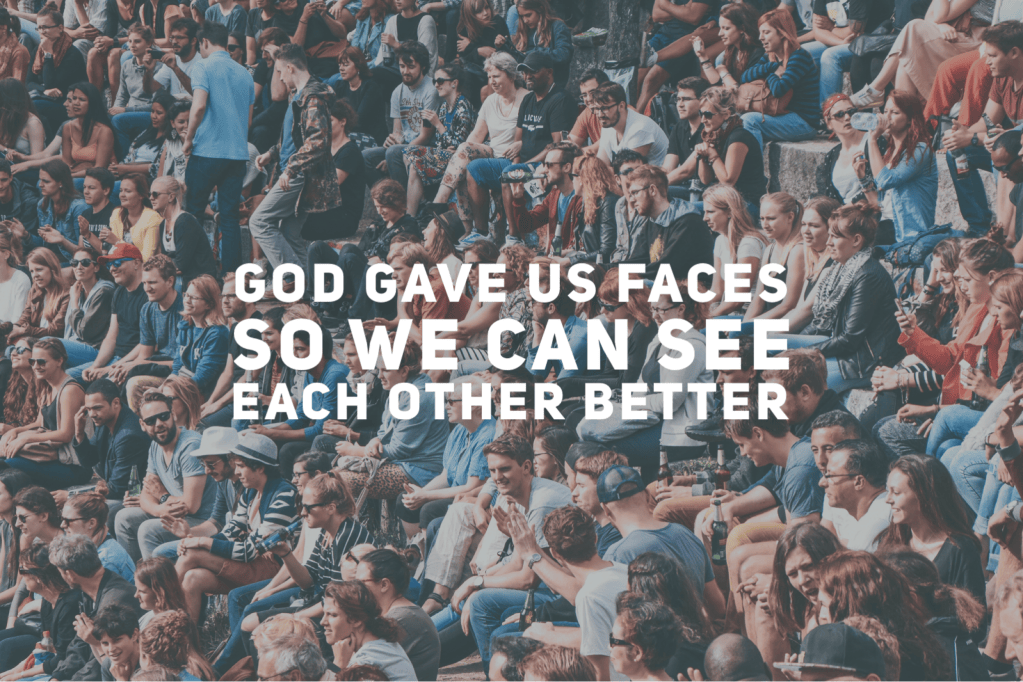
‘God gave us faces so we can see each other better.’


Hi Bruce,
I’m going to put this book on my reading list.
Thank you
>
LikeLike