A Christian apologist is someone who endeavours to explain Christianity in words and imagery that is accessible to the masses. They address the issues that are likely to prove an obstacle to belief. Other well known Christian apologists include C. S. Lewis and G. K. Chesterton.
Blaise Pascal was born at Clermont-Ferrand, France, on 19 June 1623. His father’s name was Etienne Pascal, the presiding judge of the tax court. His mother, Antoinette Begon, died in 1626 when he was only three years old. As soon as he was old enough to talk, it became clear that he possessed a mind of exceptional ability.
His father retired in 1632 and took the family, Blaise and younger sister Jacqueline (born in 1625), with him to Paris. He assumed responsibility for his son’s education and instructed him in languages and mathematics. The boy enjoyed talking with his father and wanted to know the reason for everything.
From the age of eighteen Pascal experienced significant health problems. He said that ‘he never knew a day without pain.’
Before turning twenty-four he read some works on religion. God opened his eyes and he clearly understood that the Christian Religion demands that ‘we shall live only for God and have no other object but him.’ His father had instilled in him the greatest respect for religion and had laid down, as a precept, that ‘everything that is the object of faith cannot be the object of reason.’
The most meaningful event in Blaise Pascal’s life was a spiritual experience when he was thirty-one years old. It began around 10.30pm on November 23, 1654, and lasted about two hours. There are no records of him ever speaking about the experience or of him publishing it anywhere. Instead, he wrote it down on a piece of parchment and sewed it to the lining of his jacket. It was discovered after he died eight years later. He titled it ‘Memorial.’
FIRE
GOD of Abraham, GOD of Isaac, GOD of Jacob
not of the philosophers and of the learned.
Certitude. Certitude. Feeling. Joy. Peace.
GOD of Jesus Christ.
My God and your God.
Your GOD will be my God.
Forgetfulness of the world and of everything, except GOD.
He is only found by the ways taught in the Gospel.
Grandeur of the human soul.
Righteous Father, the world has not known you, but I have known you.
Joy, joy, joy, tears of joy.
Jesus Christ. Jesus Christ.
I left him; I fled him, renounced, crucified.
Let me never be separated from him.
He is only kept securely by the ways taught in the Gospel:
Renunciation, total and sweet.
Complete submission to Jesus Christ and to my director.
Eternally in joy for a day’s exercise on the earth.
May I not forget your words. Amen.
Source: Mystical Visions of Blaise Pascal
Pascal’s life was transformed, a reorientation that would last until his death. God was with him, in him. The presence of divine love eclipsed all else.
My word for 2026 was FIRE. Like Pascal, we need our ‘night of fire,’ a night of reckoning, an encounter, a humbling, a transformation, when we realise that we are not our own, we belong to another, to God alone.
Blaise Pascal was a philosopher, scientist and mathematician, a man of extraordinary natural gifts. It was when he applied himself to understanding the bible that his life underwent a transformation. He often used to say,
‘Holy Scripture is not a knowledge of the mind but of the heart. It is only intelligible to those whose heart is upright.’
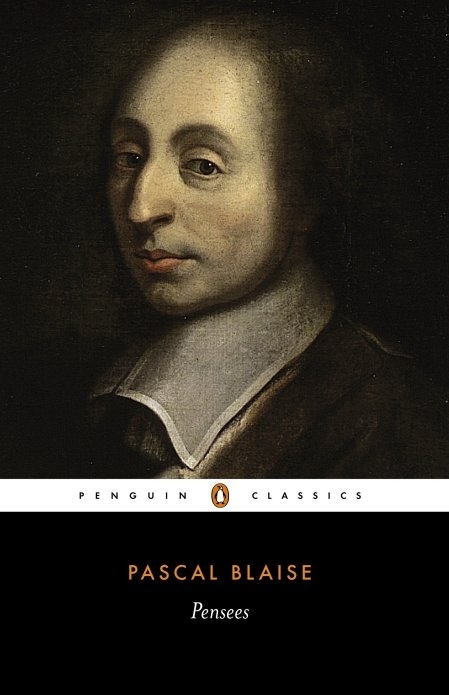
Pascal wrote his work of Christian apologetics, Apologies de la religion chrétienne, to convince friends and acquaintances of the authenticity of Christianity and to bring about a change in his readers who held widely differing views. Although the work remained unfinished at his death, during the summers of 1657 and1658, he put together most of the notes and fragments that editors published under the title ‘Pensees’ meaning ‘Thoughts.’
Pascal died in 1662 after suffering terrible pain, probably from carcinomatous meningitis following a malignant ulcer of the stomach. He was thirty-nine.
Pascal’s wisdom and insight speaks to us today.
The problem of our existence:
‘Man’s unhappiness arises from one thing alone: he cannot remain quietly in his room.’
In those moments of quiet, when we are relieved of every distraction, we realise we do not like ourselves. It may be an image problem, a body that will not conform, that will not yield. It may be a character problem, the inability to love selflessly, to speak the truth unashamedly, to show mercy and kindness unreservedly. It may be an existential problem, a sense of abandonment, feeling alone in a world where there is no one to hear our cry.
We remain imprisoned within the problem of ourselves, striving to get away, to go anywhere, to do anything. Any diversion, any addiction, any activity that will address the abyss at the heart of each of us. We experience a terrible absence, the absence of God. We spend our entire lives trying to avoid a confrontation, to flee his presence, to escape his scrutiny.
Reason:
‘Reasons last step is the recognition that there are an infinite number of things which are beyond it.’
Reason is not enough. We cannot reason ourselves into the kingdom of God. Faith triumphs over reason. Faith is not irrational; on the contrary, it is the finest wisdom. If we submit everything to the test of reason, our religion will have nothing mysterious or supernatural about it.
Reason does not bring us to the foot of the cross. It is faith that shines a light on our fallenness and reveals our need of a Saviour. We may know the truth of the cross with our mind, but it is the heart that loves the Son who willingly gave his life for us. As Pascal says,
‘It is the heart which perceives God and not the reason. That is what faith is: God perceived by the heart, not by the reason.’
Reason does not move God like faith does. Reason says I understand. Faith says I will. ‘Without faith it is impossible to please God.’ Faith emanates from the heart, not the head. Faith is love in action. Our calling is ‘live by faith, not be sight.’
Miracles:
‘It would have been no sin not to have believed in Jesus Christ without the miracles.’
St. Augustine says,
‘I should not be a Christian without the miracles.’
Jesus Christ performed miracles and the Apostles after him, and the first saints in great numbers.
Blaise Pacal experienced his own miracle, the daughter of Madame Périer, his sister. She writes,
‘It was at this time that it pleased God to cure my daughter of lachrymal fistula from which she had suffered for three and a half years. The fistula was so bad that the ablest surgeons in Paris regarded it incurable; and at last God took it upon himself to cure it by the touch of a Holy Thorn at Port-Royal (pertaining to the Crown of Thorns), the miracle was vouched for by several surgeons and doctors and confirmed by the solemn verdict of the Church.’
The miracle healing of his goddaughter deeply moved Pascal. His joy was so great that he was entirely absorbed by it and through it God was glorified.
Miracles speak of authority, God’s authority. God commands and it is done. God said, ‘Let there be light,’ and there was light.
The biblical narrative is laced with miracles, a reminder of God’s presence and power. Moses encounters a burning bush, a bush that is alight but not consumed. God is present for the ground is holy.
God’s holy fire purifies, removing the dross. It deals with every contaminant that would tarnish our witness. God’s holy fire also empowers. On the day of Pentecost, tongues of fire rested on the apostles. It was those same apostles that performed miracles – healing the sick, casting out demons, and raising the dead. To know God’s presence is to know God’s power.
Miracles reveal the heart. Some people, like Pascal, rejoice. They see the hand of God. Many people reject the miraculous. The religious leaders witnessed the works of Jesus and said he had a devil. Those who deny the miraculous fear what they cannot explain, and their hearts turn to stone.
As Blaise Pascal says,
‘Miracles do not help to convert, but to condemn.’
Light:
‘There is enough light for those whose only desire is to see, and enough darkness for those of the opposite disposition.’
All individuals must decide between faith in some reality beyond themselves or a life without belief. But a life without belief is also a choice. Belief in God is the difference between misery and true happiness.
Even though our hearts may acknowledge the reality of God, we do not want to believe in Him. We consider it too dangerous. The implications of acknowledging a holy God do not sit well with our own hopes and desires. And so, we ignore or suppress the truth, reasserting our own independence.
As Pascal observes,
‘Men despise religion. They hate it and are afraid it may be true.’
Christian musician and worship leader, Chris Tomlin, wrote the following lyrics,
‘Light of the world Stepped down into darkness.’
The light of Christ has come into the world and his glory shines all around.
Grace:
‘The grace of God makes itself known in great minds by little things and in commonplace minds by big things.’
Grace is undeserved favour. It is given freely by God, not because of what we have done, but because of who he is. This is the heart of grace in the Bible.
Author Timothy Keller says,
‘Grace is the key to it all. It is not our lavish good deeds that procure salvation, but God’s lavish love and mercy. That is why the poor are as acceptable before God as the rich.’
Pascal wrote a note that captures the action of God’s grace in his life. He says,
‘I love poverty because Jesus Christ loved it. I love wealth because it offers us the means of helping the poor. I keep faith with everybody. I do not return ill to those who do me ill… I try always to be sincere, true, and loyal to all men… Every day I bless my Redeemer who implanted these views in me and who out of a man riddled with weaknesses, with misery, with sensual desires, with ambition and pride, has made a man free from all these vices by the power of his greatness to which all glory is due…’
Amazing grace, how sweet the sound!


