During his tour of Africa, Pope Leo XIV gave a talk in which he lamented the fact that powerful world leaders do not prioritise peace. He said,
‘World leaders turn a blind eye to the fact that billions of dollars are spent on killing and devastation, yet the resources needed for healing, education, and restoration are nowhere to be found.’
What is needed to create peace in our world?
Throughout his earthly ministry Jesus taught his followers about the Kingdom of God. Jesus explained that when the Kingdom of God is fully established, ‘peace will reign.’
The prophet Micah speaks of such a time when ‘nations will beat their swords into ploughshares and their spears into pruning hooks.’ Micah 4:3
After his resurrection Jesus appeared to his disciples and said, ‘Peace be with you.’
The word ‘peace’ in our culture has many meanings. The United States Institute of Peace defines peace as
- The absence of conflict
- The end of violence or the formal cessation of hostilities
- The attainment of justice and social stability
- Economic well-being and basic freedoms
The Oxford English Dictionary adds
- Freedom from quarrels or dissensions between individuals
- Freedom from anxiety, disturbance (emotional, mental, or spiritual), or inner conflict
- The absence of noise, movement, or activity
Pope Leo XIV is qualified to talk about peace. Robert Francis Prevost was born on September 14, 1955, in Chicago. In 1977, he entered the novitiate of the Order of Saint Augustine. Prevost studied the writings of Saint Augustine in depth. They helped shape his understanding of peace.
Augustine was a prominent Christian theologian in the 4th century. He was a prolific writer. His books Confessions and The City of God are still in print.
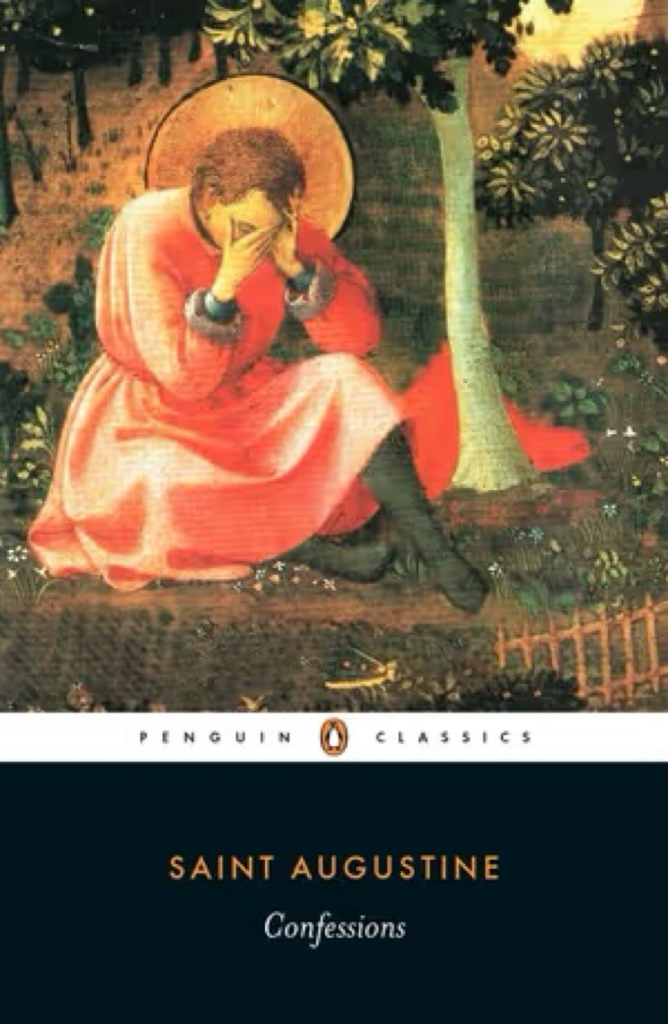
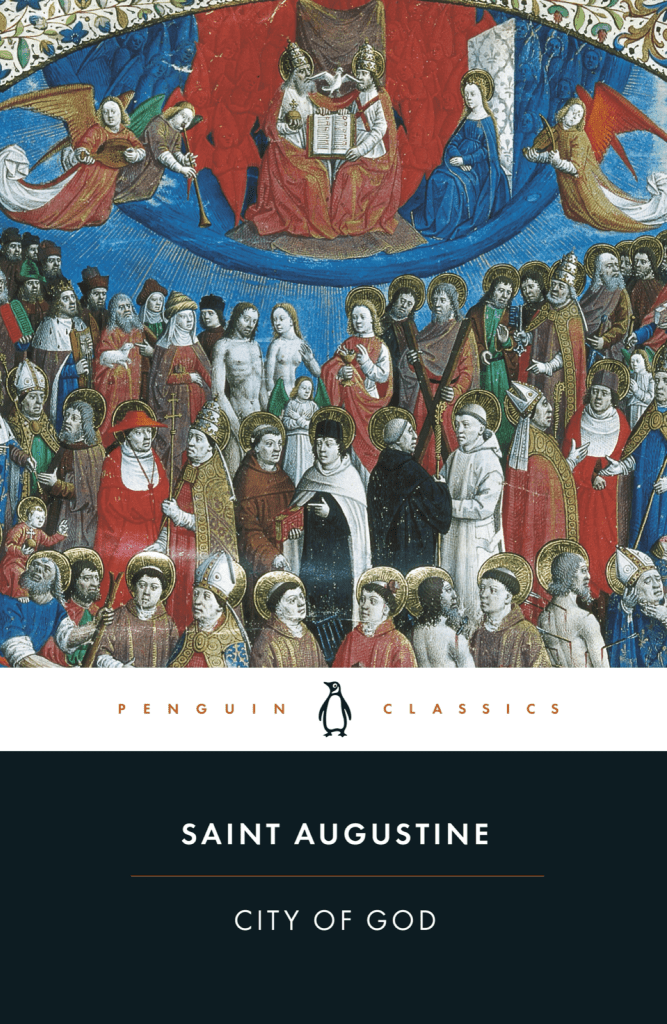
Augustine famously said,
‘Our hearts are restless and will not rest until they find rest in You.’
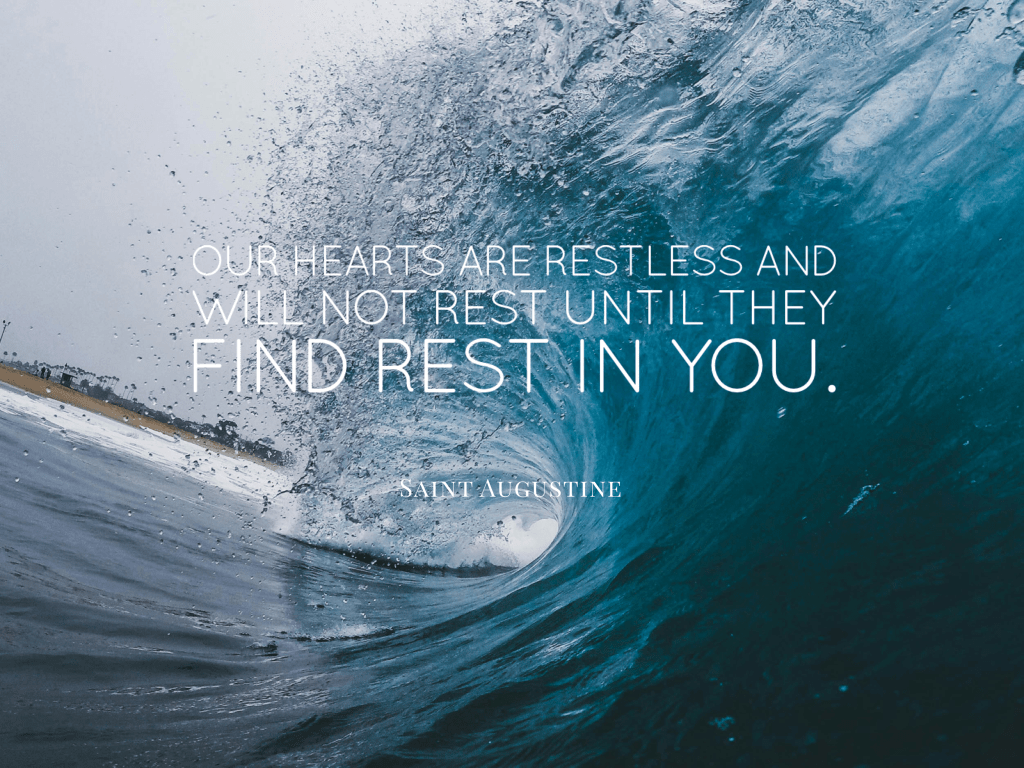
What Augustine means is that ‘Peace replaces restlessness when our lives are directed to God.’
Prevost is the first American pope in history. He was elected on May 8, 2025, taking the name Leo XIV.
In his book, ‘Peace Be with You,’ Pope Leo XIV talks about ‘the pursuit of peace.’
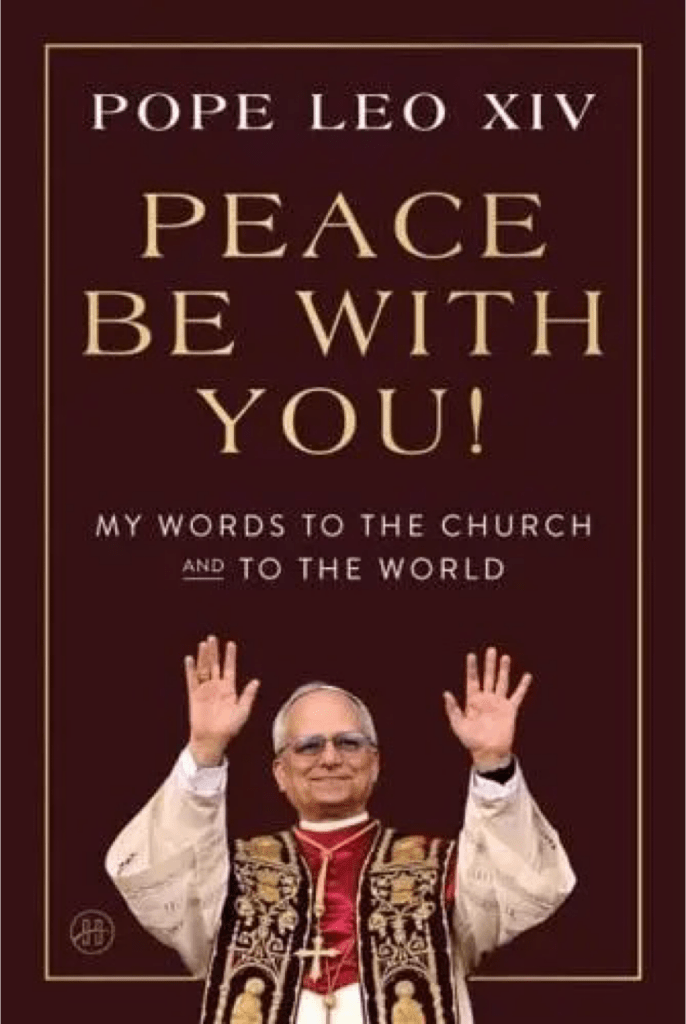
Peace is a gift:
You cannot choose peace the way you pick apples. Peace is a gift from God. Peace is given to those who are eager to receive.
Pope Leo XIV says,
‘Peace is a gift that God has given to men and women of every age through Jesus’ birth in Bethlehem. The angels announced ‘peace on earth’ because God became man. He embraced humanity so deeply that with his cross, he destroyed the enmity of sin.’
It is the peace of the Risen Christ. A peace that comes from God, the God who loves us, unconditionally.
In the gospel of John, we have these words of Jesus. He says to his followers,
‘Peace, I leave you; my peace I give you. I do not give to you as the world gives. Do not let your hearts be troubled and do not be afraid.’ John 14:27
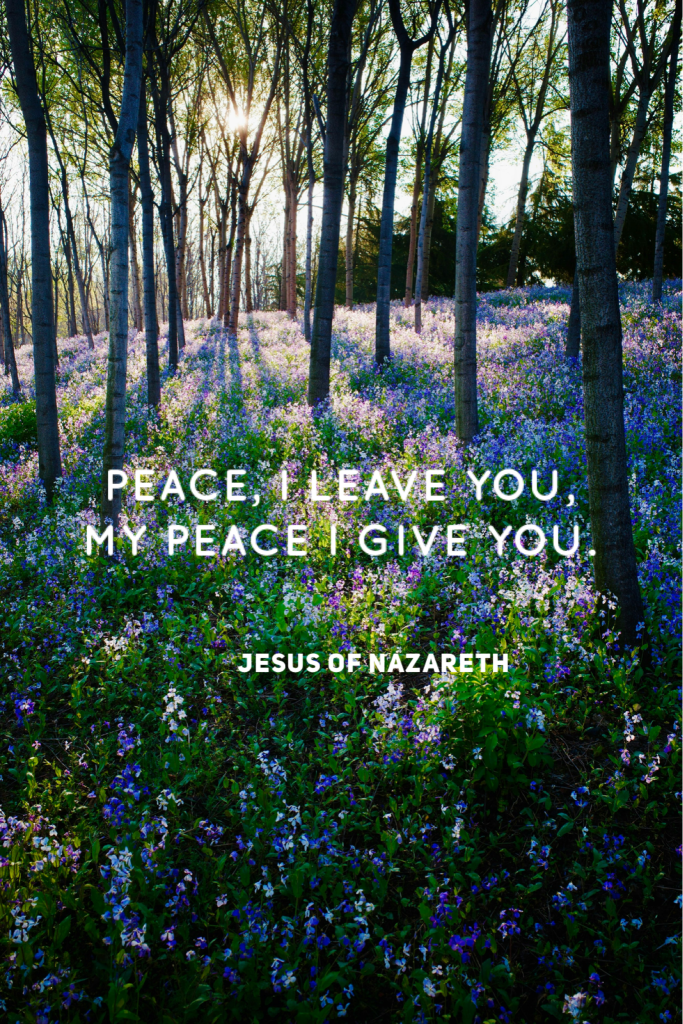
Jesus gives his followers ‘the gift of peace.’ He is qualified to do this. The prophet Isaiah describes him as ‘the Prince of Peace.’ Isaiah 9:6
You can only gift something that is yours to give. Jesus is the source of peace. When we welcome Jesus into our life, we receive the gift of peace. But it is a different kind of peace to what the world recognises.
The peace that Jesus gives is amplified in his life and ministry.
- When surrounded by hostile worshippers from the synagogue who were intent on throwing him off a cliff, Jesus walked through the angry crowd unharmed.
The peace that Jesus offers is not intimidated by the evil of others. It is sustained by the Father’s love for his own, those who believe in His Son.
- When faced with a large crowd of people who had been captivated by his teaching for three days, Jesus had compassion on them. He took what little food they had, and multiplied it, and everyone had enough to eat.
The peace that Jesus offers is never overwhelmed by the need. It knows ‘God is sufficient for all my needs.’ He is ‘Jehovah Jireh’ – The Lord Our Provider. With God, there is always more than enough.
- A violent storm hit the boat. The wind and the waves struck fear in the disciples. They were certain the boat would sink and they would die. Jesus was lying down in the stern of the boat asleep. The disciples understood that they had no other choice but to wake him. Having questioned their lack of faith, Jesus stood before the raging wind and turbulent sea and said, ‘Peace! Be still!’
The peace that Jesus offers is never anxious or afraid. It recognises that the Father has given Him authority over all things, even death itself.
- The religious leaders opposed Jesus vigorously. His teaching exposed their hypocrisy and undermined their authority. Their shared anger and hatred resulted in Jesus’ death, nailed to a cross. While on the cross and knowing that death was fast approaching, Jesus spoke these words:
‘Father, forgive them. They know not what they are doing?’
The peace that Jesus offers is merciful, extending forgiveness to those who wrongly accused him and wanted him dead.
The peace that Jesus gives his followers frees them from feeling intimidated, overwhelmed, fearful, anxious, and/or judgmental. The peace that Jesus gives his followers inspires courage, faith, confidence, and generosity of spirit.
Peace within:
Pope Leo XIV says,
‘Peace is when our heart and our life are inhabited by silence, meditation, and listening to God.’
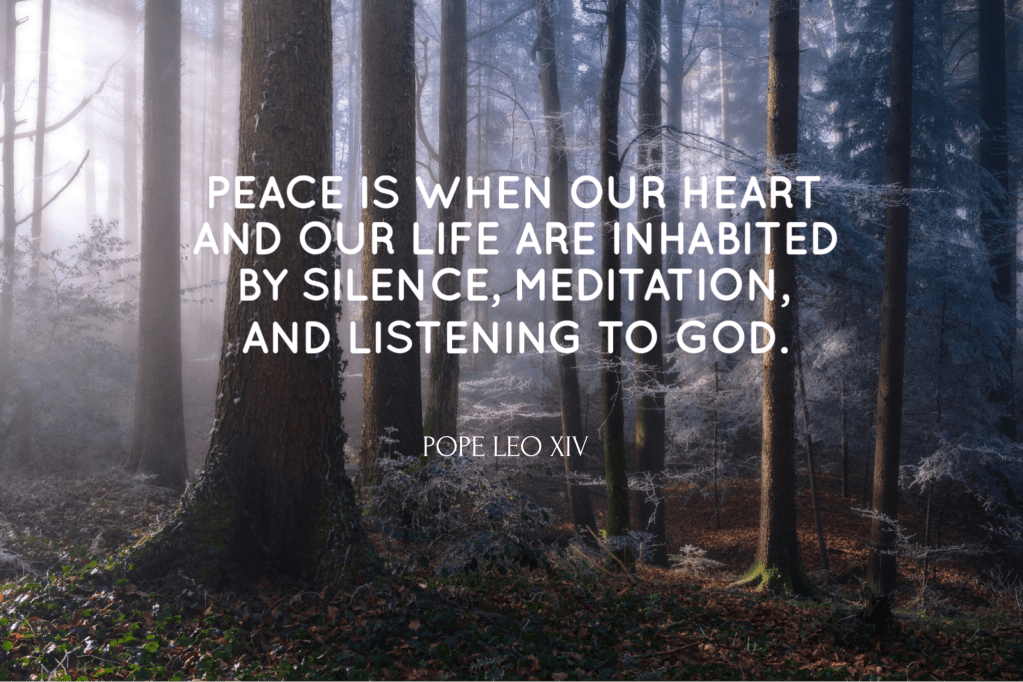
The peace that Jesus gives lives in us. It is evidence of his Spirit being present in our lives. It speaks of relationship, the intimacy we enjoy with the Father, Son, and Spirit. The ‘silence,’ ‘meditation,’ and ‘listening’ Pope Leo refers to is that which allows us to cultivate friendship with God, to know Him, to love Him.
In his letter to the church in Colossae, the apostle Paul says,
‘Let the peace of Christ rule in your hearts, since as members of one body you were called to peace. And be thankful.’ Colossians 3:15
Peace is a matter of the heart. Only when peace reigns in our hearts are we able to share it with others. As Thomas à Kempis says,
‘First keep peace within yourself, then you can bring peace to others.’

The ‘interior’ peace we experience is not dependent on external factors. Throughout his life and ministry, Jesus, the bearer of peace, experienced conflict and treachery. He felt the anger and hostility of the religious leaders. He knew how fickle the crowds could be. Jesus explained this tension to his followers. He said,
‘I have said these things to you, that in me you may have peace. In the world you will have tribulation. But take heart; I have overcome the world.’ John 16:33
Conflict is inherent in the human condition. We all experience strife and struggle. We all know rejection. We all know betrayal. We all hurt.
Jesus knew opposition. He was verbally abused, falsely accused, shamed, despised, physically beaten, wrongfully detained, and violently killed.
Jesus told his followers they would share in his suffering; they would experience the rage and rejection he had known. The assurance Jesus gives his followers is that he has overcome the world. There is no cause for fear. There is no reason to feel anxious. There is nothing that can happen that will separate us from his love. Our future is in his hands. In him we have peace. The prophet Isaiah says,
‘You will keep in perfect peace those whose minds are steadfast because they trust in you.’ Isaiah 26:3
Trust is the key. When our trust is in God and God alone, we will experience his peace.
A Prayer for Peace:
When we walk in relationship with Jesus and live in the power of His presence will we be equipped to be ‘instruments of His peace.’
Saint Francis of Assisi was an Italian friar who lived in Italy in the 13th century. Inspired to lead a Christian life of poverty, he became a beggar and itinerant preacher. There is no conclusive evidence to suggest St Francis wrote the Peace Prayer. There is no doubt he lived it.
Lord, make me an instrument of your peace:
where there is hatred, let me sow love;
where there is injury, pardon;
where there is doubt, faith;
where there is despair, hope;
where there is sadness, light;
where there is sadness, joy.
O divine Master, grant that I may not so much seek
to be consoled as to console,
to be understood as to understand,
to be loved as to love.
For it is in giving that we receive,
It is in pardoning that we are pardoned,
And it is in dying that we are born to eternal life.


Thanks Bruce
Reassuring words!
>
LikeLike