On Memorial Day, 2019, the American holiday that falls on the last Monday in May and honours the war dead, author Geraldine Brooks received news that her husband, Tony Horwitz, had collapsed and died, in the middle of his own book tour.
Three years later she booked a flight to Flinders Island off the coast of Tasmania.

The Furneaux Group of Islands is what remains of the original land bridge that once joined Tasmania to mainland Australia. Flinders Island is the largest of these islands, 75 km long and 40 km wide. The region has about 800 permanent residents.
In her book Memorial Days, Geraldine Brooks shares what her stay on Flinders Island allowed her to accomplish: to seize the time and space needed for her own grief.
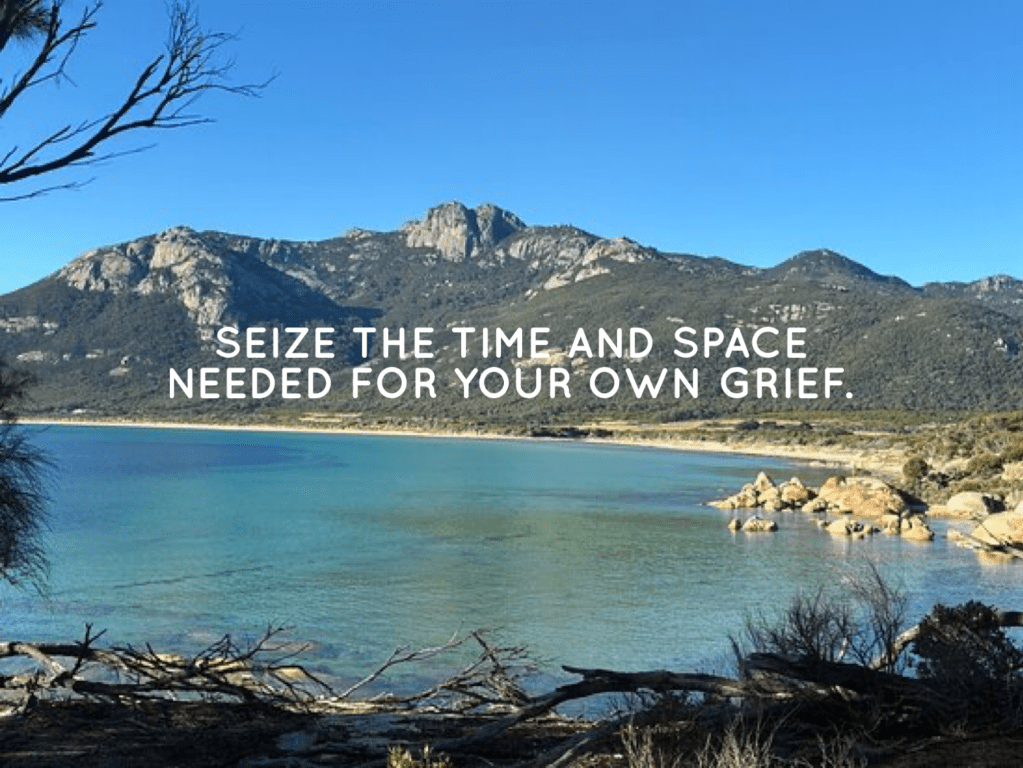
‘To shut out the world and its demands. To remember my love and to feel the immensity of his loss.’
In doing so, she helps us understand how we might navigate the sudden death of someone we love.
Breaking the news:
When someone we love dies suddenly, we feel overwhelmed, numb, disorientated. We struggle to grasp the magnitude of what has happened. The last thing we want to have to do is to tell someone. We know what pain and disruption the telling will cause. But family have a right to know, and it is preferable that they hear the news from us.
The reality is, news of someone’s death, particularly when the circumstances are dramatic, cannot be contained. It spreads like wildfire.
Geraldine Brooks could not reach her son Nathaniel who was on a long flight to Sydney, Australia. The delay meant that he would learn of his father’s death from someone else. She laments,
‘Their words had flown around the world faster to him than my own.’
While making the journey to be with her deceased husband, Geraldine received a call from a friend. She says,
I barely had my seat belt fastened when my friend Susanna called me. Martha’s Vineyard is a small place. Its grapevine had done its work. Someone at the airport had mentioned something to someone. Now Tony’s death had been reported in the online edition of the local paper.’
How quickly the ripples of loss widened. How swift the first brokenhearted reactions of friends.
When my younger son Nicholas shared with our immediate family the information the police had provided him about Adam’s death, I did not feel an urgent need to tell anyone else, apart from my sister in Newcastle and my brother’s family. Our knowing was enough. How do you tell the world that your son has taken his life?
I recall ringing my boss at work and requesting extended leave. I struggled to mouth the words, to explain why I was ringing, to relate the circumstances of Adam’s death. It was something I wanted to protect, something that couldn’t be explained.
Controlling the narrative:
The sudden death of a loved one brings with it the responsibility of gathering the facts and creating a narrative that helps explain why the person died. People are genuinely curious. They want to know the details.
It was fortuitous that Geraldine Brooks could speak to the people who saw her husband’s death. The detective explained that Tony had been walking when he collapsed, and that the first to see him lying on the ground was a former Vietnam medic who yelled for someone to call 911 as he checked for vital signs. Women from the yoga studio across the road ran out with a defibrillator and in minutes two ambulances arrived.
When Geraldine spoke to Mr. Ryan the former medic, he provided a personal account of what happened. He said,
‘There was no sign of any trauma – the fall must have been gentle, maybe Tony had dropped to his knees and then crumpled slowly forward. His arms were at his sides, indicating he hadn’t attempted to break his fall or even been aware of falling.
The paramedics worked hard and well at the scene for a good half hour. But he wasn’t conscious and there was no pulse. The women from the yoga place were stroking his head. They were very affectionate. Careful and caring.’
Such a detailed summary was reassuring, knowing that her husband wasn’t alone and had received all the help possible.
When my son Adam took his life, his movements were captured on CCTV. The police constables watched the footage and were able to provide a detailed description of how Adam died. I recall my reaction to the words ‘He jogged purposefully.’ It was something I could imagine, a clear intent, in keeping with Adam’s state of mind.
I could have requested a viewing of the incident. A trauma specialist I spoke to later, suggested that it might have been helpful. I knew enough. I failed to see how viewing my son’s final moments would help in any way.
On most occasions, describing the details of a person’s death is straight forward. Explaining the cause of death is more complicated.
‘Tony collapsed and died of a heart attack.’ That was all Geraldine could say. That was all she knew. It would take months for Geraldine to understand why her husband was at risk of dying. She details some of the factors in ‘Memorial Days’ – a pre-existing health condition, a delayed treatment plan, a heavy workload, poor life choices…
After three years, the narrative of her husband’s death has become more expansive, nuanced, instructive. It falls to Geraldine to decide how much she wants to make public. No one should feel obligated to tell it all.
‘Adam took his life.’ Death by suicide is complex. I have yet to find any guidelines on what to say apart from ‘avoid glamorising the means of death.’ The more important question is why, why would my son want to end his life. It has taken me fourteen years to unravel this mystery (at least in part) and to try to put it into words. The book, ‘Adam: God’s Creation’ is nearing completion.
Controlling the narrative is one important way we can honour the dead. It is when we leave things unsaid that people begin to fill in the blanks. They cannot tolerate a vacuum.
Giving yourself permission to grieve:
Geraldine Brooks didn’t realise how complicated life would become following the sudden death of her husband. There was so much to attend to, so many questions to answer, so many people to deal with – police, medical professionals, coroner, funeral directors, accountants, book publishers, work associates, friends, neighbours, family, strangers – some caring, some supportive, some detached, simply doing their job. Some able to empathise, like women who have lost husbands. ‘Widows. Widows everywhere.’ Others unthinking, insensitive to the hurt, careless in their choice of words.
Geraldine admits she made mistakes. She was quick to deploy a ‘defensive shield,’ denying reality, trying to remain positive when her heart was breaking. She was fearful of engaging with her feelings, of surrendering to her emotions. She says,
‘I [didn’t cry unashamedly for Tony.] I should have; the moment I received the news of his death. But I was afraid to give way to it. I knew that if I started, I might not be able to stop. So, I shut it down. And for the past two years, I haven’t been able to cry at all.’
Geraldine erected a façade that she hid behind. She became a fugitive from her own feelings. She carried a heavy burden which she knew was unsustainable.
Putting a lid on your grief is a risky business. You cannot contain your grief forever. To do so is to diminish yourself, to become estranged from your emotions. Maintaining a pretence is exhausting.
Grief is not the enemy. Grief is a gift. It enables you to understand the magnitude of your loss. Grief is a pathway to wholeness. Grief opens doors, bringing a deeper appreciation your loss.
Geraldine chose Flinders Island for its remoteness. It is a place where she contemplated living. Tony’s attachment to America ran deep. He needed America, a nurturing presence for his challenging work.
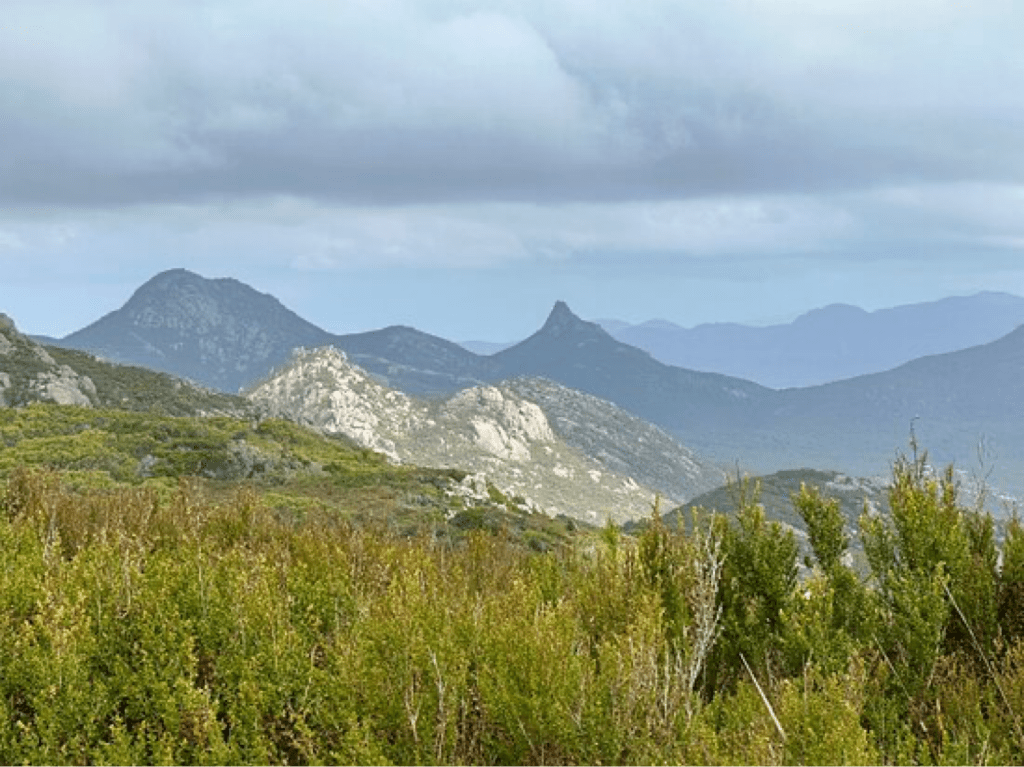
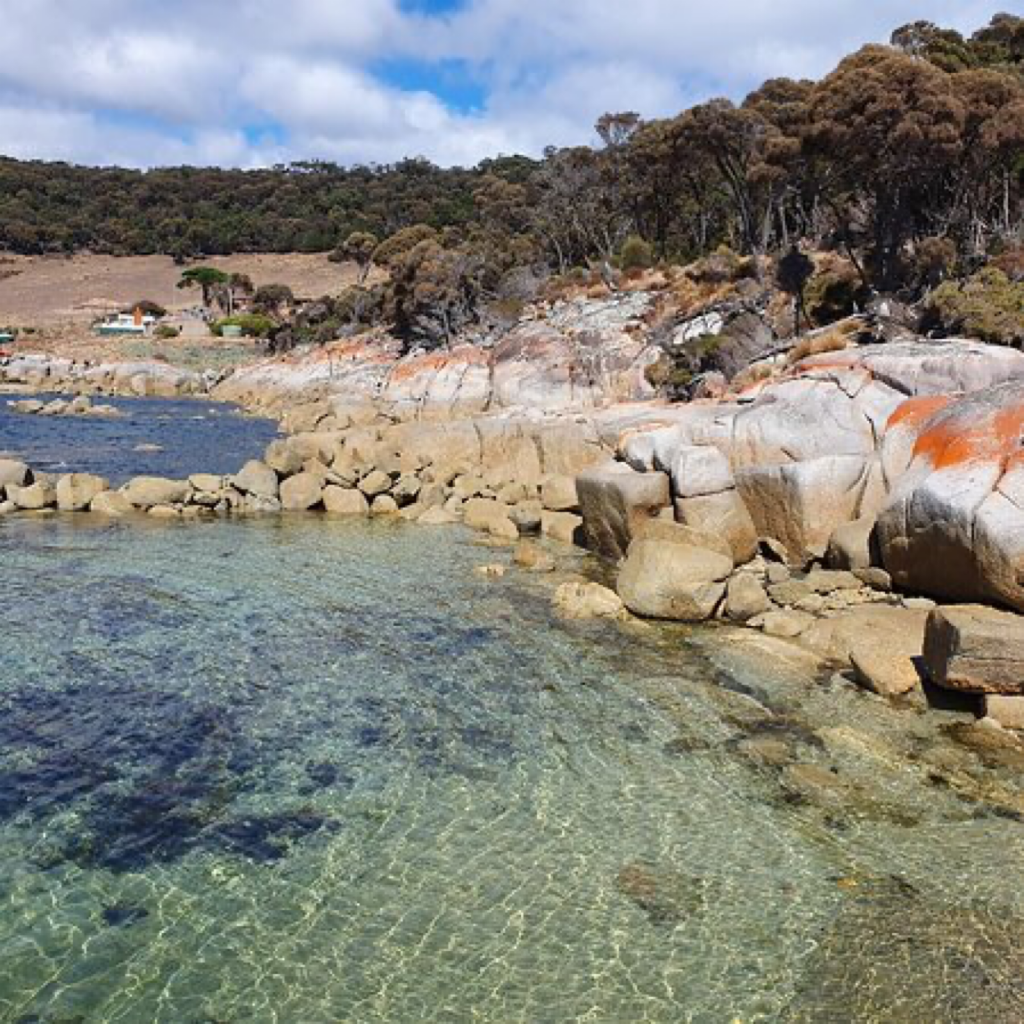
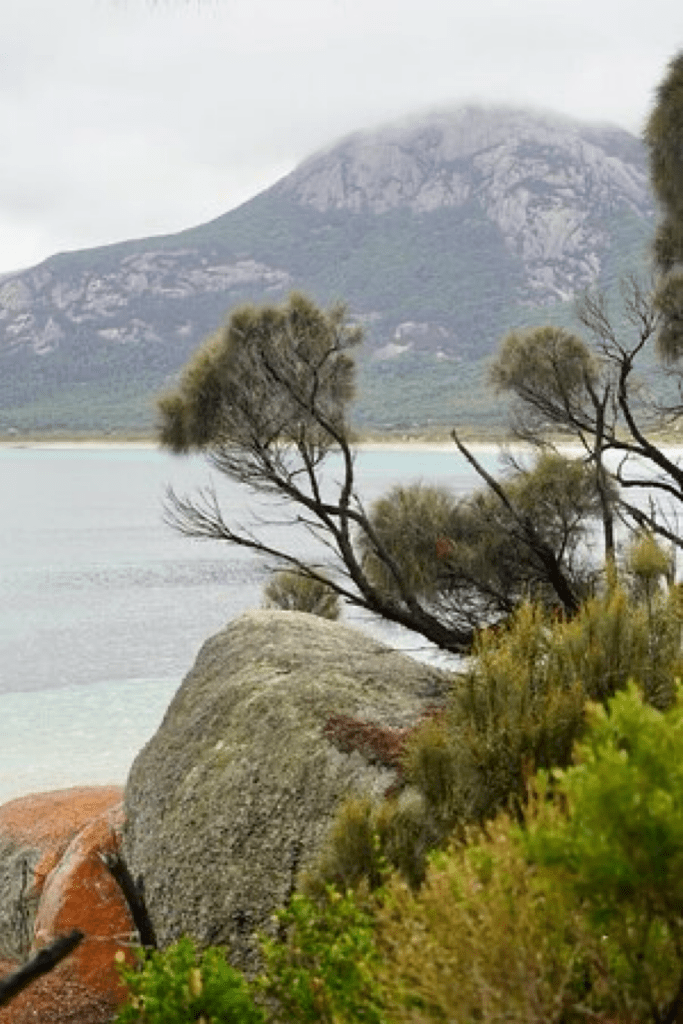
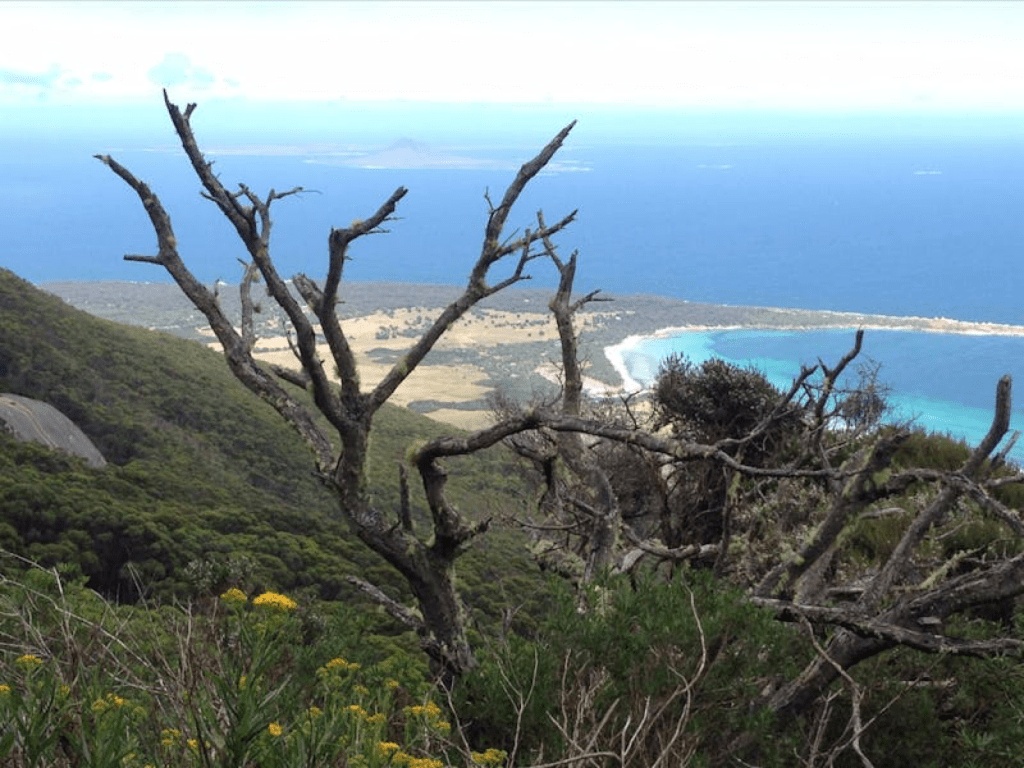
Geraldine hopes the solitude Flinders Island offers will allow her to reconnect with the man she loved, to savour a happy and fulfilling marriage, to be grateful for the memories and to grieve all that is lost. Geraldine quotes Martin Prechtel, the author of The Smell of Rain and Dust. He says,
‘Grief is praise because it is the natural way love honours what it misses.’
Geraldine discovers that grieving well requires focus, a letting go of everything that will delay, confuse, or distract. Flinders Island offers views of land, sea, and sky, ‘an unpeopled landscape,’ that draws her in, bringing peace and calm to her spirit. The beauty and quiet are like a sedative, relaxing her mind and unburdening her thoughts. She wants to keep it simple. She says,
‘I will walk and reflect, taking whatever solace nature cares to offer me. I will write down everything l can recall about Tony’s death and its aftermath. I will allow myself time and space to think about our marriage and to experience the emotions I have suppressed.’
Choosing to grieve is a sacred task, demanding honesty, humility, and generosity. It is an unravelling of life, an examination of the memories that surface and the written diaries and journals that remain. It provides a connection with our loved one, an appreciation of all that they brought to our life, and a realisation of all that has been lost. There is joy and sadness, gratitude and disappointment. Geraldine experiences feelings of sorrow and regret. She says,
‘I am sorry. Sorry I didn’t take better care of you. Sorry I wasn’t with you. Sorry I can’t be with you now.
I could have been with him that Monday. Could have flown down to DC for the long weekend, gone with him to see the old friends in Waterford, walked with him to breakfast, held him in my arms as he died.’
Solitude makes space for the person we have lost. It allows us to experience the full measure of our grief.

 Hope For Tomorrow
Thanks for this honest challenging article
I cannot agree more people fill the gaps if we don’t say.
look forward to your book
Get Outlook for iOShttps://aka.ms/o0ukef
LikeLike