New Release:
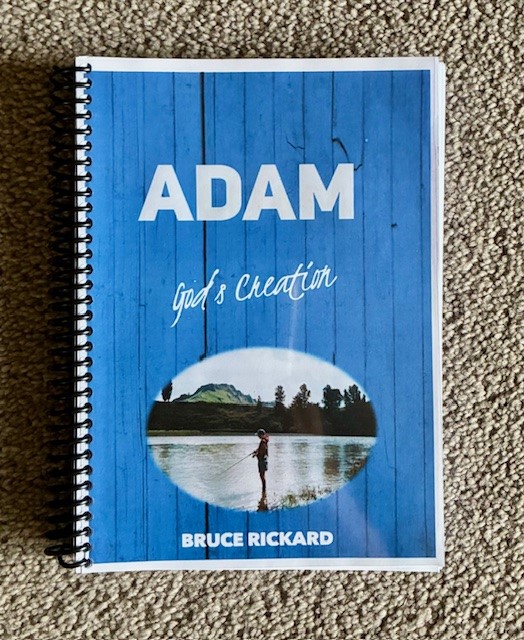
The book ‘Adam – God’s Creation’ is now available. If you want to access the manuscript, it can be found on the Resources page under Booklets, Articles, Presentations. The link is https://hopefortomorrow.info/resources/articles/ The book is in PDF format and is free to download.
The spiral bound A5 version is available for purchase. Indicate your interest in the comments section.
Notes on writing:
Motivation:
It starts with the desire to write. Writing is a discipline. Writing about a particular subject is writing with intent. Writing about ‘suicide’ will take you to places you would prefer not to go.
Writing is personal. It reveals our deepest thoughts, it explores what we value, who we love, why we believe. We write because we must. There is an obligation to honour, to set right, to challenge. There is an urgency to get it down, lest the moment pass and all is lost. There is a hope that it might bless, or encourage, or comfort, or inspire.
Seth Godin’s words were motivation enough. He says,
‘The book that will most change your life is the book you write.’
Title:
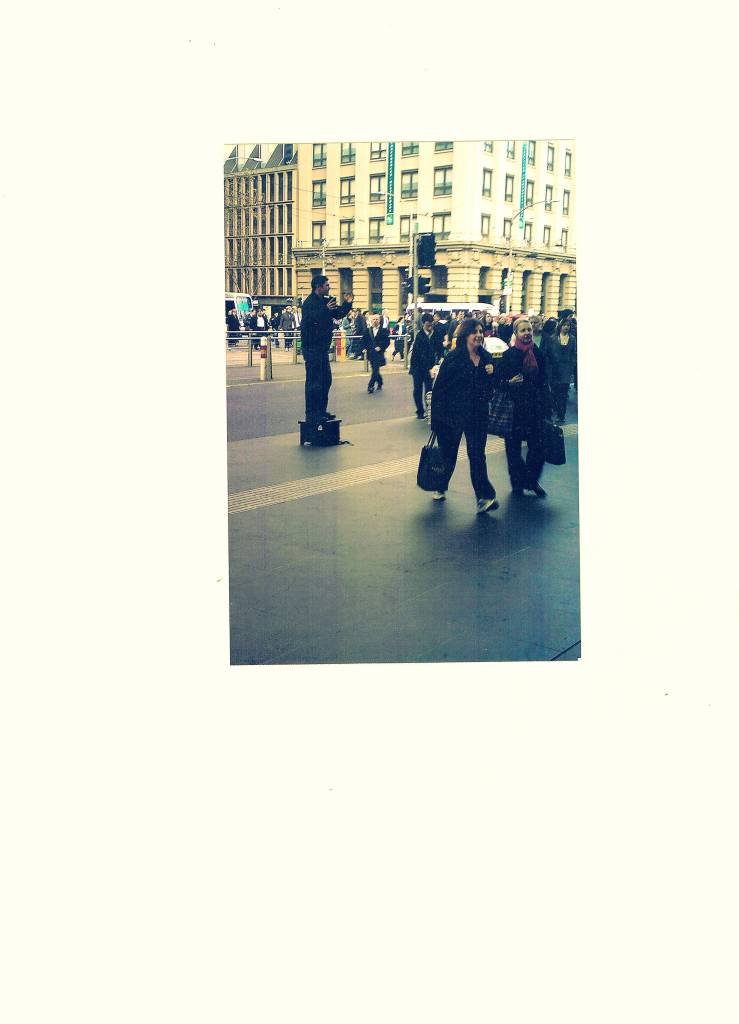
It helps to have a working title. At first, I was drawn to ‘Preacher Boy’. This was a name used on social media by those who had seen Adam preaching in public places. One of Adam’s favoured locations was outside the Southern Cross Railway Station in Melbourne. He had a stool that he stood on. It elevated him above the masses. On a visit to Bendigo, he preached in our shopping mall.
The title ‘Preacher Boy’ was catchy, but the difficulty I faced was the tone of Adam’s preaching. It came across judgmental with an overemphasis on the law. Adam believed that people needed to hear how they had failed God before they could find God, and experience his forgiveness. It was preaching driven by a formula – law precedes grace, laced with religious jargon.
I settled on ‘Adam: God’s Creation.’ To acknowledge our beginnings, to know that we were created in love, is to feel understood, accepted, and valued. We matter to God. What we do matters to God.
‘Adam is God’s creation, made in the image of God. He is a child of God – loved, nurtured, supported, and corrected, prepared for all eternity. God’s call on Adam’s life is unique, intentional, and beautiful. How Adam responded to God’s call is both inspiring and perplexing. Why Adam lost focus on what God intended for him is not easy to unravel, but there are lessons to be learnt.’
Structure:
Without a suitable structure our writing will appear haphazard, unconnected, random. I thought of having chapters, but they did not offer the flexibility I needed. I settled on five parts as a way of organising the text.
Part One covers the final weeks in Adam’s life, a cascade of events that gained momentum and challenged our ability to respond appropriately.
Part Two is biographical, a collection of memories that paint a picture of a life lived fully and purposefully.
Part Three is more technical, a summary of current thinking on suicide and what we can do to prevent it.
Part Four addresses the nature of grief, accepting the premise that no two people grieve the same way.
Part Five deals with the aftermath – How we put our lives back together; How we accommodate the loss of a loved one; How we honour the memory of those who are no longer with us.
Text:
I endeavoured to pare down the text, to say a lot with a little, to make every word count. A paragraph I wrote on ‘grief’ illustrates this point.
‘Grief is central to the new reality. Grief is multi layered. It engages the mind and the emotions. It immerses our whole being. Grief is never static. It ebbs and flows. Grief is constant. It does not diminish over time. Grief is not to be ignored.. It needs to be afforded a place of respect. Handled well, grief can enrich our lives.’
To de-clutter the text I made use of a Notes section. This allowed for background information, more detailed explanations, and biographical outlines of people I had referenced.
In acknowledging the significant changes in Adam’s life, I referenced ‘life transitions’ in the Notes section. It was the ‘letting go’ Adam found difficult.
‘A transition is an event that changes the course of your life. They can be expected – changing schools, or unexpected – the loss of a friend or loved one.
Humans value consistency and routine. Any significant change requires adjustment and may take a toll on our mental health. We may experience mixed emotions – anxiety, excitement, loss, hope.
Each time we transition, we have to let go of something.’
Part one of ‘Adam: God’s Creation’ covers the final weeks in Adam’s life. This was a disturbing time for all as we tried to understand what was happening to our son and how we might support him. To try and capture the sense of struggle, disappointment, despair, and fatigue, I have written the account in the present tense. It makes the telling more immediate and the shifting emotions more accessible. Here is an example:
‘Adam came to stay over Easter. We are renting a townhouse, close to the city centre. Adam is agitated and distressed. We try to understand his anguish. We try to untangle his confusion. We try to speak to his mental torment. We try to be positive, infusing our conversation with hope.’
Symbol:
During his intermediate years Adam developed a passion for fly-fishing. The Tukituki River became his favoured location. He says,
‘I have had many memorable experiences fishing the Tukituki River. Describing this magnificent river is hard because it changes around every bend. There are places where the river runs wide with weeping willows on one side and luscious grass banks on the other. The trout often rise under the willows taking dropping willow grubs.’
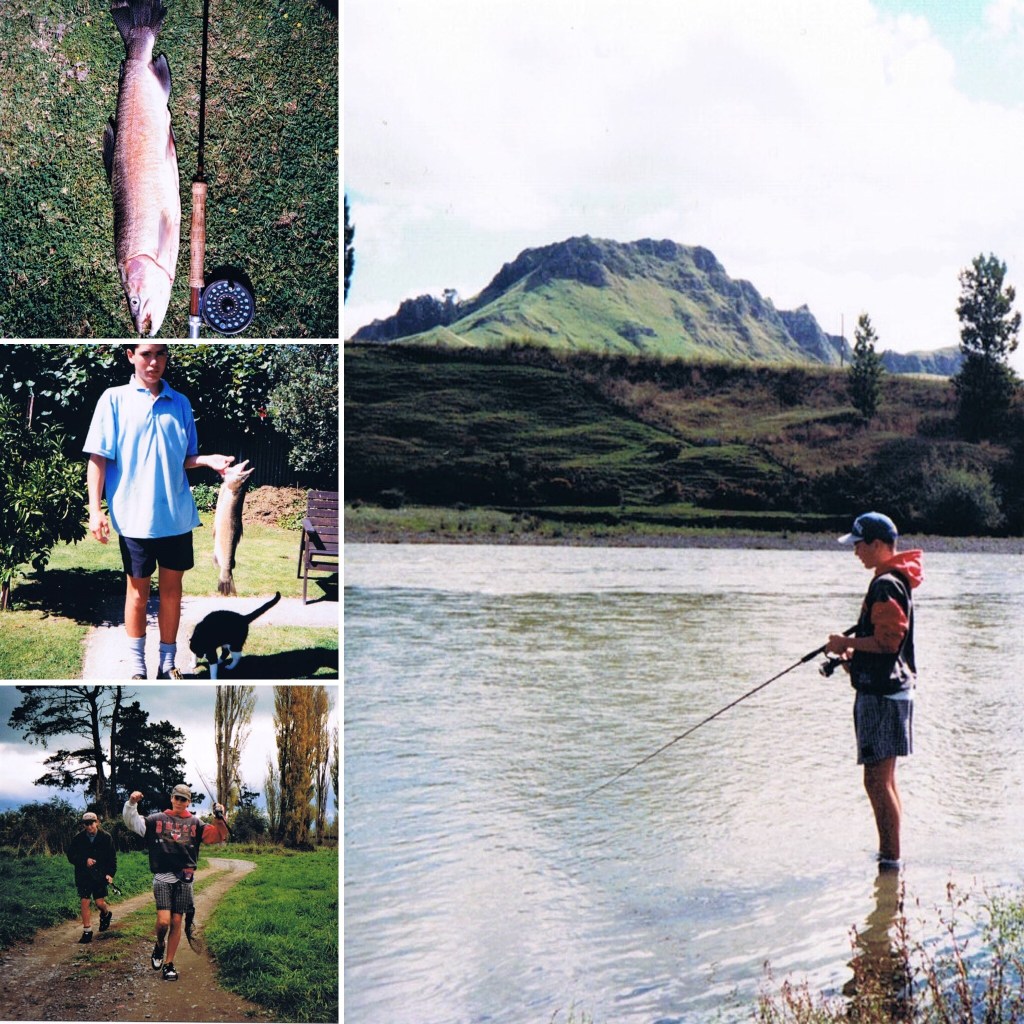
Adam accepted the challenges associated with fly-fishing – the knowledge, skill, concentration, patience, and determination needed to be successful. Adam respected the fish he was trying to catch. He would only keep one or two fish for the dinner table.
Adam adopted a catch and release policy. To this end he used barbless hooks as they reduce the risk of injuring the fish while fighting it. When Adam began making his own flies he used barbless hooks. Adam describes one of his fishing expeditions:
‘Fishing was awesome last week at the Tukituki River. I caught about ten and had twenty strikes. They were all around 2 pounds, but one I caught was about 2.5 which I kept and smoked.’
Throughout the book I used the symbol of a barbless fishing fly to signify hope. Being hooked is not a permanent state. Freedom is available. It is God who liberates us from the habits and desires that drag us down, releasing us to do good works in his name.

When the children were growing up, we had family fridge magnets. Adam’s fridge magnet had the verse,
‘For we are his workmanship, created in Christ Jesus for good works, which God prepared beforehand, that we should walk in them.’ Ephesians 2:10 English Standard Version (ESV)
Space:
When we come across blank spaces in our reading, pages that have little or no writing, we sigh and take a deep breath. We are relieved that the writer appreciates our limited capacity to absorb masses of detail. Blank spaces give the reader time to gather themselves and consider how they might respond to the information presented to them and how it might change the way they live.
Blank spaces allow us the time to think our own thoughts, to come to an understanding, to see a way forward.
A blank space in a book is like a musical rest. A musical rest is a moment of silence or a dramatic pause. The composer put it there for a reason. It might point to what has gone before or it might suggest a change in mood in the music. It is there to help the listener process the story that is unfolding.
Pauses in music, like blank spaces in a book, offer the possibility of a renewed perspective.
Addendum:
An addendum is a supplement to a book. The 101 Grief Quotes are my gift to you. They have been gleaned from the books I have been reading. They are the creative work of people with a lived experience of grief. Their words have the colour and texture of autumn leaves, that fall to the ground and blanket the path we are walking.
There is much discussion about artificial intelligence or AI. Let me remind you, AI knows nothing about grief. AI has never experienced loss. AI doesn’t have a heart or a soul. AI has never shed a tear. Any wisdom AI has acquired is stolen. Not a single word is derived from lived experience.
If it is comfort you seek, don’t look to AI. Look to God, the Creator God, who is the God of all comfort. He waits for us to look to him, for he is real and is ready to hold us in his arms and to wipe away every tear. The Bible says,

 Hope For Tomorrow