The Daily Inspirational Journal (Volume Three) will be available for download on the Resources Page – Booklets, Articles, Presentations, early in March. All downloads are free. Please provide due acknowledgement if using the product.



If you are familiar with the Daily Inspirational Journal, you will know that there are readings from a translation of the Bible, in this instance the English Standard Version (ESV), quotes from notable people, and extracts from books that I have been reading.
The daily readings take less than two minutes to complete. To gain added benefit you will have to invest more of your time. It will mean – engaging with the text, digging deeper, doing the research, posing questions, and providing the space to process what you are reading.
Here is an example of what to expect from the Daily Inspirational Journal Volume Three.
March
1
‘Tell the next generation that this is God, our God for ever and ever.’ Psalm 48:14 (ESV) (1)
‘The Lord spoke to Moses in the wilderness.’ Numbers 1:1 (ESV) (2)
‘I think we ought to own our grief. I put it like this. If Eric was worth loving when he was alive, then he is worth grieving over when dead. Why would he not be?’ Nicholas Wolterstorff (4)
‘Fame, the grand deluded, puts you at risk of ceasing to be yourself. It distorts not just how you appear to others, which doesn’t matter much, but how you might appear to yourself, which does.’ Unfinished Woman – Robyn Davidson (5)
‘My father doles out money as if it were peeling off his own skin. It is not just a humiliation; it is a kind of annihilation.’ Robyn Davidson
2
‘The kingdom of God will be taken away from you and given to a people producing its fruits.’ Matthew 21:43 (ESV)
‘Although they knew God, they did not honour him as God.’ Romans 1:21 (ESV) (3)
‘There is no life, no moment, that doesn’t have the big themes in it.’ George Saunders
‘The loneliness outside of marriage was hard to bear, but loneliness inside the marriage sounded and diminished her.’ Unfinished Woman – Robyn Davidson (6)
‘I noticed that, as I wrote, the memories were being subsumed into the book, such that I no longer had ready access to them. They seemed to blur and fade as the writing progressed, as if the book was cannibalising the reality it described.’ Robyn Davidson
3
‘They exchanged the truth about God for a lie.’ Romans 1:25 (ESV)
‘My mouth shall speak wisdom.’ Psalm 49:3 (ESV)
O God, early in the morning I cry to you
Help me to pray
And to concentrate my thoughts on you
I cannot do this alone
In me there is darkness, but with you there is light
I am lonely, but you do not leave me.
I am feeble in heart but with you is strength
I am restless, but with you is peace
In me is bitterness, but with you is patience
I do not understand your ways
But you know the way for me
Restore me to freedom
Help me to so live now
That I may answer before You and before me
Lord, whatever this day may bring
Your name be praised
Dietrich Bonhoeffer (7)
Reading the Bible:
Whenever we read the Bible, no matter how short the text, we need to remind ourselves that it is God’s book. He inspired the writers, of which there were many, to record what he wanted communicated.
There are three main themes in the Bible. Firstly, it reveals who God is, his nature and character. Secondly, it explains the how and the why of creation and the forces that are at work in the world. Thirdly, it makes known God’s plan for all humanity, the heavens and the earth.
The quote from George Saunders (March 2) speaks to the importance of being actively present, fully alive, genuinely attentive. He says,
‘There is no life, no moment, that doesn’t have the big themes in it.’
When you read from the Daily Inspirational Journal look for the big themes, write them down, consider your relationship to them, how they affect your life.
(1) Psalm 48:14 says, ‘Tell the next generation that this is God, our God for ever and ever. (March 1)
‘Eternity’ is the big theme of this verse. God is eternal. He is for ever and ever. God was before time, his existence a sure thing, and he is unchangeable. This is good news, bringing hope and purpose to succeeding generations.
Questions: How do you relate to the concept of eternity? Does it fill you with optimism or dread? Can you imagine a life without end?
(2) Numbers 1:1 says, ‘The Lord spoke to Moses in the wilderness.’ (March 1)
‘Relationship’ is the big theme of this verse. When God created man and woman he desired relationship, to know and be known. It is God who searches for us. His love is compelling, seeking us out.
God found Moses in the wilderness. ‘Wilderness’ is an image that speaks of survival, solitude, and silence. It is an environment devoid of distraction. Wilderness is also a metaphor for when our life has been stripped bare, when we have nothing, when we feel nothing, when hope is gone. It is in those moments of emptiness and despair that God reveals himself to us.
Questions: Are you aware that God wants a relationship with you, that it is love that motivates him to seek you out? If we want to engage with God, we need to distance ourselves from the distractions of life, to remove ourselves from the constant noise, to be expectant. How successful are you at stepping away from all the noise and finding a quiet place?
If we are to know God, to be in relationship with him, we must honour him in all that we do. Romans 1:21 bears this out. ‘Although they knew God, they did not honour him as God.’ (March 2)
‘Honour’ is the big theme of this verse. To honour God is to acknowledge that he is deserving of our love and commitment for he has made it possible for us to experience fullness of life.
Questions: Who do you honour in your life? How does that show itself? Do you think it is possible to honour something or someone you know nothing about?
Notable Persons and/or Authors:
To fully understand the importance of what someone has written we need to be familiar with their background, their life experience, the strategic events that have shaped who they are.
Nicholas Wolterstorff:
The big theme – Grief
Nicholas Wolterstorff is among the most prominent Christian philosophers of the 20th century. He has written numerous books including ‘The God We Worship,’ ‘Justice in Love,’ and ‘The Mighty and the Almighty.’
In Lament for a Son he writes not as a scholar but as a loving father grieving the loss of his son. On a sunny Sunday afternoon Wolterstorff received a telephone call informing him that his 25-year-old son Eric had died in a mountain climbing accident.
(4) ‘I think we ought to own our grief. I put it like this. If Eric was worth loving when he was alive, then he is worth grieving over when dead. Why would he not be?’
If you have experienced loss, you will know what it is to grieve. Wolterstorff lost his son in a climbing accident. It was a tragedy. When someone we love dies, we don’t stop loving them. They remain a part of our life even if they are not physically present. Some people feel a need to hide their grief. Wolterstorff suggests that we need to own our grief, to live with our grief, to allow other people access to our grief.
Robyn Davidson:
The big themes – Fame; Loneliness
Robyn Davidson is an Australian writer best known for her 1980 book Tracks. At the age of 27, Robyn Davidson walked three thousand kilometres alone across the Australian desert, with a dog and four camels. Tracks brought her international success and recognition. She is well placed to talk about the perils of fame.
(5) ‘Fame, the grand deluded, puts you at risk of ceasing to be yourself. It distorts not just how you appear to others, which doesn’t matter much, but how you might appear to yourself, which does.’
In her book Unfinished Woman Davidson delves into her nomadic life, revisiting the long-avoided country of her childhood and her mother’s tragic suicide in 1961. When the family lived at Malaba, her mother began to suffer from severe clinical depression. Davidson writes about loneliness within a marriage and how it diminishes a person. She says this about her mother:
(6) ‘The loneliness outside of marriage was hard to bear, but loneliness inside the marriage sounded and diminished her.’
Dietrich Bonhoeffer:
The big themes – Prayer; Dependence on God
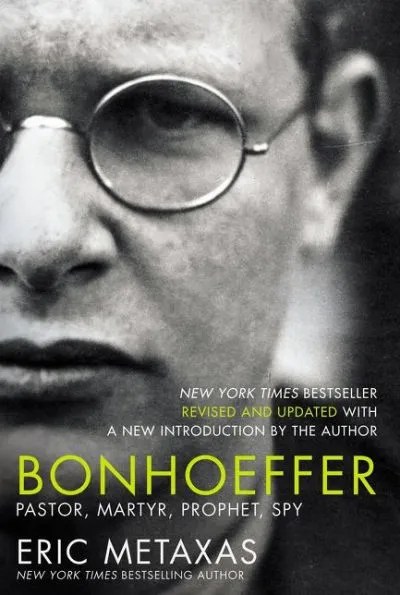
Dietrich Bonhoeffer was a German pastor and theologian known for his opposition to National Socialism. Bonhoeffer remained faithful to the principles of his belief in God despite the consequences. He was executed by the Nazis just days before the end of WWII for his participation in a plot to assassinate Hitler. He is regarded by many as a 20th century martyr.
His Morning Prayer (7) demonstrates his love for God and his dependence on God to be everything that he isn’t.
O God, early in the morning I cry to you
Help me to pray
And to concentrate my thoughts on you
I cannot do this alone
In me there is darkness, but with you there is light
I am lonely, but you do not leave me.
I am feeble in heart but with you is strength
I am restless, but with you is peace
In me is bitterness, but with you is patience
I do not understand your ways
But you know the way for me
Restore me to freedom
Help me to so live now
That I may answer before You and before me
Lord, whatever this day may bring
Your name be praised
Dietrich Bonhoeffer (7)
Questions: Is prayer a regular part of your life? Do you recognise your dependence on God? When we praise God, we are expressing our thanks and affirming our faith and trust in him.

 Hope For Tomorrow
Hi Bruce,
This looks like an amazing resource. It must have taken a long time to compile. Thank you.
Tessa
>
LikeLike