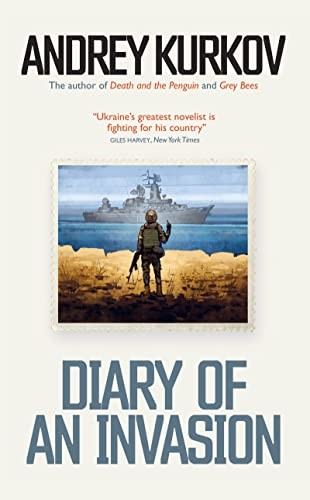
In the preface of his book ‘Diary of an Invasion’, author Andrey Kurkov writes,
‘This diary consists firstly of texts that I wrote in the two months before the onset of the war, followed by my wartime notes and essays. It is both a private diary and my personal history of this war… This is not only a chronicle of Russian aggression in Ukraine, but a chronicle of how the war imposed by Russia – and Russia’s attempt to destroy Ukraine as an independent state – have contributed to the strengthening of Ukrainian national identity.’
The Bible teaches that during ‘the last days’ the conflict between the forces of darkness and the forces of light will intensify and that many who identify with the latter will fall away.
There are parallels between ‘the invasion of Ukraine’ and ‘the church at the end of the age.’ The invasion of Ukraine teaches us about ‘the god of this world,’ the enemy who wants to rob us of our freedom and challenge our right to be. The war also teaches us how to be an ‘overcomer,’ a people united, one faith, one hope.
Loyalty:
Loyalty is a word that has many shades of meaning. It covers such words as adherence, allegiance, and devotion, which imply a sense of duty or attachment to something or someone.
The Russian Orthodox Church is loyal to the Kremlin. Unlike many Christian leaders across the denominational landscape, Patriarch Kirill is one of the most vocal defenders of Vladimir Putin’s war in Ukraine. He has described the conflict as a ‘holy war’ and said that any young man who died in action would be absolved of their sins. The war is essential to ‘defending the unified spiritual space of Holy Russia,’ he claimed.
The Russian Orthodox Church and its Patriarch have aligned themselves with Putin’s war rhetoric, portraying Russia as a defender of traditional Christian values against a backdrop of Western liberalism and moral relativism.
The Bible warns the Church of forming unholy alliances, looking to political powers to further their interests.
History demonstrates that ‘the object of our loyalty shapes our identity.’ The Russian Orthodox Church has taken on the character traits of President Putin’s leadership – ruthless and uncaring and therefore is no longer fit to serve God and to speak His word.
Andrey Kurkov illustrates the tensions that exist between the Russian Orthodox Church and the Ukrainian Orthodox Church. He says,
‘The Moscow Patriarchate (patriarchate is an ecclesiological term in Christianity, referring to the office and jurisdiction of a patriarch), the Russian Orthodox Church, has more than twelve thousand parishes in Ukraine. Services are conducted in Russian. Prayers are offered for the patriarch Kirill, who is an outspoken supporter of the war… Further, since 2014, priests of the Moscow Patriarchate have refused to bury Ukrainian soldiers killed in the Donbas, an area that has experienced intense fighting.’
President Zelensky has acted to ensure the Ukrainian military receives appropriate spiritual support. Andrey Kurkov writes,
‘In 2021 Zelensky signed ‘The Law on Military Chaplains’. Since then, for the first time, priests and worship centres have appeared in the Ukrainian army. Zelensky has ruled that priests of the Moscow Patriarchate be not accepted as chaplains.’
Kurkov makes this observation about those called to serve their country. He says,
‘The majority of recruits start their military service as agnostics or atheists. But many of them return from the war as believers and become parishioners of the Ukrainian Orthodox Church, the church independent of Moscow, or of the Ukrainian Greek Catholic Church, which was banned in Soviet times but has since revived.’
The Bible teaches that ‘in the last days the love of many will grow cold.’ (Matthew 24:10-14) A time is fast approaching when it will be costly to love God and to keep His word. Many governments see the Church as outdated and irrelevant, passing laws that are contrary to Christian values. Christians are finding their freedoms are being curtailed. Their right to pray, to worship, and to declare the truth as revealed in God’s word are being challenged.
There are people in the Church who give the appearance of being true believers, but their hearts and minds are not open or responsive to God. In the words of the apostle Paul to Timothy, ‘In the last days people will hold to an outward form of godliness but deny its power.’ (2 Timothy 3:6) In their minds, God is an idea and their loyalty to Him an illusion.
During the last days our faith in God will be severely tested. God demands that our loyalty to Him take precedence over all else, including family and country. Our loyalty to the Almighty requires an avoidance of unhealthy alliances and a determination not to compromise. To be an overcomer we must put our trust in God alone.
Truth:
Since his full-scale military attack on Ukraine began on February 24, Russian dictator Vladimir Putin has deliberately and forcefully spread propaganda about the war and the Ukrainian state and people.
According to a BBC report, when President Putin ordered up to 200,000 soldiers into Ukraine his aim was to overthrow its pro-Western government and return Ukraine to Russia’s sphere of influence.
To justify the invasion, Putin declared on TV that his goal was to ‘demilitarise and denazify’ Ukraine. Repeated statements were made, labelling Ukraine a Nazi state and calling on Ukraine’s military to ‘take power into your own hands’ and target the ‘gangs of drug addicts and neo-Nazis’ running the government.
Putin also expressed a commitment to protect Russian speakers, particularly in the eastern Donbas region where rebel states exist.
Andrey Kurkov questions the misleading and misguided commentary from the Russian leader, his assertion that fascists are sitting in the Ukrainian government and that Ukraine is an anti-Semitic and Russo-phobic state where Jews and Russians living in Ukraine are afraid to go out on the streets. He says,
‘An ‘anti-Semitic and Russo-phobic’ state is hardly likely to elect a Russian-speaking Jew from the south of Ukraine as its president, especially not with seventy-three per cent of the vote, as was the case with Volodymyr Zelensky. It is ridiculous to talk about his hatred of Russian-speakers and the anti-Semitism of Ukraine. Russia, however, continues with this narrative, just as it continues to bomb the cities populated mostly by Russian-speaking Ukrainians like Kharkiv, Mariupol, and Kherson.’
By destroying the state of Ukraine, Putin’s objective is to remove anything that represents Ukrainian culture and identity. His targeted attacks on museums and publishing houses are but one example. In the newly separatist ‘republics’ where Russia is in the ascendency, schools are instructed to teach in Russian and textbooks are rewritten, describing Ukraine as a fascist state. Ukrainian published books are removed from libraries, street names are changed, and any public display of national sentiment toward Ukraine is suppressed. Dead Ukrainian soldiers have been found to have had their nationalistic tattoos removed from their bodies.

We are currently witnessing an unprecedented attack on truth. It has caused confusion and uncertainty across the globe, resulting in an exponential increase in depression and anxiety and maladaptive behaviours. Satan is the driver of this dis-ease, and his influence will grow at the end of the age.
The focus of Satan’s attack will be to destroy the credibility of the Church. His strategy will be to target our traditional beliefs and to turn believers against each other, driving a wedge, causing division and disillusionment. Accusations and insinuations will further undermine the effectiveness of the Church and its witness.
The growth in hostility toward the Church is evident today and will only intensify. Public worship will be scrutinised and modified in keeping with societal attitudes and demands. Church leaders will encounter serious opposition and will be forced to operate under set guidelines or face sanctions. The Bible will be censured and religious texts removed from libraries and educational institutions. Praying in public will be banned and the wearing of Christian apparel or jewellery or tattoos promoting Christian belief will be prohibited. There will be loud voices denying the existence of God and denouncing faith in Him.
If God’s people are to survive this onslaught they will need to know their authority in Christ, to believe in the power of God’s word, to be sensitive to the leading of the Holy Spirit, to pray unceasingly for their leaders, to value the love and commitment of their brothers and sisters in the faith, and to daily equip themselves for battle by putting on the whole armour of God. (Ephesians 6:13)
Our most effective offensive weapon is ‘the sword of the Spirit’, which is the word of God. When we align ourselves with the truth, when we believe what God has said, when we appropriate what God has promised, when we declare His word with authority, we will be able to push back the darkness and defeat the enemy.
Calling:
When Russia invaded Ukraine, it caused irreparable damage to their way of life. War is disruptive and destabilising. Nothing is the same. 40 million Ukrainians were faced with a choice – ‘Do we stay, or do we go?’ Many Ukrainians looked to relocate, some in safer areas of Ukraine, others in countries sympathetic to their plight. As of February 2025, 6.9 million refugees have crossed into neighbouring countries.
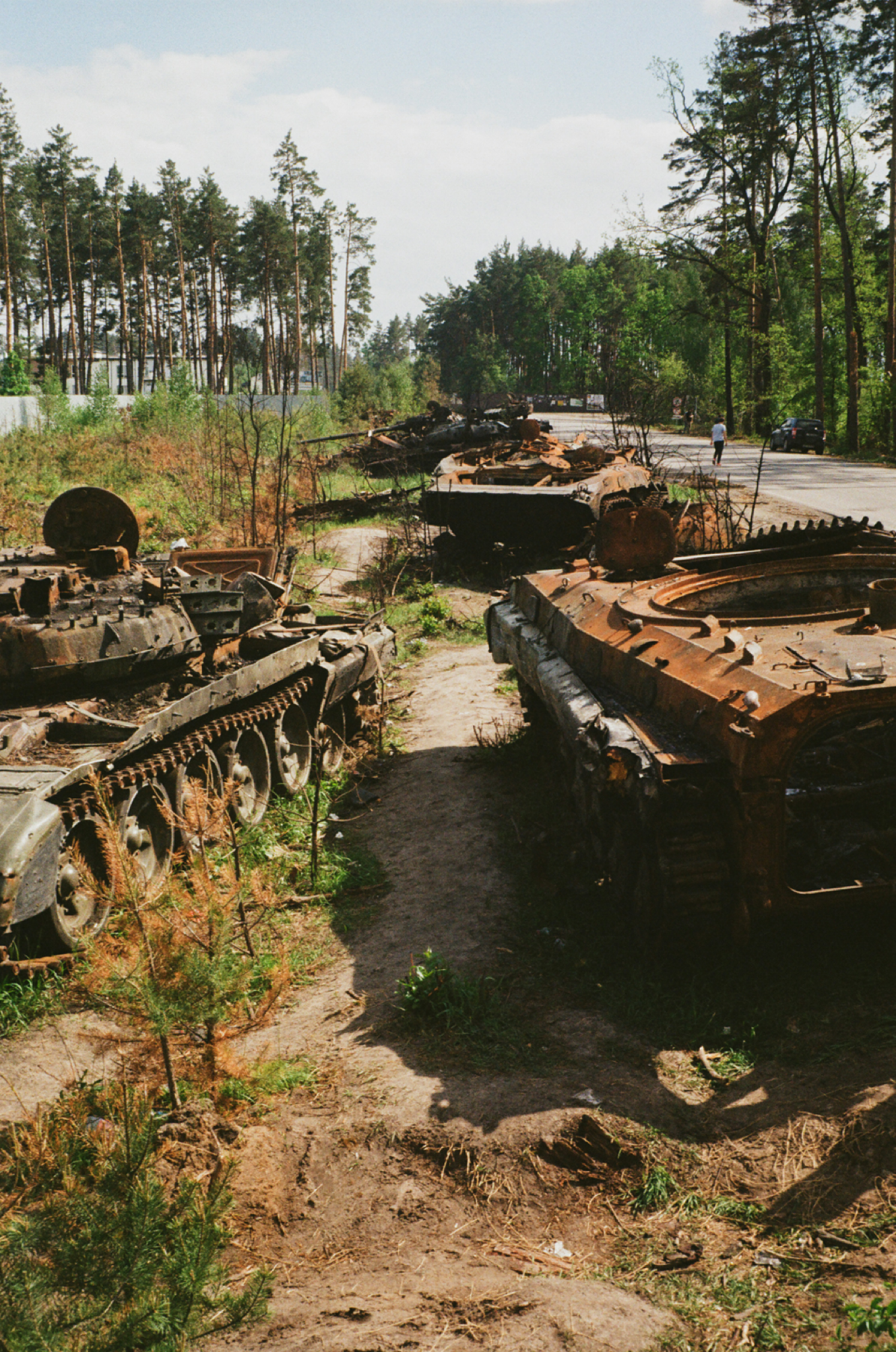
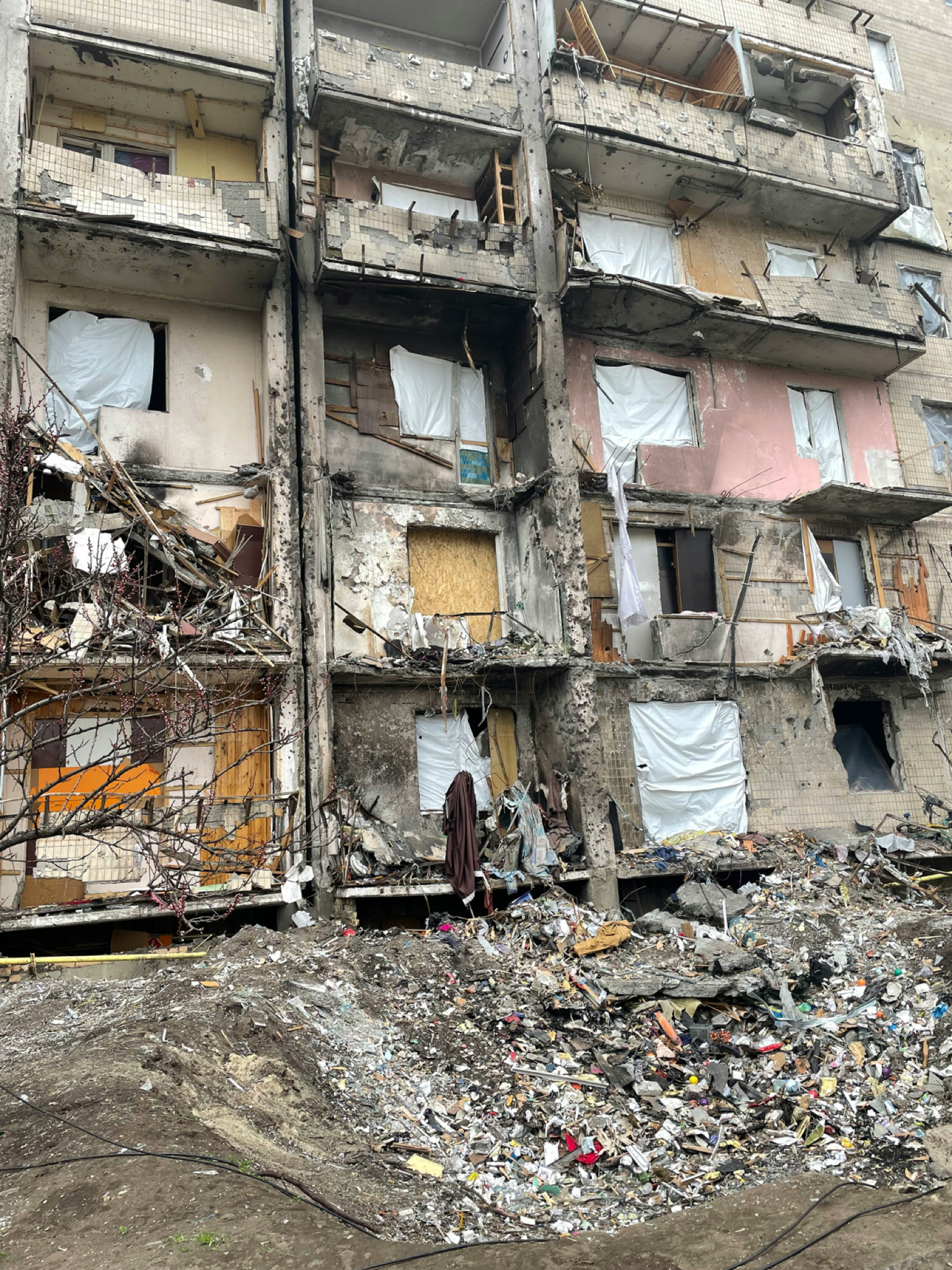
Not everyone wants to leave their homes or livelihoods. Farmers are unwilling to walk off their land. Their farms are irreplaceable. They continue to follow the seasons, turning the soil, planting their crops, and reaping the harvest despite the danger to their lives.
Andrey Kurkov says,
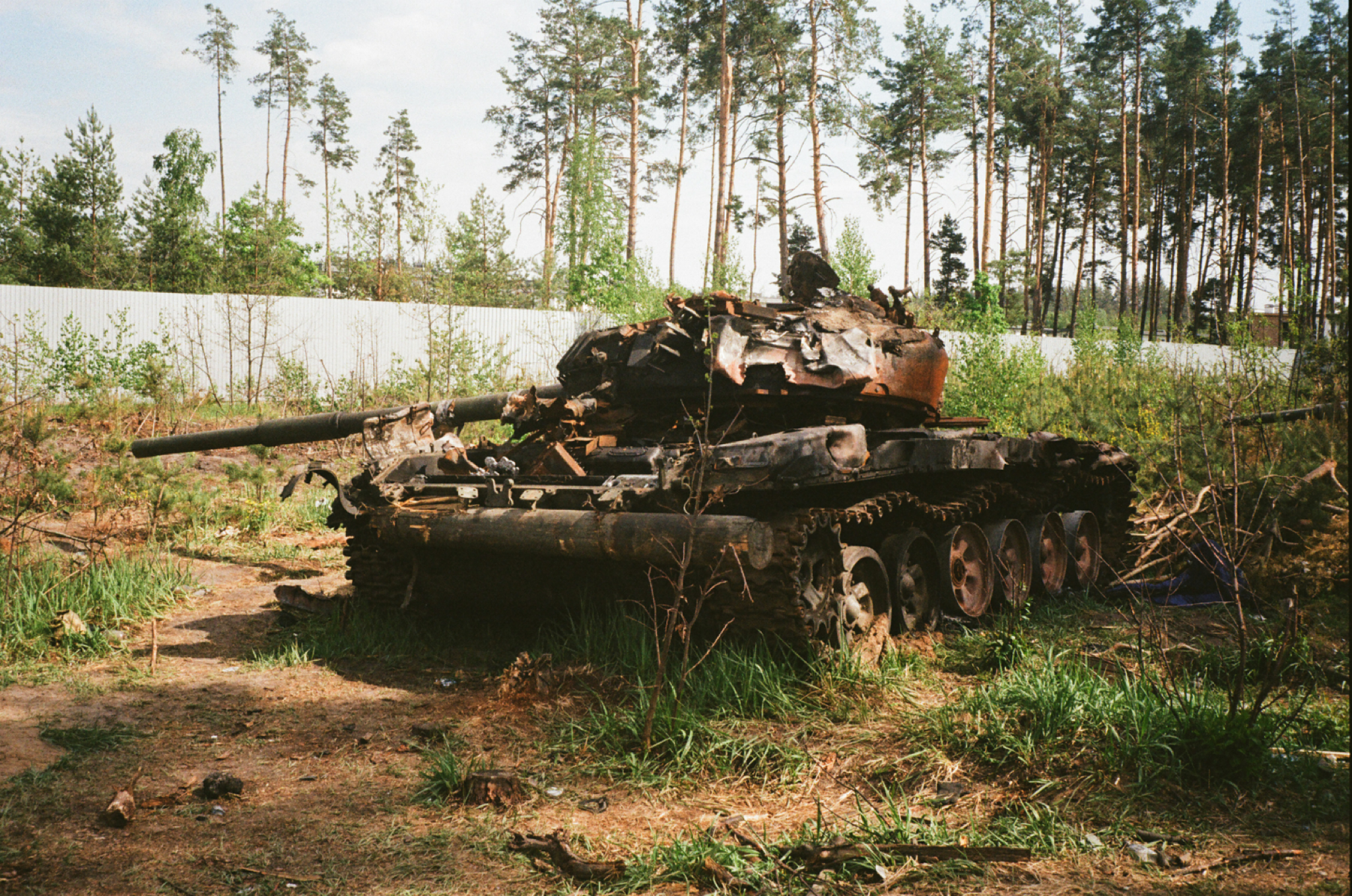
‘Ukraine is a land of bread and wheat. In many regions, the soil of the wheat fields is full of metal – fragments of shells, pieces of blown-up tanks and cars, the remains of downed planes and helicopters – an assortment of military hardware and unexploded shells.
Farmers run the risk of being blown-up in their own fields during the sowing season or harvest time.’
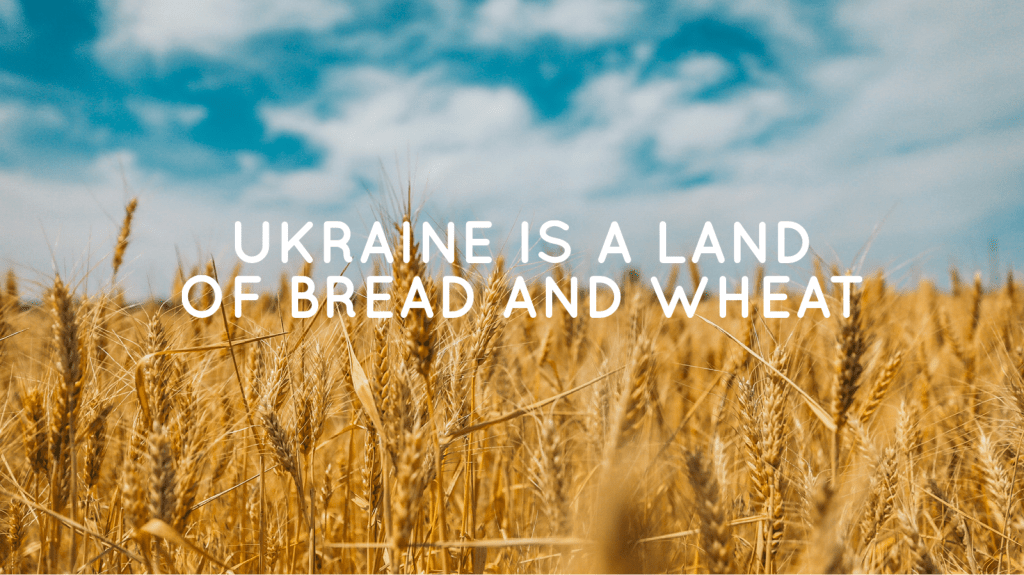
Farmers embrace their calling. They are people of the land. They accept that remaining true to their life’s work may cost them their lives. They are to be celebrated for their courage.
Elderly people are also reluctant to leave their homes in isolated towns and villages. They are accepting of their fate, knowing that Russian control will be an unwanted disruption to their life.
Andrey Kurkov tells the story of a remarkable 85-year-old grandmother who lives in Horenka, a village that can be reached by tram from the centre of Kyiv. He writes,
‘She cooks paskas – a special sweet bread eaten at Easter – in a badly damaged stove which, until recently, she used both to cook her food and to heat her house. The house was destroyed by Russian artillery, but the stove, built into the inner wall of the building, survived almost intact. You can still cook food in it, but there are no walls or windows around it and no roof above. This grandmother, who now lives in the ruins of her home, has baked almost a dozen Easter paskas in this oven. No doubt, once they were done, she then took them along to her church so they could be blessed for Easter. That is, if the church itself survived the Russian bombing.’
The trauma of war is felt by writers and journalists who are skilled in observing and recording. Any affection they may have felt for Russia and its people is taken over by anger and bitterness.
The book industry is doing what it can to survive. Publishers have no new books to publish, and paper is in short supply. Many bookshops have closed their doors. With so many residents displaced there is little appetite for buying books. As Andrey Kurkov says,
‘The war has pushed books and literature in general into the background.’
Writers now write newspaper columns, broadcast radio programmes and participate in informational projects. Those who have stayed in Kyiv write from there about life during the war. Andrey Kurkov says,
‘There can be no normal life for my generation now. Every war leaves a deep wound in the soul of a person… You cannot get away from the war. It has become a chronic, incurable disease. Writers carry the war inside themselves.’
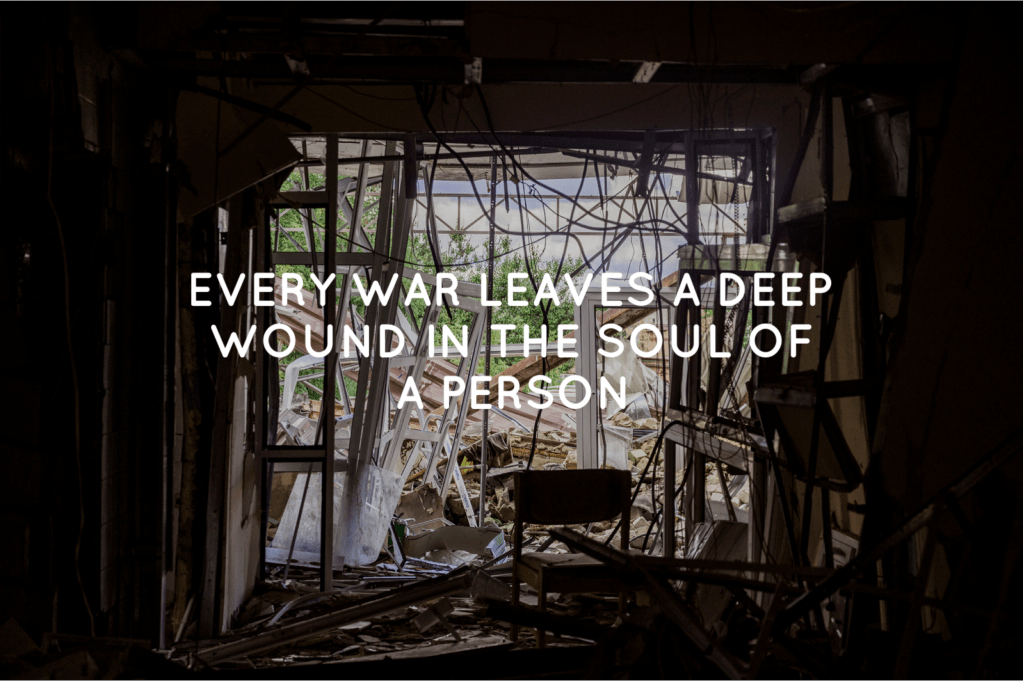
A farmer ploughs, a grandmother bakes, a writer records the struggle to live in a time of war, people committed to their calling despite everything that would cause them to fear and detract them from their purpose.
The Church at the end of the age needs to guard against fear – fear that we will lose faith, fear that we will be found wanting, fear that we will fail our God. God reminds us, ‘Fear not, I am with you.’ (Genesis 26:24) God says to us, ‘I have not given you a spirit of fear, but of power and love and self-control.’ (2 Timothy 1:7)
God is calling his Church to be strong and courageous, to not fear the enemy, but to stand firm, immovable, unshakable.
It is important that every believer know their calling, live their calling, be energised by their calling. God has called us. The teacher teaches, the preacher preaches, the prophet speaks the word of the Lord – a word or warning, a word of encouragement, a life-changing word, the evangelist declares the good news of the gospel of peace. Be true to your calling.
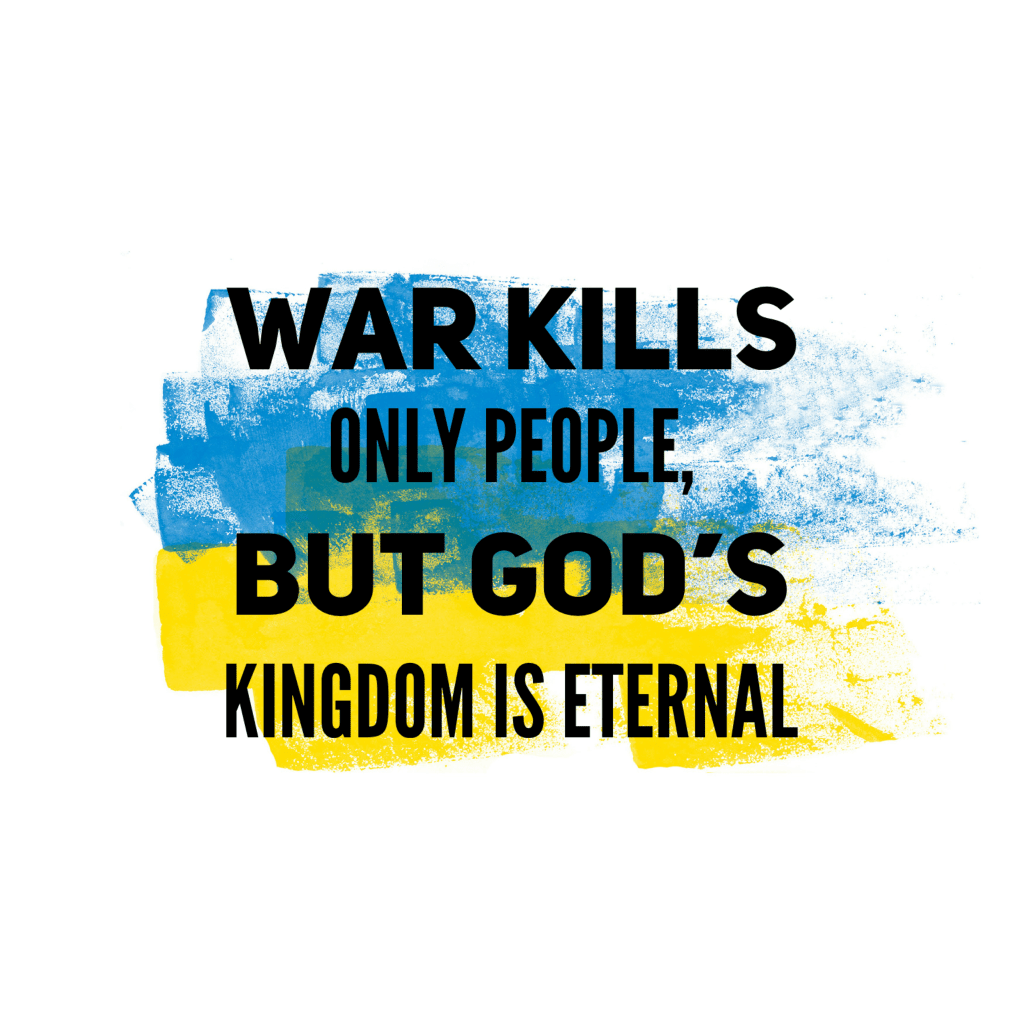
War kills only people, but God’s kingdom is eternal.

 Hope For Tomorrow