What it takes to survive:
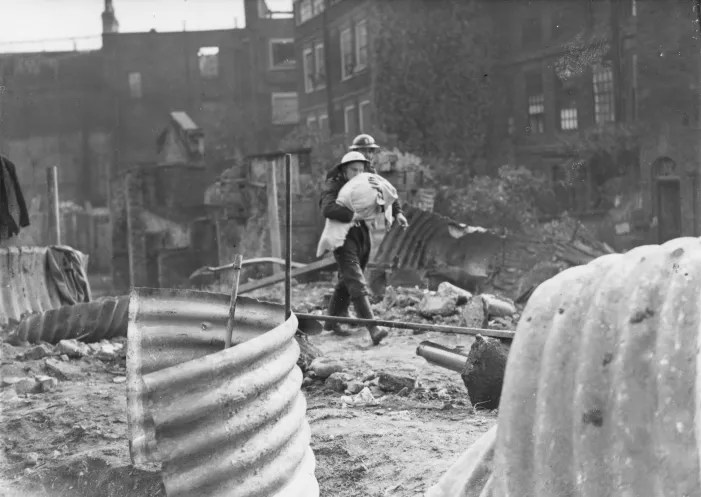
Writers of historical fiction engage in prolonged and rigorous research to understand the specific details that define a time, visualising the world their characters inhabit. In his newest novel, Strangers in Time, David Baldacci plunges the reader into wartime London, midway through 1944, depicting the rubble-strewn landscapes of a city that is bent but not beaten.
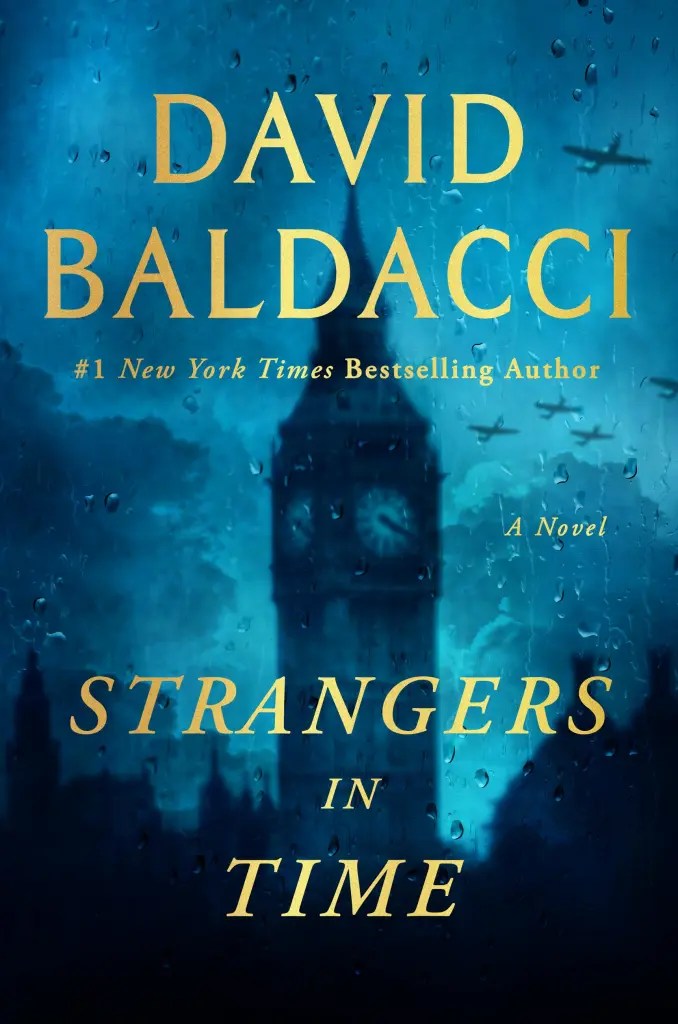
David Baldacci is a self-confessed anglophile, whose father, a naval officer, was based in London, and experienced firsthand the devastation of war. He witnessed the courage and resilience of a people who would not lie down, who chose to live in the shadow of death.
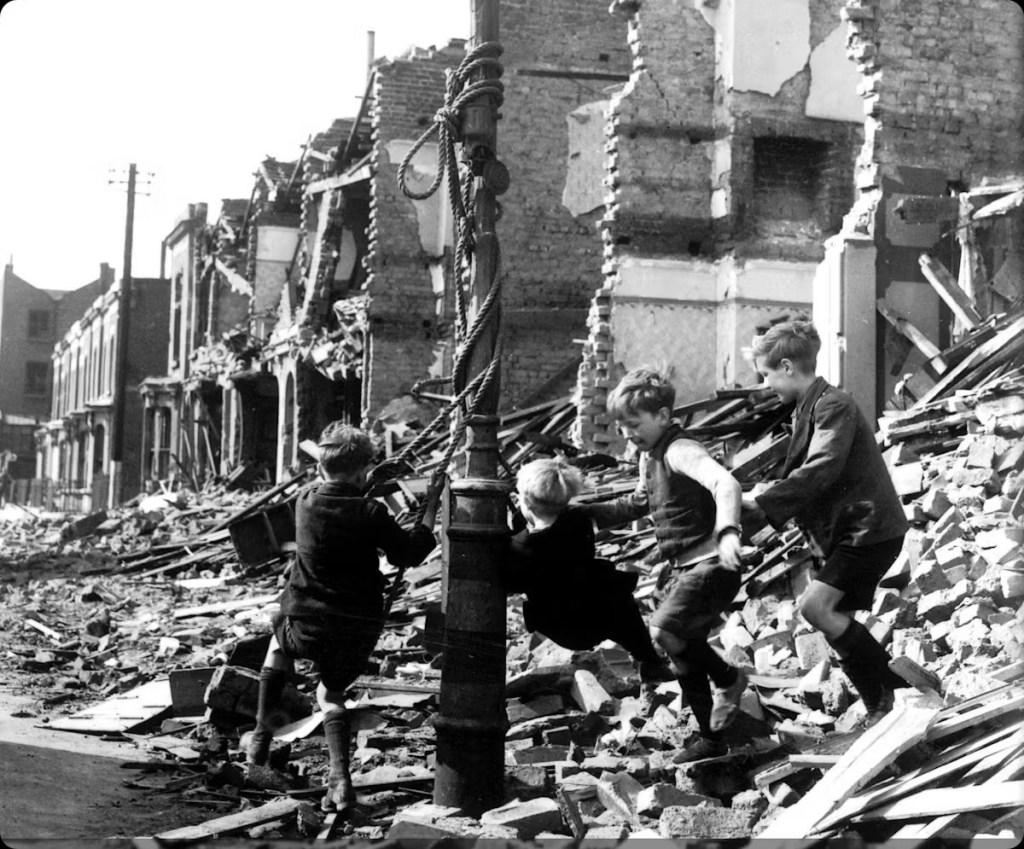
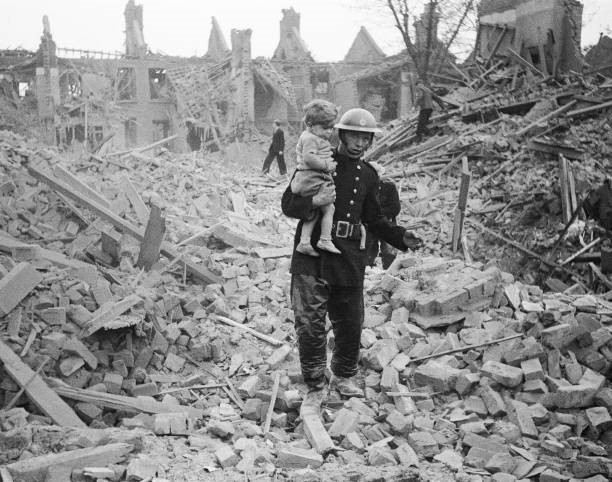

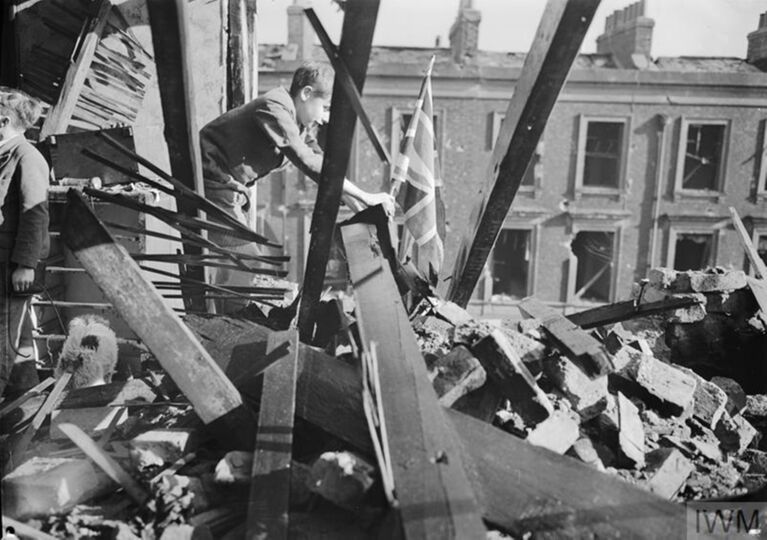
Baldacci weaves a story of fear, and loss, and moral dilemmas, and acts of courage and betrayal.
War doesn’t discriminate. You may be young or old, rich or poor. War imposes itself, robbing us of the life we took for granted. No one escapes the perils of war.
Charlie Matters is a resourceful young man, not yet fourteen years old, who has been orphaned by the war. His father died at Dunkirk while his mother was killed in an air-raid. Her death hit Charlie hard.
Every boy needs a devoted mother. She went with Charlie on his first day of school, determined to see that he arrived safely. While making her way home, the sound of a bomb caused her to turn and go back. The blast killed her and injured Charlie. We read,
‘When the late sirens had finally started, his mother had ignored her personal safety and rushed to the school to retrieve her son. Right before she got there, a bomb had landed barely ten feet from her.
And then she, like the building, had ceased to exist. Jane Matters had been transformed into a mere memory, simply because she had wanted her son to go to a proper school and had walked him there on his first day because she loved him so.’
Love is costly. It may ask us to make the ultimate sacrifice. Jane Matters gave her life for Charlie and in doing so gave her son the gift that would sustain him throughout his life – love. Charlie carried his mother’s love in his heart.
Not all of us are blessed to have a mother like Jane Matters. But there is a God who is the author of self-sacrificing love. He willing gave his son for us. When we allow God’s love to invade us, it sustains us when we are feeling weak and vulnerable; it strengthens us when we meet situations that demand courage and perseverance; it births in us a sensitivity to the needs of others and inspires empathy. It was Plato who said,
‘The highest form of knowledge is empathy for it requires us to suspend our eyes and live in another’s world.’
Surviving in times of conflict requires that we know we are loved; that we matter.
Charlie understood that there are no guarantees in life, that the next bomb might have his name on it. Death was everywhere. But everyday Charlie accepted the challenge. He would not surrender to despair. He roamed the streets, scavenging what he could, sifting through the rubble, looking for anything he might be able to sell or repurpose. He did it for his Gran, the only family he had left. Charlie had a sense of right and wrong but sometimes survival required a bending of the rules. On occasions he stole what he needed but only from those he thought could afford it.
Molly Wakefield also benefitted from a mother’s love. Prior to the war, Molly lived a comfortable existence. She had a nanny, Mrs. Pride. Her parents were well off. They lived in the suburb of Chelsea. Molly had a special relationship with her mother. She says,
‘My mother was the closest friend I had. But she loved me perhaps too much.’
With the onset of war, Molly is evacuated to the countryside via Operation Pied Piper. Many thousands of children were removed from the cities to ensure their safety. She stays with the Coopers in Leiston, Suffolk, for five years. During the latter part of her exile, Molly gains medical experience helping at a local hospital treating wounded soldiers. She finds she has the temperament for nursing.
Molly is fifteen when she returns to London, a city ravaged by war. She faces a devastating reality: neither of her parents are at home. Mrs Pride, her old nanny, is living in the house. She is welcoming but reserved, reluctant to share what she knows. Eventually, the truth comes out. Her beautiful mother, Eloise Mary Wakefield is in a psychiatric hospital, the Beneficial Institute, in Cornwall. She was institutionalised after a traumatic assault in a tube station during a bombing, a crime the police were unwilling to investigate. Her father, Herbert James Wakefield is missing. Mystery surrounds his whereabouts. The authorities want him for questioning.
The consequences of sexual trauma are substantial. Molly discovers the full extent of her mother’s loss – social connection, sexual intimacy, self confidence, positive thoughts, appropriate behaviour – not to mention the damage done to her mental wellbeing. We read,
‘That sort of mental trauma (being attacked and sexually abused by three British soldiers) is like shell shock in a way. It does things to your mind. Terrible things. You can never seem to dig your way out of the hole the horrible event has placed you in. Your trust in humankind is also shattered. You see the world solely through the prism of that one awful experience. It becomes your obsession and impacts all aspects of your life. It is as though you can never see the good in people ever again.’
Deep emotional wounds can only be healed by the love of God. God’s love seeks out our brokenness. It searches every crevice of sorrow and despair, bringing healing and wholeness.

Molly could not save her mother. She didn’t have the knowledge to resurrect a life. When she visited the sanatorium, she found her mother emptied of life, existing in a world of terror, disposed to moments of rage. Molly felt shaken by her mother’s appearance and the severity of the treatment she received even though it was thought to be helpful. The clinicians were not confident Molly’ mother would recover.
Molly found the situation confronting but knew there weren’t any alternatives. She resolved that after the war she would study psychiatry and equip herself to do better for the traumatised and those who struggled with a mental illness.
Ignatius Oliver is the owner of The Book Keep, a small, cluttered bookshop with its cracked windows and cluttered shelves. It is a haven for book lovers and a place of solace for those seeking a quite space in a noisy, stressful world. Oliver also works part-time as an air warden. It is dangerous work, encouraging people to make use of the bomb shelters and checking the rubble after a bomb raid for dead persons or people who may be injured.
Oliver is mourning the recent loss of his wife, Imogen. She was the original proprietress of The Book Keep. Attractive, intelligent, a competent writer, but disenchanted with the war. She imagined that if she were to leak sensitive information to the German undercover agents, she might hasten the end of the conflict and save lives. She was sadly mistaken. When Oliver nearly died in a bombing raid, she realised the Nazi Machine was intent on domination at any cost.
Imogen was a bibliophile. Her eyes sparkled when they alighted upon books. She was devastated when the Germans bombed Paternoster Row, London’s book district. She visited the sight with Oliver. They openly wept at the losses. Imogen had been near inconsolable, as the ashes of destroyed books still filtered through the breezy air, covering them like the detritus of an apocalyptic eruption.
Oliver often quoted Imogen. It was one way of keeping her alive. She once said,
‘What else does one do with books beside read them and then wonder about what one has just read? And, even more pleasurably, what one will read next?’
Imogen confessed her dealings with ‘the enemy’ to British intelligence. Rather than lock her away, they encouraged her to maintain contact, but feed the foreign agents misinformation, reports that sounded factual but were skewed to cause confusion. Following her tragic death, Oliver had assumed a similar role.
Imogen took her life. Her dalliance with the German cause brought guilt and shame. There was nothing she could do to appease her conscience. Author Christiane Sanderson explores what shame does to us. She says,
‘Shame attacks the very core of our being and threatens to destroy our self identity through self loathing.’

We can receive forgiveness for our mistakes. We can be absolved of our actions. But often the hardest thing to do is to forgive ourselves. Imogen had betrayed her country. She had acted foolishly. Nothing could change that.

When Oliver accompanied Molly to the Beneficial Institute in Cornwall to visit her mother, he discovered that his wife had talked with Dr. Stephens. Oliver could understand why she had come here. She loved this part of the country and there were so few psychiatric institutions available. He learnt that although his wife was of sound mind, she had other issues that were causing her great distress.
Oliver stood on the cliff’s edge, trying to imagine the last bits of Imogen’s life as she grappled with the most difficult decision a person could make.
Some people imagine suicide is easy. It is anything but. Who can understand what it takes to make that one last final step? God forbid that we should ever downplay the internal struggle that grips a soul.
The worlds of Charlie, Molly, and Oliver intersect in The Book Keep. They find unity in their suffering. They all carry the burden of loss. Everything familiar is gone, stripped from their being.
It takes time for friendship to grow. It is the things unsaid that create a barrier, making it difficult to trust. Trust invites disclosure, the sharing of personal failures, disappointments, and regrets. Confession is painful but it creates a bond, solidifying our commitment to one another.

Sometimes the only way to survive in to trust someone. People function better when they are together. Important relationships are wonderful, but they also have the capacity to exact a punishing price when one in the relationship is gone.
Baldacci concludes,

 Hope For Tomorrow