THE PURSUIT OF SUCCESS:
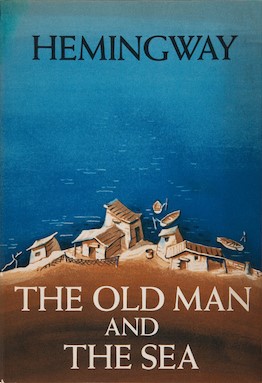
Earnest Hemingway was awarded the 1954 Nobel Prize for Literature. The Old Man and the Sea is one of Hemingway’s enduring works. It is short and uncomplicated, depicting the challenges faced by an old Cuban fisherman, offering profound insight into the human spirit. We read,
‘Everything about him was old except his eyes and they were the same colour as the sea and were cheerful and undefeated.’
Hemingway claimed that he wrote on the ‘principle of the iceberg,’ meaning that ‘seven-eighths’ of the story lay below the surface. Hemingway is inviting us to think deeper, to respect the wisdom that comes with years of experience.
Most people aspire to be successful. But what does success look like and how do we attain it?
Santiago is a simple man. Fishing is his life, while baseball is his religion. Fishing provides the reason for getting up in the morning, baseball provides the inspiration.
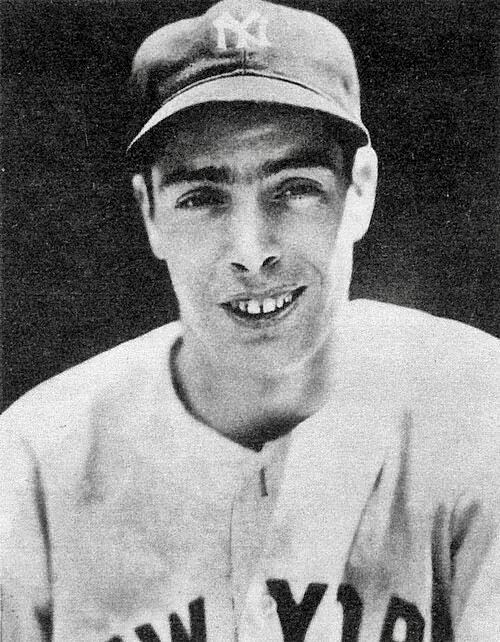
The old man often talks about Joe DiMaggio, a player he considered the greatest baseball player in history, a player he regarded as unbeatable.
Joe DiMaggio suffered from a bone spur but didn’t allow it to detract from his performance. By overcoming the pain and discomfort, he showed great courage and resilience.
To experience success, we must endure the pain. There are no easy victories in life. They all come at a cost.

When the old man hooks the marlin, he knows he is in for a fight. It takes him three days and three nights to subdue the fish. It is a relentless, agonising battle. He endures exhaustion, hunger, thirst, and pain. His back aches, his hand throbs, his head hurts, and he regrets not being better prepared. We read,
‘The old man drank his coffee slowly. It was all he would have all day, and he knew that he should take it. For a long time now eating had bored him and he never carried a lunch. He had a bottle of water in the bow of the skiff and that was all he needed for the day.’
To be successful we need to know our foe, we need to know who or what we are up against. The old man had caught big fish before, but this fish was something else. He knew that marlin were brave and determined and strong. He knew that the fish would go down into the depths of the sea. We read,
‘He was happy feeling the gentle pulling and then he felt something hard and unbelievably heavy. It was the weight of the fish, and he let the line slip down, down, down, unrolling off the first of the two reserve coils.’
To succeed we must never underestimate our opponent. The old man respects the marlin and regards him a worthy adversary. He knows the fish will never surrender without a fight. He knows that he will need to be attentive, constantly evaluating, constantly adjusting, never assuming. We read,
‘This will kill him, the old man thought. He can’t do this forever. But four hours later the fish was still swimming steadily out to sea, towing the skiff, and the old man was still braced solidly with the line across his back.’
Pursuing success invariably comes with moments of doubt and despair when we question our resolve and wonder at our ability to see it through to the end. The old man fears the fish might be the cause of his death.
‘You are killing me, fish, the old man thought. But you have a right to. Never have I seen a greater, or more beautiful, or a calmer or more noble thing than you, brother. Come on and kill me. I do not care who kills who.’
Patient endurance is a requisite for success. To endure is the ability to turn up, to press on even when nothing is happening. It is the ability to accept the barren times, knowing that nothing stays the same forever. The old man went eighty-five days without catching a fish. There were those who had written him off. The old man never doubted his calling. He was born to be a fisherman and fishermen catch fish, but this was no reason to boast.

We read,
‘He was too simple to wonder when he had attained humility. But he knew he had attained it, and he knew it was not disgraceful, and it carried no loss of true pride.’
Success is dependent on holding something back, keeping something in reserve. The old man draws on his inner strength, reminding himself that a lifetime of experience has equipped him for a moment such as this. It is a matter of maintaining tension on the line and sensing any slackening. It is applying pressure and retrieving line when the fish eases off. We read,
We read,
‘He could not see by the slant of the line that the fish was circling. It was too early for that. He just felt a faint slackening of the pressure of the line, and he commenced to pull on it gently with his right hand. It tightened, as always, but just when he reached the point where it would break, line began to come in.’
Success may require us to go it alone. The old man left the other boats behind, choosing to row out into the deep water. His style of fishing differed from the others in that he preferred to have his lines perpendicular while they chose to drift with the current allowing the bait to find its own depth. We read,
‘He looked down into the water and watched the lines that went straight down into the dark of the water. He kept them straighter than anyone did, so that at each level (one bait was down forty fathoms; the second was at seventy-five; and the third and the fourth were down in the blue water at one hundred and one hundred and twenty-five fathoms.) there would be a bait waiting exactly where he wished it to be for any fish that swam there.’
The old man hadn’t always been alone. The boy Manolin had been his apprentice. The old man taught him how to fish and took him out in the boat. The boy cared for the old man and did what he could to help him with the practicalities of life. Their relationship was founded on mutual respect. But Manolin’s parents had intervened when the old man’s ‘luck’ ran out.
The old man found company in the sound of his own voice. He would talk to himself, giving voice to his thoughts. It started when the boy left. The old man believed it a virtue not to talk unnecessarily at sea, but this was different, and despite what others might think, ‘He wasn’t crazy.’ We read,
‘Now he said his thoughts aloud many times since there was no one that they could annoy.’
The old man also had an affinity with nature – the sea and the sky, the birds, and the fish. The flying fish were his principal friends on the ocean. He recognised the hissing their stiff set wings made as they soared away, even in the darkness.
The old man admired the courage of the smaller birds. He noticed a warbler flying low over the water. He looked very tired. The bird flew around the old man’s head and came to rest on the line. We read,
‘How old are you?’ the old man asked the bird. ‘Is this your first trip?’
‘Take a good rest, small bird,’ he said. ‘Then go and take your chance…’
The old man knew that hawks posed a threat to any small bird approaching the shore.
People look to God to help them succeed, even those who are not overly religious. The old man promised to say ten Our Fathers and ten Hail Marys, as well as making a pilgrimage to the Virgin of Cobre if he caught the fish.
Requesting God’s help is a worthwhile undertaking if we keep our side of the bargain. We honour God by delivering on our promises. Any failure on our part demonstrates a lack of respect. God desires our recognition, our appreciation, our love.
There are people who will use our success to advance their own interests. They diminish our achievements to satisfy their own ambitions. Having secured the fish to the boat, the old man set sail for the safety of the harbour. He calculated the monetary value of his catch. But danger lurked in the deep. Sharks had smelt the blood. They circled the boat and attacked the fish, ripping flesh with their sharp teeth. The old man fought back, killing some and wounding others, but it was a lost cause. When he made it back, all that remained was the skeleton.
Sometimes we are forced to question the value of our endeavours. We ask ourselves, ‘Is success worth pursuing?’ The old man knew that he had given his best, that he had singlehandedly triumphed over a giant marlin. There were some who looked at the skeleton and marvelled. The old man could feel satisfied with his achievements. Now it was time to rest.

 Hope For Tomorrow