Our minds are like a kaleidoscope of thoughts, ever changing.

Some thoughts are honourable, some are not. Unfiltered thoughts can build us up or pull us down. They can bring clarity or blur our vision. They can satisfy us on an existential level or blow us up.
People who boast of unfettered thinking, believe they are free to think as they please. But this is delusional. They are at the mercy of every whim, held captive by their passions, and seduced by their appetites.
If unchecked, our minds may wander into inappropriate areas where physical desires can dominate. Succumbing to unwelcome thoughts stifles our spirit, disrupts our emotions, and hinders our creativity.
To live fully, vibrantly, and expressively we need to take responsibility for our thoughts, filtering what we allow, deciding what is acceptable, denying entry to anything that would undermine our strength of purpose.
In Portrait of a Suicidal Mind author Clancy Martin writes about the daily struggle with suicidal ideation. Throughout much of his life he has lived with two incompatible thoughts in his mind: I wish I were dead, and I am glad my suicides failed. He never once thought, if only I had successfully killed myself, I would have been spared all this living I have done. Martin further explains,
‘[It is not so unusual to think this way, really]: we often call it cognitive dissonance; it’s the essence of self-deception.’
In his book, The Power of Positive Thinking (1952), Dr. Norman Vincent Peale championed the benefits of positive thinking. It is achieved by eliminating defeatist attitudes and embracing a positive mindset.

He argues that our health and wellbeing is influenced by what happens in our minds. He says,
‘We are beginning to comprehend a basic truth hitherto neglected, that our physical condition is determined very largely by our emotional condition, and our emotional life is profoundly regulated by our thought life.’
Let us consider several proven ways to take control of our thought life and to help our mind focus on the positive.
1. Immerse yourself in the natural world.
The natural world is God’s gift to us. It may be imperfect, marred by the Fall, but it is still God’s creation, mirroring His beauty, His order, His purpose.

When we place ourselves in the natural world and allow it to envelop us, we experience a release from all the cares and concerns that weigh us down. The distractions and demands of a busy life fall away, allowing us to reset, to rest in a world that caresses our senses and speaks peace to our soul.
In his recent novel Burn, Peter Heller tells the story of two lifelong friends who make an annual pilgrimage to the most remote corners of the country, where they camp, hunt, and hike. They regard it as an opportunity to relax and recharge.
On this occasion, they confront a dystopian scene. They witness something unimaginable, unspeakable – death and mayhem – a state racked by violence.
Overwhelmed by the indiscriminate destruction of people and dwellings, they try to find their way home. Despite a jumble of confusing emotions, there is comfort and reassurance in the familiar beauty of the forests and mountains. We read,
‘They were walking north slowly, a graded track of smooth dirt scattered with the first fallen leaves, basswood, and swamp maple. The woods grew over the ditches on either side and over the road, too, the limbs tangling overhead, so much so, that much of the time they were walking through a tunnel of hardwoods.’
When life is imploding, when our reality is challenged by external forces, when our thoughts are disorganised, the natural world offers solace. God is present in the overarching branches; He is present in the rustling of the leaves. His order reveals itself in the changing seasons. He asks that we pay attention, that we think on these things.
2. Read the classics.
C. S. Lewis came to Oxford to read classics – that is, the literature, history, and thought of ancient Greece and Rome. His study of the Classical texts influenced his writing and played a role in his spiritual transformation.
C. S. Lewis believed that old books have value, that they speak to the present day. He warns against the dangers of an exclusive contemporary diet. The worth of a book is found in its enduring quality, the ability to speak to successive generations. Lewis says,
‘Every age has its own outlook. It is specially good at seeing certain truths and specially liable to make certain mistakes. We all, therefore, need the books that will correct the characteristic mistakes of our own period. And that means the old books.’
Harriet Sanders suggests that a classic novel is a book that has stood the test of time because it is so good, having a level of complexity and depth, which enables it to transcend the time in which it was written. She adds,
‘A classic brilliantly articulates universal themes – like love, morality, death, adversity – and offers revelatory insight and clarity to readers of any era.’
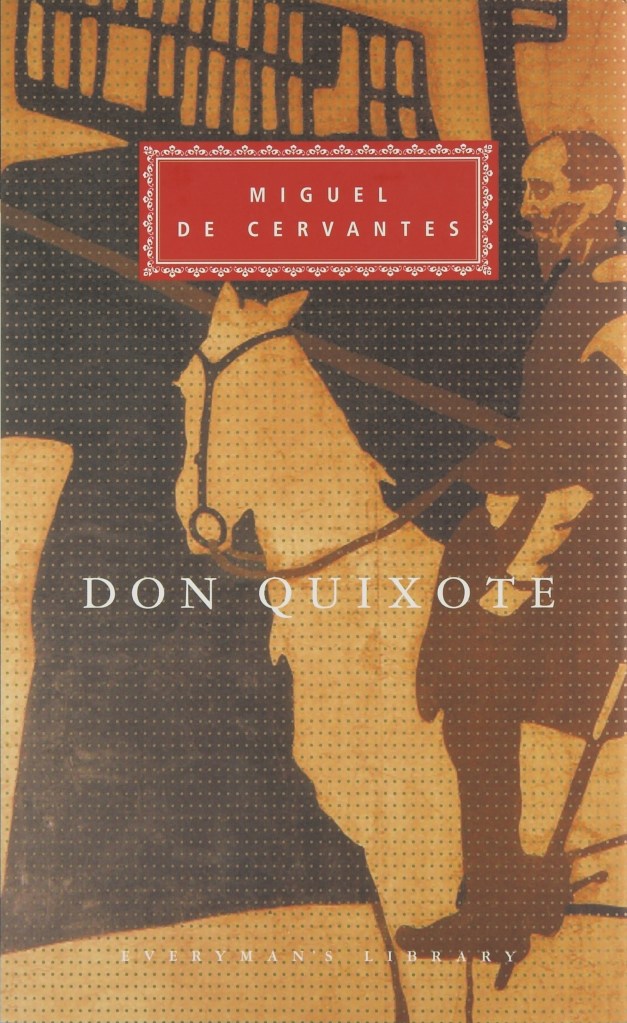
The book Don Quixote by Miguel de Cervantes was published in the 17th century. Described as ‘a sprawling epic novel full of adventure and jeopardy,’ Don Quixote is a genuine classic. I read it last year, at night, in bed. I found it bizarre, satirical, and incredibly funny. The amusing misadventures and memorable interactions relaxed my mind.
There are many quotes in Don Quixote that invite reflection, such as
‘The truth may be stretched thin, but it never breaks, and it always surfaces above lies, as oil floats on water.’
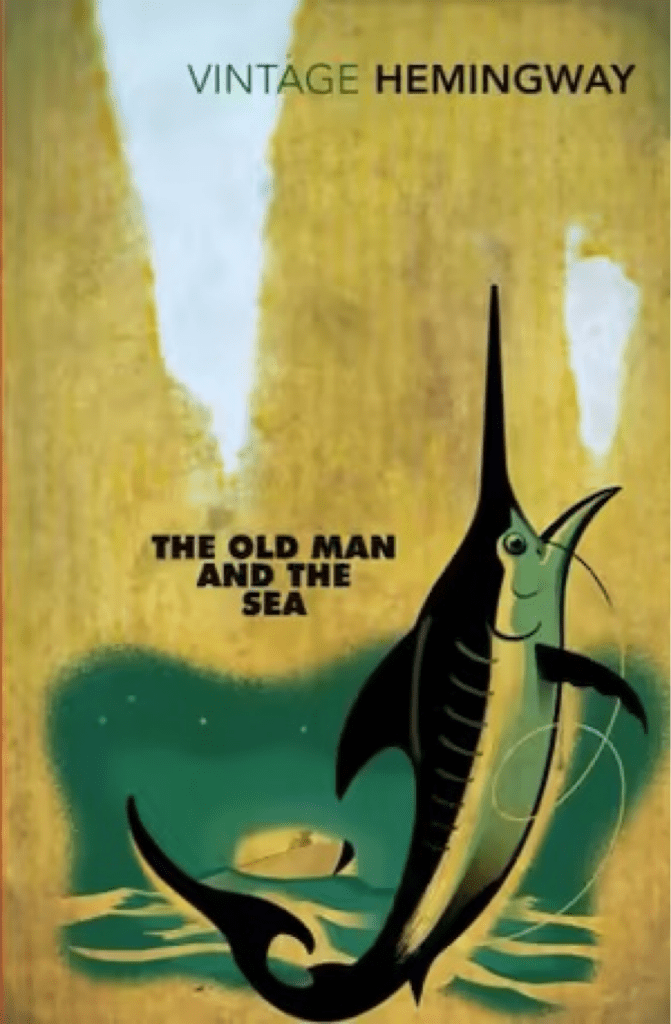
Earlier this year I read The Old Man and the Sea by Earnest Hemingway. It is a modern classic. Unlike Don Quixote, The Old Man and the Sea is a short novel, 112 pages in length. Set in the Gulf Stream off the coast of Havana, Hemingway’s magnificent fable is the tale of an old man, a young boy, and a giant fish. The simplicity and clarity of his prose sets his writing apart. Hemingway knew the number three stood for perfection. He selectively employed ‘the rule of three’ in his writing. In Chapter 1 of The Old Man and the Sea he writes,
‘He was old, he was alone, and he was a fisherman.’
Pope Francis died on Easter Monday, April 21, 2025, at the age of 88. In his Easter 2025 Homily, delivered by Cardinal Angelo Comastri, he says,
‘We must look for him without ceasing. Because if he is risen from the dead, then he is present everywhere, he dwells among us, he hides himself and reveals himself even today in the sisters and brothers we meet along the way, in the most ordinary and unpredictable situations of our lives. He is alive and with us always, shedding the tears of those who suffer and adding to the beauty of life through the small acts of love carried out by each of us.’
‘We must look for him without ceasing.’
The third way we can take charge of our thoughts overlays the earlier two.
3. Seek God
In Matthew’s gospel it says, ‘Seek, and you will find.’ (Matthew 7:7)
Only those who look for God will find him. While God might seem hidden, He wants to be found. He is present in the natural world. He is present in the writings of the ancient Greeks and Romans. He is present in the modern classics, works of fiction, dotted here and there with wisdom and insight.
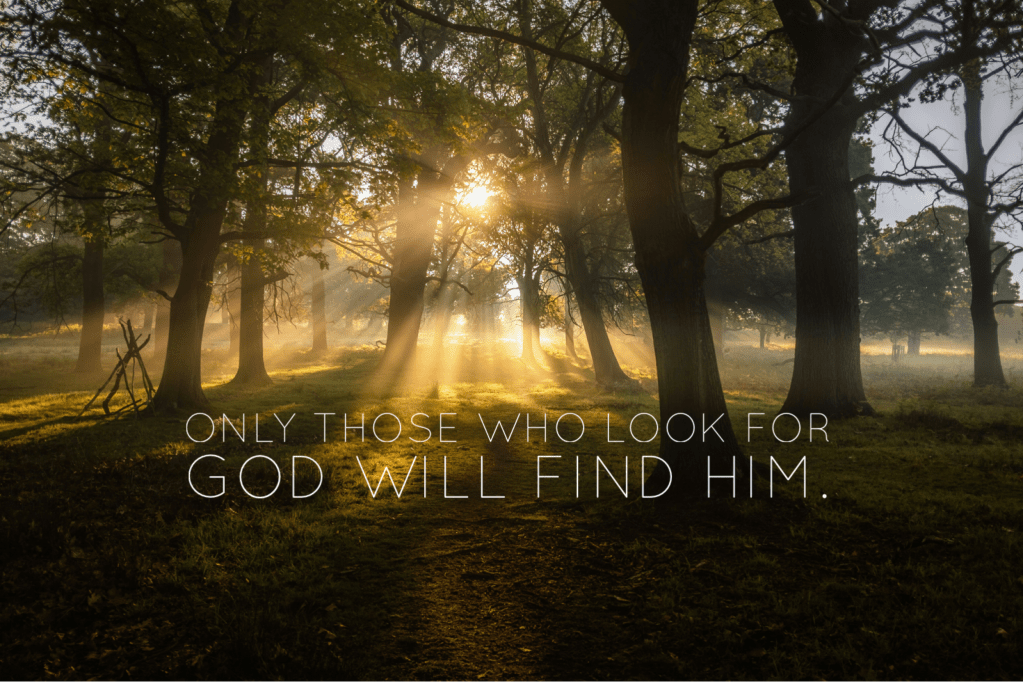
Seeking God in the natural world:
I sat in my car overlooking a reservoir. A gentle breeze caused the hanging leaves in the eucalypt trees to stir. There was movement and there was song. Author Henri Nouwen says,
‘God is always speaking to us, but it requires spiritual discernment to hear God’s voice, see what God sees, and read the signs in daily life.’
I thought:
‘God’s Spirit is like a gentle breeze. He brings energy and movement to our lives. Without the Spirit’s activity, we hang listless. God wants us to be swayed by His presence, to be like King David who danced and made melody before the Lord.’
Seeking God in the modern classics:
In Don Quixote we read these words:
‘The bravest battles are fought within our own minds.’
It has been said, ‘Take control of your thoughts or your thoughts will take control of you.’ When we abdicate responsibility for the way we think we enter dangerous territory. We must always avoid letting other people do our thinking for us because ‘It makes a difference what you think.’

What we think about determines how we live. What we think about sets the agenda for our lives. What we think about influences our values and beliefs.
It takes courage to confront our thoughts, to evaluate their worth, to reject those that detract from our sense of well-being, that weigh us down with self-condemnation, that undermine our hope for the future. Throw out any thought that does not lead to hope.
In The Old Man and the Sea, we read these words:
‘It is silly not to hope. It’s a sin he thought.’
The old man, Santiago, hasn’y caught a fish in 84 days. He does not accept what some are saying that he is unlucky. He knows that being a fisherman requires patience, persistence, and positivity.
‘Fishermen know what hope looks like.’
He hooks a giant marlin that is longer than his boat. It takes him three days to subdue it. He lashes it to the side of his skiff, but the sharks gather, tearing off the flesh and leaving the skeletal remains. Having returned to the harbour Santiago goes home to sleep. All who see the skeleton tied to the boat are amazed.
Hope in God is a living hope. God never disappoints. His promises never waver. God is committed to the restoration of all things. He is committed to the renewal of our minds. When we think God thoughts we are strengthened to live confidently, thoughtfully, and victoriously.

 Hope For Tomorrow