Throughout biblical history God demonstrates His willingness to reveal what He is doing. The prophets foretold what was to come, whether it be blessing or judgment.
God often uses pictures to disclose His intent. His word is embedded in the natural world. There we discover His plans if we have ‘eyes to see.’
In his letter to the Corinthians Paul says,
‘The spiritual did not come first, but the natural, and after that the spiritual.’
1 Corinthians 15:46 NIV
A powerful cyclone provides a compelling metaphor for what some have described as the ‘Great Southland Revival.’
There is a growing expectation among God’s people that Australia will experience an outpouring of the Holy Spirit like no other. As with Tropical Cyclone Alfred, the whole world will be watching.
A Royal Connection:
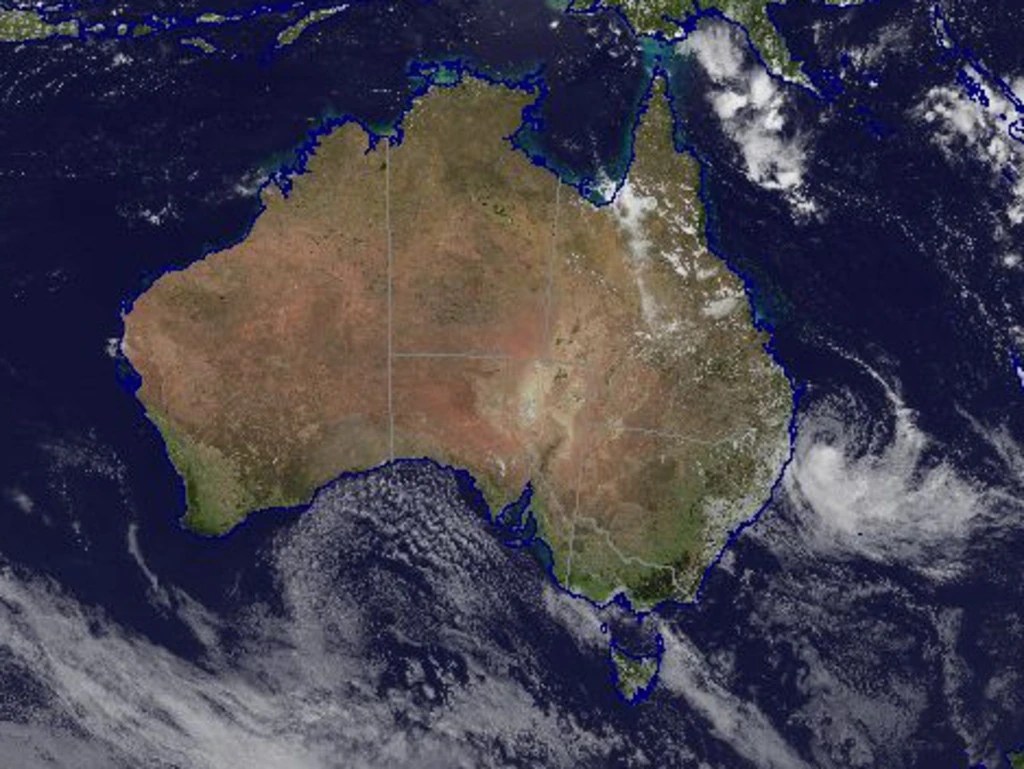
Tropical Cyclone Alfred formed over the Coral Sea approximately 1,300 kilometres north of Brisbane on February 22. At one point, Alfred coexisted in the South Pacific with two other tropical cyclones, Seru and Rae.

Cyclone Alfred has a namesake in Alfred the Great, king of Wessex, who lived in the 9th century. Wessex was a Saxon kingdom in southwestern England.
Alfred was a warrior king. He halted the advance of the Danes who were seeking more land and more influence. Alfred bolstered his army, uniting all the English-speaking territories not under Danish rule, and fortified his defences. He was a wise administrator, ensuring the weak and dependent didn’t suffer injustice. He promoted learning and had important Latin books translated into English.
The priorities King Alfred set for his reign reflect what God is planning in bringing renewal to His people. The coming of the Holy Spirit will inspire a return to godliness whereby evil is defeated, unity is preserved, justice is sought, and truth is celebrated.
An Unpredictable Path:
Tropical Cyclone Alfred tracked south and southeast, meandering slowly off the coast for almost a fortnight, fed by warm waters in the Coral Sea.
Initial forecasts predicted Alfred would remain offshore. However, on March 4, it made a sharp turn to the west, steered by a high-pressure ridge to the south.
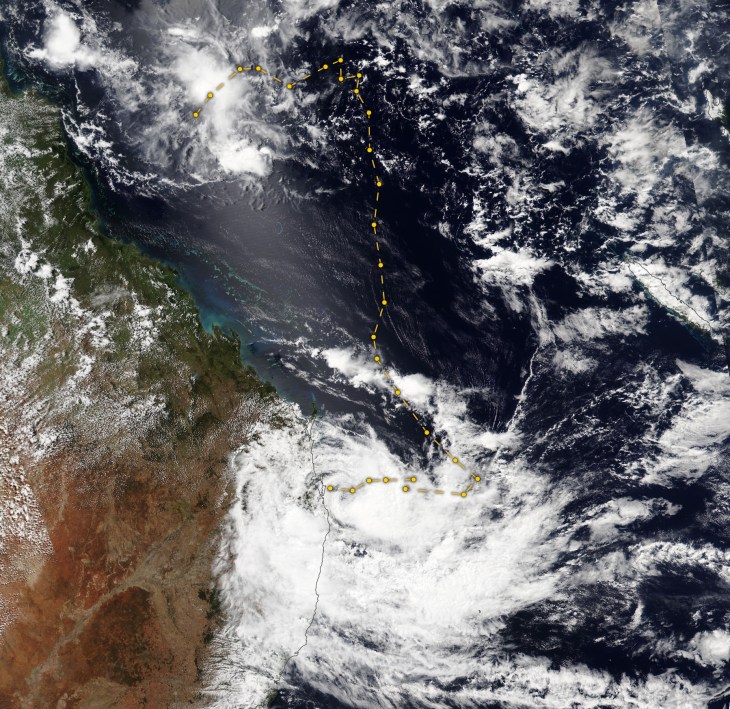
Most cyclones hit hard and fast, but ex-Tropical Cyclone Alfred had other ideas, forging a slow path, punctuated by pauses and pirouettes, spinning back around to the east on two occasions.
The Bureau of Meteorology were unable to predict with certainty Cyclone Alfred’s movements, suggesting landfall would be late on Thursday or early on Friday, then Saturday morning and finally Saturday evening at 9 p.m.
God sets His own agenda. His ways are unknowable unless He chooses to make them known. To make predictions about what God will do and when He will do it is unwise. He is Lord. He determines the times and seasons. He decides how and when revival will come to His people. However, we can be certain that His activity in our lives will always reflect His character. The prophet Joel says,
‘God is gracious and compassionate, slow to anger and abounding in love, and He relents from sending calamity.’
Joel 2:13 NIV
Revival brings God’s blessing, but it also brings God’s correction. When God delays His coming, we can be assured that He wants us to get ready, ‘to put our house in order.’
Although Alfred caused widespread damage, the cost of which is likely to be in the billions of dollars, the impact could have been catastrophic with many more casualties. God is merciful. Paul writes to the Romans, reminding them of what God said to Moses,
‘I will have mercy on whom I have mercy.’
Romans 9:15; Exodus 33:19 NIV
The following examples relating to Cyclone Alfred illustrate God’s mercy.
The slower speed of Cyclone Alfred’s advance meant that coastal communities had more time to prepare for the impact of heavy rains, storm surges, and high winds. The demand for sandbags was unprecedented.
Further, the islands of Moreton, North Stradbroke and Bribie acted as a buffer, copping the initial brunt of Cyclone Alfred, a category 2 storm, before it was downgraded to a tropical low.
Catching the Wave:
Many of God’s people fear revival. They fear the demonstration of God’s power. They fear the unusual public manifestations of the Spirit. They fear what they might lose. They fear what God might ask them to do. They fear that nothing will ever be the same.
Revival brings change. It challenges our assumptions about who God is, how God works, and what God desires. Revival is God making all things new, restoring His people to a life of faithfulness and obedience, re-energising His church to a life of love and service.
With Cyclone Alfred whipping up seas off Australia’s east coast, I was intrigued by the response of three groups of people.
1. The Surfers:
Surfers began tracking Alfred’s progress in late February. It wasn’t clear how surfable the swell would be. As it turned out, the large swells and powerful waves that pummelled the Queensland coast were very, very surfable. The videos on social media captured the courage and skill of the surfers as they took on the mountainous waves, waves that provided ‘the ride of a lifetime.’ As one surfer commented, ‘This will be talked about for years to come.’
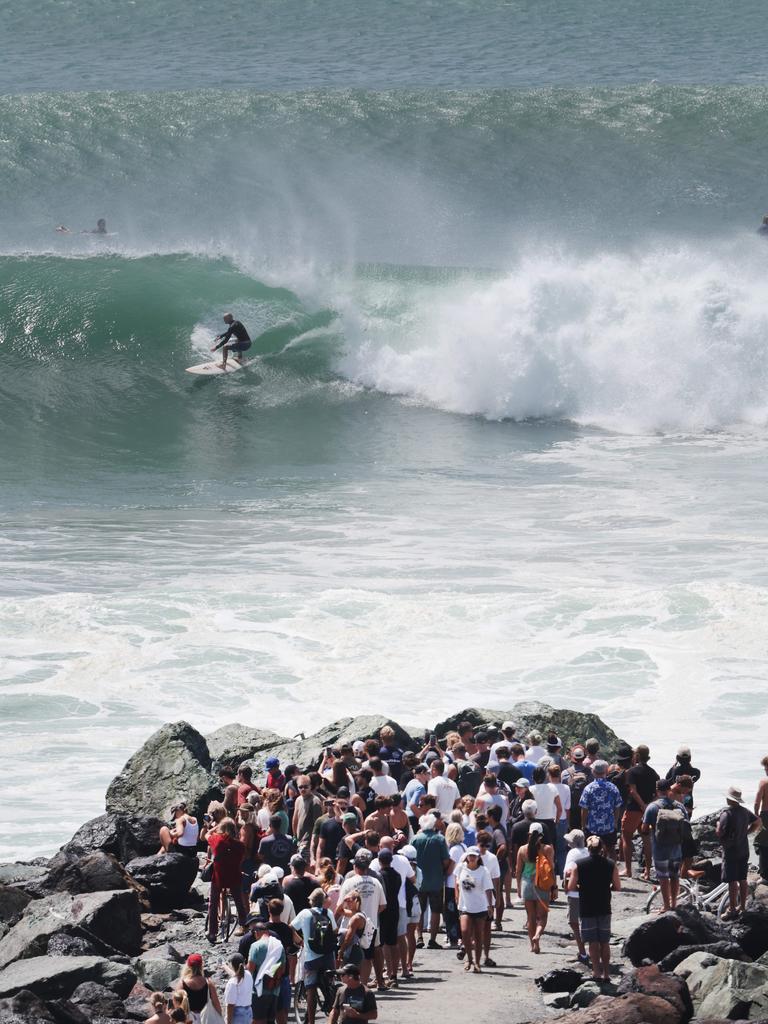
The Spirit’s coming will be like the large swells, powerful and relentless. God invites us to ride the wave of the Spirit, to celebrate its power. Being immersed in what God is doing is challenging but also exhilarating. The Spirit brings life. It is God’s desire that we surrender to His Spirit, that we be a people who recognise the presence of the Holy Spirit in us and are attuned to his leading.
2. The Onlookers:
Storm tourists defied road closures and flocked to vantage points like the Gold Coast Spit rock wall to witness the ferocity of wild swells whipped up by Cyclone Alfred, despite winds gusting up to 80km/h. Some might consider their actions foolish, but they were desperate for that ‘cyclone selfie.’
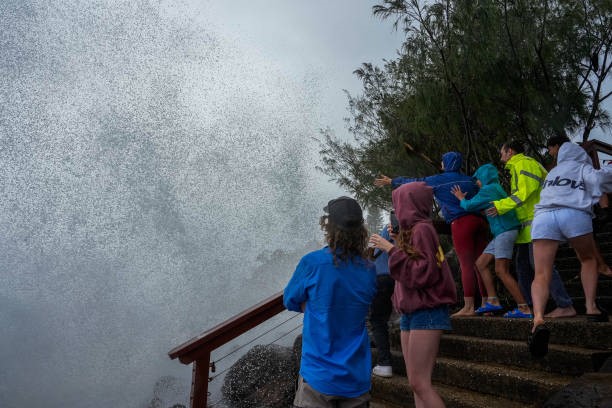
When the Spirit comes in power, some people prefer to stand on the sidelines and capture the moment on their phone. They are present but not fully immersed. They are curious but not willing to jump in. They are observant but reluctant to commit.
3. The Sandbaggers:
Many people were desperate for sandbags. They are useful in reducing the impact of flooding on homes or businesses. It was reported in the media that over 1.3 million sandbags were distributed by state emergency services in preparation for Ex-Tropical Cyclone Alfred. Residents in flood prone areas worked tirelessly to protect their assets. In some areas a shortage of sand hindered their efforts and left their properties exposed.
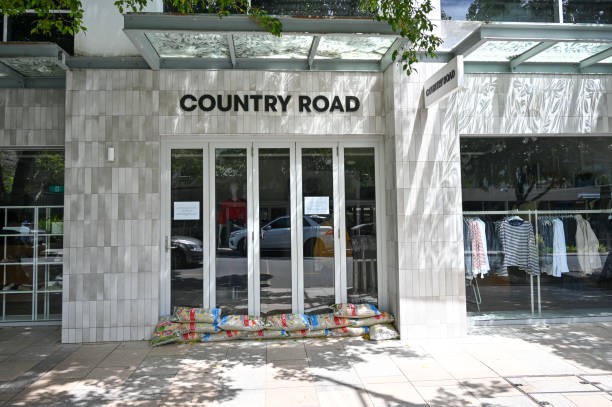
When the Spirit comes in power, some people become defensive. They build barriers to shield themselves from His presence. Their focus is on preserving their assets, protecting what they have worked so hard to achieve.
A similar attitude is reflected in the response of the religious leaders to the ministry of Jesus and His followers. Self-interest blinded them to the fact that God was present in their midst, present to heal and restore.
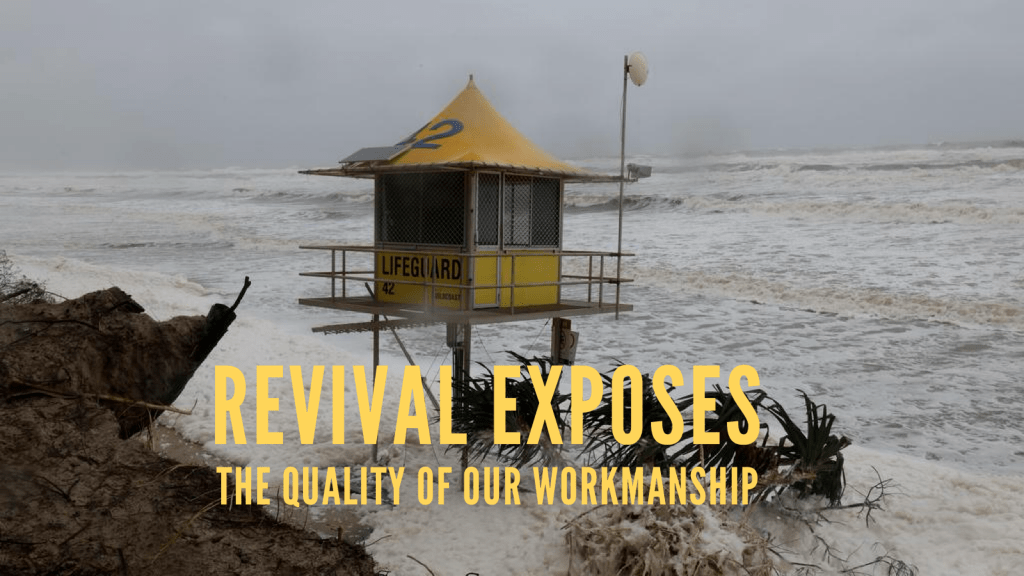
Revival exposes the quality of our workmanship. If our service for God has been built on self-effort it will all be washed away in the flood.
Inadequate Infrastructure:
The term ‘infrastructure’ is defined as the basic facilities and system serving a country, region, or community. Cyclone Alfred exposed major weaknesses in vital infrastructure against disasters.
- Electrical outages reached record levels, peaking at more than 300,000 across Queensland and NSW.
- Widespread flooding impacted many communities, some of whom, like Lismore, had faced multiple floods in recent years.
- Strong winds brought down trees, crushing homes and cars.
- Significant coastal erosion resulted in scarring to hundreds of kilometres of beaches. In some sections, sand cliffs stretching as high as 6 metres were carved into the beach.
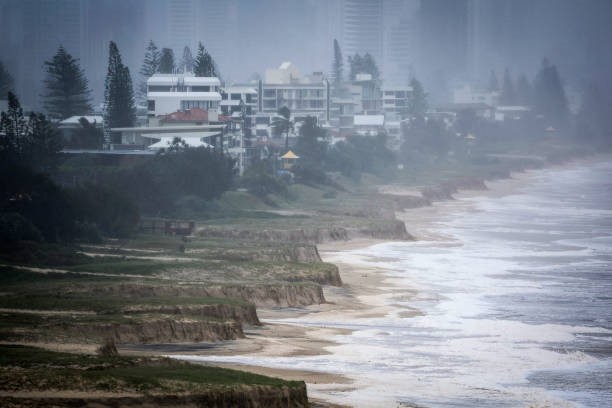
Revival exposes the inadequacy of church infrastructure. Church infrastructure not only relates to the buildings and facilities, but also the organisational structures that enable the church to function effectively. Organisational structures are generally not built to cope with a surge of God’s Spirit. They lack the flexibility to accommodate an outpouring of God’s Spirit in power. They are often outdated and not fit for purpose.
The following questions, although few, do allow us to see whether the organisational structures in our local church are adequate for a visitation of God’s Spirit.
- Do we have the leadership to guide people in the ways of the Spirit?
- What pathways to ministry and service do we provide for people filled with the Spirit?
- What supports are in place to accommodate an influx of new believers?
Exposed Skeletons:
The wild weather whipped up by Ex-Tropical Cyclone Alfred exposed a 180-year-old shipwreck, with high seas and shifting sands uncovering what is thought to be an 1843 wooden schooner named The Comet near Ballina. The Comet weighed 34 gross tons and was wrecked on March 30, 1851, on the north side of the Tweed River entrance while attempting to cross the bar.
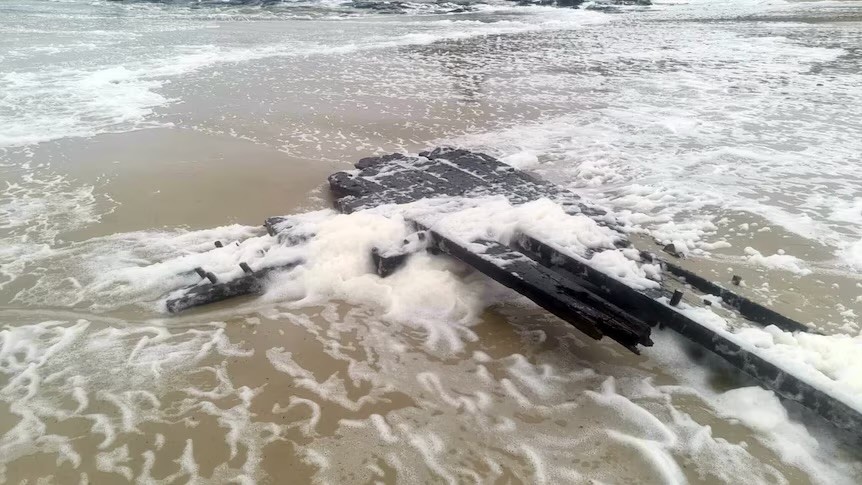
One of the main characteristics of revival is that it pulls back the layers and reveals what is hidden. Jeus warned his disciples,
‘There is nothing concealed that will not be disclosed or hidden that will not be made known.’
Luke 12:2 NIV
The Holy Spirit searches people’s hearts and uncovers the sin lurking in the shadows. What legions are lying low? Confession is at the heart of revival. Without repentance there is no work of renewal, no healing and restoration.
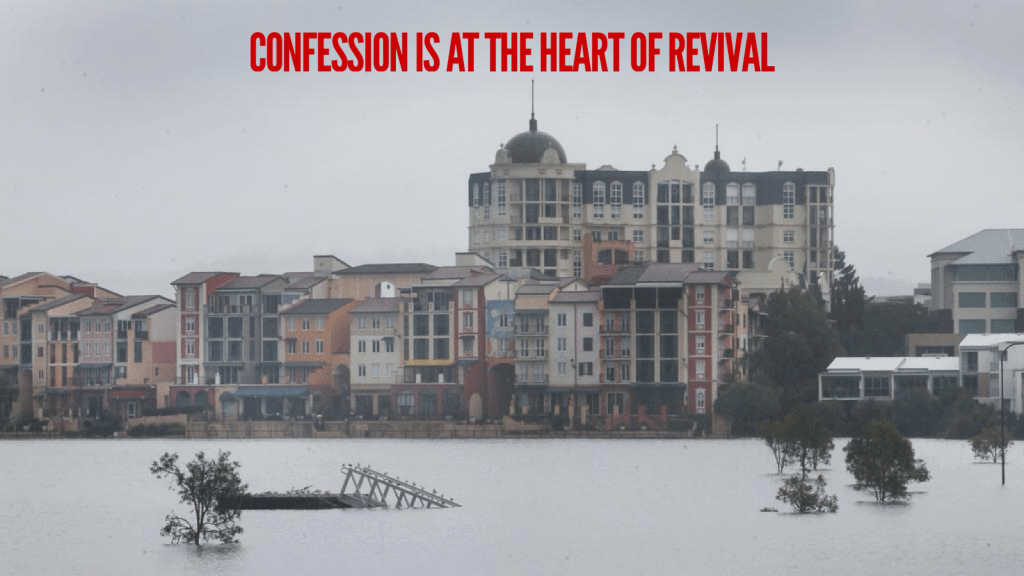
Sometimes the sins of the past weigh heavily, frustrating the work of the church and limiting its effectiveness. The Spirit alerts us to our failures and breathes life into our flagging spirits.

 Hope For Tomorrow