We attend the family service at our church. It is inter-generational, attracting many young families. Children have an opportunity to come to the front to sing a couple of action songs and listen to a short talk. Recently, I noticed two boys with Lionel Messi printed t-shirts.
Lionel Messi is an Argentine professional footballer who is regarded as one of the greatest players of all time. In the 2022 World Cup final Messi achieved his dream, leading Argentina to victory over France. The BBC headline read: ‘Lionel Messi Leads Argentina to glory.’
Professional sportspeople are motivated by riches, fame, and the glory. Glory, in this sense, refers to ‘the admiration gained by doing something impressive or achieving great success.’ Only those who reach the pinnacle, who triumph, take the prize. They are the ones who bask in the glory.
Followers of any sporting discipline gravitate to winners. We like to declare our allegiance. We like to demonstrate our support. We like to share vicariously in their glory.
Wearing customised merchandise shows our admiration for the person. Their ability wows us. Their determination grips us. Their achievements inspire us.

Not all sportspeople focus on personal glory. Those who have a personal faith in God believe the glory belongs to Him. They do not want the adulation they receive for their achievements to detract from the greatness of God.

Nicola Olyslagers is an Australian national athlete, who became recognised for being the first woman in her country to jump over 2 metres high.
Olyslagers explains how her commitment to God shapes her performance. She says,
‘Competing is like being in church. My worship might not be my singing, it is in my feet jumping over the bar.’
At every competition, Olyslager has a notebook, her ‘little book of gold’, as she calls it, with the inscription ‘For His Glory’.
Sportspeople like Nicola Olyslager can glorify God with their words, by acknowledging that their ability to compete comes from God. They thank God and give Him the glory when they perform well or when they are below their best.
A sportspersons commitment to God is clearly evident by the way they act when competing.
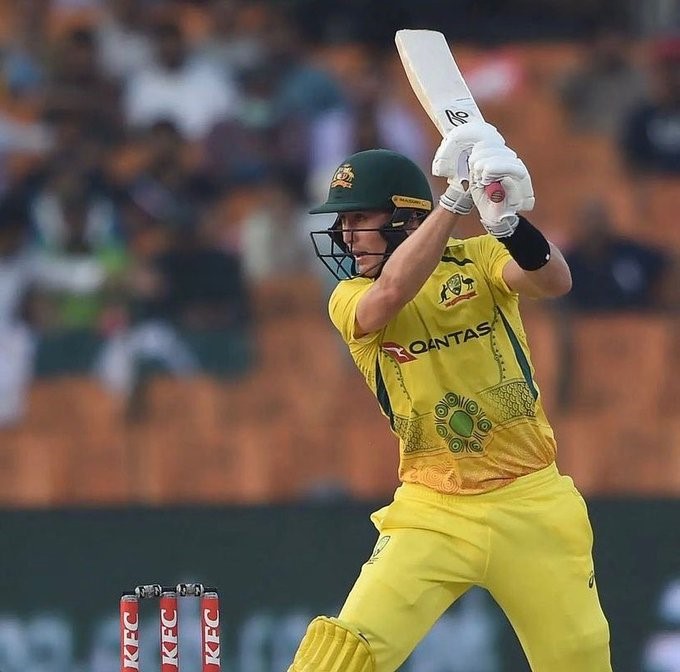
Marnus Labuschagne is an Australian cricketer who plays internationally for the Australian national team.
He believes cricket is more than just a game, and his career is more than just a job. He has a responsibility to set an example, be a role model, and invest in the next generation of kids. Labuschagne addresses what motivates him and where he finds his worth. He says,
‘Everyone knows cricket is a major part of my life but the value of me as a person isn’t in cricket – it’s in my faith.’
Labuschagne says he cannot really remember a time when he didn’t believe in God. His relationship with God is the reason has an eagle graphic on his bat. It is a reference to his favourite Bible verse.
‘But those who hope in the Lord will renew their strength. They will soar on wings like eagles; they will run and not grow weary; they will walk and not be faint.’
Isaiah 41:1 New International Version
Labuschagne acknowledges the importance of prayer and admits to praying to win a match, especially when victory feels just within reach. He says,
‘Mainly I pray that I might perform at my best, and that all the glory will go to Him, for whatever happens on the day, win or lose.’
The hunger for glory exists in all our hearts. Award winning author and conference speaker, Paul Tripp writes,
‘We are glory-orientated creatures.’
He suggests that our lives are shaped by the pursuit of some kind of glory. We are attracted to glorious things. We look for glory in the arts, music, and sport.
But we also want glory for ourselves. Self-glory harbours a desire to be successful, noteworthy, honoured, and celebrated. Personal glory is fleeting, a cheap counterfeit that can never satisfy. If we search for glory in the wrong places, we will feel defeated, disillusioned, and frustrated.
The glory of God is the only genuine or lasting glory. How then do we take hold of what we do not fully understand?
The phrase, ‘the glory of God’ is difficult to grasp. Its meaning is expansive.
Billy Graham Ministries defines ‘the glory of God’ as ‘the visible manifestation of His attributes and His character.’
Rick Warren, author of ‘The Purpose Driven Life’ says,
‘What is the glory of God? It is who God is. It is the essence of His nature; the weight of His importance; the radiance of His splendour; the demonstration of His power; the atmosphere of His presence.’
The Hebrew word for glory when translated into English has many shades of meaning – beauty, splendour, fame, honour, admiration, magnificence, weight, power, majesty, heaviness, and importance.
The glory of God is splashed across the pages of the Bible. It is present in the beginning, at the unfolding of the creation story. The Psalmist tells us the ‘the heavens declare the glory of God.’ Psalm 19:1 English Standard Version

When we reflect on all that God has made, we are filled with awe and wonder. Everything there is: the sun, stars, the ocean, every living thing – display God’s glory. Nothing can hide from God’s glory.
The hymn writer Oliver Wendell Holmes wrote,
Lord of all being, throned afar, thy glory fames from sun and star.
What is even more remarkable is that God wants those who are His children to share in His glory. He wants us to be carriers of His glory. His glory is for our joy and delight, not a burden to be endured.
We were made to show off the magnificence of God. The Old Testament prophet Isaiah wrote these words.
‘Everyone who is called by my name, whom I created for my glory, whom I formed and made.’
Isaiah 43:7 ESV
We are to be like God, reflecting who He is and what He is like. As our relationship with God deepens, as we come to understand all that Jesus His Son has accomplished for us, as we celebrate the Holy Spirit’s presence in our life, God’s glory will shine in us.
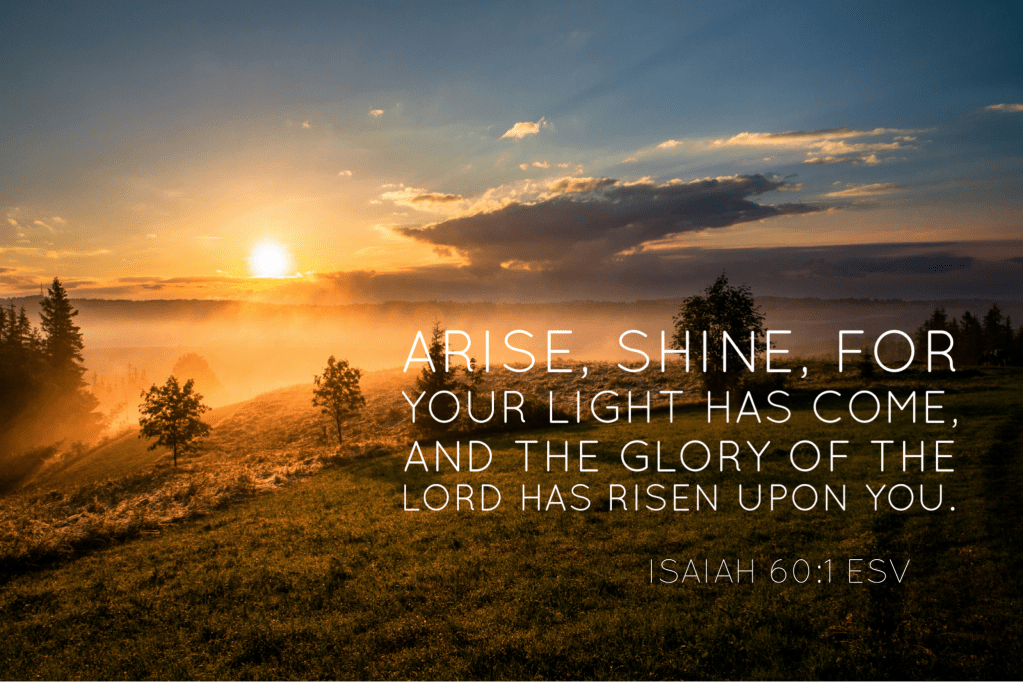
‘Arise, shine, for your light has come, and the glory of the Lord has risen upon you.’ Isaiah 60:1 ESV
Isaiah 60:1 ESV
Advent, in the Christian church calendar, refers to the period of four weeks leading up to Christmas. The word ‘advent’ means ‘coming.’ For those who believe in Jesus, advent is a time to reflect on the coming of Jesus, the long-awaited Messiah and King.
Luke’s account of this coming tells us that the angels announced the birth of the Messiah to lowly shepherds. Shepherds were simple people who had no political influence or earthly power. Having heard the good news of the baby born in a manger, born to be king, we read,
‘And suddenly there was with the angel a multitude of the heavenly host praising God and saying,
‘Glory to God in the highest, and on earth peace among those with whom his is pleased.’
Luke 2:13-14 ESV

For many people, the birth of a baby in a manger poses no threat to their existence. This wasn’t the case for Herod the king. When he heard that a baby had been born king of the Jews, he gave an order for all the male children in Bethlehem and the surrounding region, who were two years and younger, to be killed.
At his first coming, Jesus came in humility, a vulnerable baby, wrapped in swaddling clothes, lying in a feed trough.
At his second coming the entire world will not be able to contain his glory.
In the gospel of Matthew we read,
‘Then will appear in heaven the sign of the Son of Man, and then all the tribes of the earth will mourn, and they will see the Son of Man coming on the clouds of heaven with power and great glory.’
Matthew 24:30 ESV
At his second coming the entire world will know that Jesus is Lord.
Last evening we attended an inspiring performance of Handel’s Messiah at Ulumbarra Theatre in Bendigo. The Melbourne Symphony Orchestra, chorus, and soloists received a standing ovation. In Movement 33 ‘Lift up your heads’ the chorus sings,
Who is this King of glory? The Lord of Hosts: He is the King of Glory.

 Hope For Tomorrow