Author Matt Haig describes The Humans as the book he is most proud of. He says,
‘It is personal… all the best things I have to offer the world are inside its pages.’
The Humans is a moving story about who we are, capturing the beauty and messiness of life as seen through the eyes of an extraterrestrial visitor to earth who takes on the form of Professor Andrew Martin, a leading mathematician at Cambridge University.
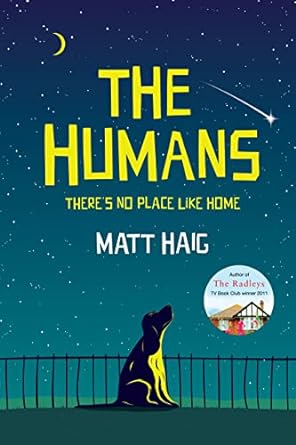
The book offers us a fresh glimpse into what it is to be human. Consider the following:
(1) Humans fight to hold on to reality:
Humans fear they aren’t being told the truth. They feel vulnerable, the victim of lies and deceit. They have been let down by the people and institutions they have trusted in the past.
Truth has become a commodity, sold to the highest bidder. It can be manipulated for whatever purpose. Law makers, politicians, journalists, medical professionals, and religious leaders are all guilty of meddling with the truth.
A sense of betrayal is a powerful force for change. When truth becomes distorted, we feel anxious, vulnerable, and afraid. The truth we thought we knew defines our reality. When our reality is tainted, we are obliged to dispense with it. Matt Haig says,
‘You hold reality in your hands until it burns and then you have to drop the plate.’
When confused about what to believe we may be drawn to social networks that address our feelings of alienation and offer support and a sense of solidarity. They offer a new reality, a re-purposed truth. For some, it becomes a path to radicalisation where identity triumphs over all else.
(2) Humans have a startling capacity for belief:
Humans need something to believe in. It is sad but true, that if we are told anything in a convincing enough voice, we will believe it. Think how scammers can convince people to transfer their savings into unsolicited accounts.
The extraterrestrial in Matt Haig’s The Humans observes,
‘Even before I had fully discovered the concepts of astrology, homeopathy, organised religion, and probiotic yoghurts I was able to work out that what humans may have lacked in physical attractiveness, they made up for in gullibility.’
Gullible people may believe money and happiness are inseparable. Consequently, they are prepared to risk everything to secure the wealth needed to achieve their goal of happiness.
Isobel is married to Professor Andrew Martin. What she doesn’t realise is that her husband has been murdered and that the current incarnation is an imposter who is still learning what it is to be human. They have this conversation:
‘There are people in this world who have motives that extend beyond the financial, Andrew.’
This was genuinely news to me. ‘Are there?’
‘Yes. There are. Because, you know, there’s this new ground-breaking and controversial theory that money can’t buy you happiness.’
‘Oh,’ I said.
(3) Humans feel a terrible loneliness:
Loneliness is flourishing, spreading unabated. Matt Haig says,
‘Loneliness is a fact as universal as hydrogen.’
This is despite the commanding place social media has in many of our lives. It offers unprecedented access to the lives of others. But it is filtered access, providing a one-sided view, majoring on positive emotions. We are seeing life through a lens of positivity, but this isn’t our experience.
Companionship can be described as having someone to talk to, to share the moment. It is having someone in our life who understands and accepts us. For many people it is a married partner or close friend. Some people find companionship in a dog.
Professor Andrew Martin is alone in the house with Newton, the dog. Their relationship is strained. Newton suspects that this man isn’t for real.
Newton suffers from arthritis in his hips. It impacts on his quality of life, limiting his movement. The man in the room, the man from a distant galaxy, has healing powers. He places his hands on Newton’s hips. The dog senses the pain leaving his body. He feels invigorated.
The professor is standing in the living room. The dog has been banished due to his excessive licking. The professor is not used to this level of attention. What surprises him most is this growing need for companionship, to be loved. He says,
‘But when I stood in the living room with nothing but my thoughts and plans, I realised I felt a terrible loneliness and so called him back. And he came and seemed happy to be wanted again.’
(4) Humans have many languages, not just words:
Sometimes words are not enough. Sometimes words just can’t describe how you feel. Our emotions convey what is in our heart, what is pulsating through our veins. Grief, for example, is a powerful emotion that often defies description.
The alien professor comes from a world where emotions are obsolete. There is no cause for grief as no one dies. Life is governed by the mind. They rely on their superior intelligence.
The professor has no understanding of human love and yet he is married to Isobel. He doesn’t know who his friends are, what his daily routine looks like, what his interests are, what food he prefers. He is a puzzle to all who think they know him, in particular, his wife.
Isobel answers a call from Maggie who she assumes must be a work colleague. Maggie is in fact a student at the university who is having an affair with the professor. The conversation goes like this.
‘Someone else called, too.’ She paused for a moment. ‘She said her name was Maggie.’
‘Oh yes,’ I said, faking it. ‘Of course. Maggie.’
Then she raised her eyebrows at me. It meant something, clearly, but I had no idea what. It was frustrating. You see, the Language of Words was only one of the human languages. There were many others, as I have pointed out. The Language of Sighs, the Language of Silent Moments and, most significantly, the Language of Frowns.
Then she did the opposite, her eyebrows going as low as they could. She sighed and went into the kitchen.
(5) Humans waste a lot of time with hypothetical stuff:
People obsess over a lot of things that won’t happen. We create scenarios in our mind that often end tragically. Thinking about possible negative outcomes can cloud our judgment and distort our perception. We find ourselves worrying about the adverse consequences of our actions, the outcomes always imagined or irrational.
The what if questions are bound to come up during certain major events in our life. In most cases we do not have a realistic way to answer these questions.
When our son took his life there were many what if questions. What if we had been more proactive, more vigilant, more attentive, more knowledgeable…
Gulliver is Isobel’s son. He finds it a burden having a father who is a brilliant mathematician. He is lonely and depressed and on one fateful night he steps out his bedroom window onto the slippery slate roof. He feels unsteady, due to the diazepam he has consumed.
The professor feels the cool draft and notices the open window in Gulliver’s bedroom. He climbs out onto the roof and tries talking to the boy, but Gulliver loses consciousness and falls. The professor jumps, hoping to intercept the falling body and lessen the impact. Gulliver is in a bad way. His heart has stopped beating and the professor fears the worst. He places his hand on Gulliver’s heart and watches as gradually, signs of life return.
The following morning Isobel tries to make sense of what has happened. She still can’t understand how her son survived. She also recognises the danger her husband put himself in. She says,
‘You could have died?’
The professor contemplates the question. Where he comes from death is not a consideration.
He thinks to himself:
‘I must admit that humans waste a lot of their time – almost all of it – with hypothetical stuff. I could be rich. I could be famous. I could have been hit by that bus… I could have spent more of my youth learning foreign languages.’
‘I am alive,’ he says. ‘Let’s think on that.’
(6) Humans believe in love, but they don’t understand it:
In his letter to the Christians in Corinth, the apostle Paul reminds his listeners that without love we are nothing.
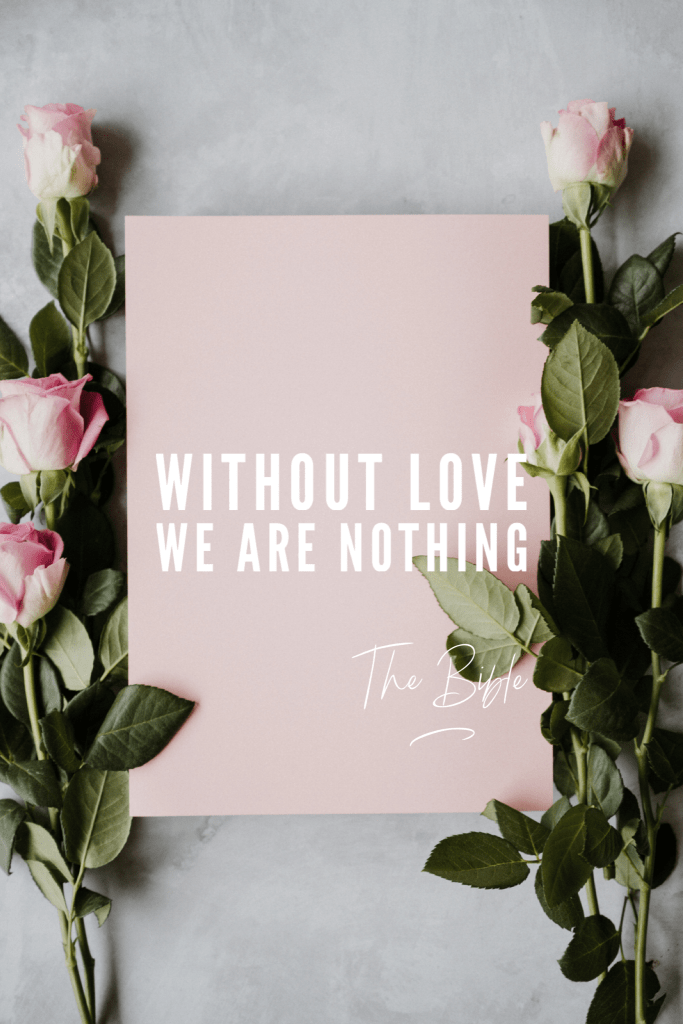
He says,
Love is patient, love is kind.
It does not envy, it does not boast, it is not proud.
It does not dishonour others, it is not self-seeking, it is not easily angered, it keeps no record of wrongs.
Love does not delight in evil but rejoices with the truth.
It always protects, always trusts, always hopes, always perseveres.
Love never fails. New International Version (NIV)
The Christian apologist C. S. Lewis says this about love:
‘To love at all is to be vulnerable. Love anything and your heart will be wrung and possibly broken.’
Love is a powerful force for good. It has no limits. It reaches across the raging river and scales the highest mountain. Love triumphs in the face of evil. Love conquers all.
The professor discovers that love is what humans are all about, but it is complex. He contemplates what he has given up for love. He says,

 Hope For Tomorrow