‘Pilgrimage is an outward sign of the inner journey… the search for meaning, inspiration, healing, and redirection, mirroring the deeply personal desire for forgiveness and renewal.”
Norman Shanks – ‘Iona: God’s Energy’
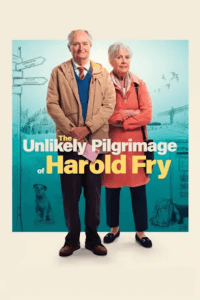
Rachel Joyce
Harold Fry is married to Maureen. Twenty-five years ago, they lost their only son David to suicide. It ruptured their marriage. Their relationship is going nowhere and lacks intimacy. They find they have little to say to one another as they lack the emotional energy to tackle the awkward questions, to be honest with each other. There are hurts that have been ignored that continue to weigh heavily on them.
Harold receives an unexpected letter from an old friend and former work colleague. The letter explains that his friend, Queenie, has been admitted to a hospice and is dying of cancer. Although uncertain as to the nature of their relationship and having her suspicions, Maureen encourages Harold to write a reply. Harold is at a loss to know what to say. His words are cold and impersonal.
Harold tells Maureen that he is going out to post the letter. When he arrives at the post box he hesitates. He ponders the inadequacy of his response, the few random words on headed notepaper. He decides to keep walking, to embark on a ‘pilgrimage’ from his seaside town in Devon, all the way to her hospice in Berwick-upon-Tweed, 450 miles.
To understand such an unlikely pilgrimage, we need to understand the man.
A personal failure:
Harold Fry is an unremarkable man who believes his accomplishments amount to nothing. He has failed at all the important things: being a good husband, father, and friend. He feels he has let people down, that his efforts have fallen short of what could be expected.
Since David’s death, his relationship with Maureen has limped along. They share a house but live in their own separate darkness. Grief has a hold of Harold, keeping him captive, overriding his better instincts with feelings of shame and regret. Harold has no words to console his wife, to help her navigate the unfamiliar terrain of complex grief.
Maureen criticises Harold for his inability to connect with his son. The father/son relationship is confrontational. Time alone together is awkward. Harold never knows what to say. He is no match for David’s intelligence. David quizzes him about certain facts and Harold must admit he doesn’t know.
Harold loves David but he struggles to know how to communicate his feelings. He worries about the combination of drugs and alcohol and can see it messing with David’s health and robbing him of the ability to think rationally. Harold is powerless to affect any meaningful change in his son’s life. He carries a burden of sorrow and sadness and feelings of guilt overwhelm him.
A fragile faith:
When Harold walked past the post box he stepped into the realm of faith. He exchanged the known for the unknown. He let go of the familiar and chose uncertainty. He risked rejection to find release.
Faith emerges from the soil of dissatisfaction. Faith invites change. Harold’s life needs an overhaul. There are issues to resolve, patterns of behaviour to correct, relationships to heal.
Walking is challenging work. Maureen senses that this could end badly. She thinks,
‘Harold has never walked anywhere in his life.’
Her husband soon discovers that a walk of faith is a work of faith. It is physically demanding. Harold has blisters to prove it.
Harold is ill-prepared to deal with the challenges – the physical discomfort, the rough terrain, the inhospitable weather. He lacks suitable clothing, appropriate footwear, and any bedding to keep him warm during the cold nights.
He knows what he wants to accomplish, but it will require faith to get it done. Faith rises when we feel compelled to do more, to be more. He knows he wants to see Queenie, but she needs to wait, to not give up, to fight to stay alive until he completes his journey.
Sometimes encouragement comes from the most unlikely places. It is the checkout girl who, having listened to Harold tell his story, says,
‘You have to believe. You have to believe a person can get better. If you have faith, you can do anything. Believing you can make a difference.’
Harold is committed to making a difference. He wants to be there for Queenie, to apologise, and to ask her forgiveness. He allowed her to take the blame for his reckless behaviour at work. He kept his job while Queenie was asked to leave. It was an act of selfless love that Harold didn’t ask for nor deserve, and he feels ashamed of his cowardice.
Harold’s walk of faith is proving to be transformative, replacing cowardice with courage.
Faith is dynamic, never static. Although Harold is on a quest, he has yet to understand ‘faith is a gift.’ Faith is born in us when we respond to the inner prompting of the spirit. Although he might not know it, God is calling him to be reconciled to the people he loves.
God is committed to reconciliation. In fact, you cannot have reconciliation without God.
A fragile faith needs nurturing. When Harold becomes a media sensation, people are drawn to him. Humble people like Harold, committed to a worthy cause, elicit admiration and support. Before long, Harold has a large group of people following him. He appreciates their enthusiasm, their energy, but it isn’t sustainable. He cannot be responsible for them.

Their presence becomes an added burden and threatens to derail the whole enterprise. Harold needs to travel light, to be unencumbered, to have the space to listen, to reflect, to work through the pressing issues in his life.
Harold finds solace in nature. The solitude sharpens his perceptual abilities. He appreciates lighting a fire and watching the flames flicker, gazing into the starry heavens, feeling the warmth of the sun filtering through the branches of the trees, being caressed by a gentle breeze, admiring the resoluteness of the migratory birds as they fly in unison, leaning on a gate and surveying the rolling plains. Nature speaks to him, comforts him, inspires him, and nurtures him. The creator God intended it so.
Harold has a vision of his son. It is a personal revelation. His son David walks towards him. Harold observes that he looks different, at peace. They shake hands. The smile on David’s face reassures Harold and brings calm to his troubled soul. The grief that has overwhelmed him suddenly feels manageable. The regrets no longer hold him down.
A positive future:
Harold finishes his journey and slowly makes his way to the hospice. The weeks of walking have exhausted him. His body has taken a beating, but internally, he is renewed.
Harold is told by the matron that Queenie is alive. His letter brought her comfort and gave her courage to fight on. Harold is relieved, gratified that his walking has made a difference. Harold is tentative about seeing the woman he failed so many years ago.
Queenie is resting when Harold enters the room. She is unable to talk but is responsive. Harold speaks to her gently. He holds her hand and says he is sorry. Harold’s relationship with Queenie is restored, made whole. Forgiveness does that.
Harold shows Queenie the gift he bought her, a clear crystal. He pulls back the curtains and ties the crystal to the rail. The reflected light splashes on the walls and the ceiling, lighting up Queenie’s face. She is at peace, ready to meet what awaits her.
Maureen finds Harold sitting on a bench looking out to sea. During Harold’s walk they spoke to one another on several occasions. Sometimes it proved awkward. Maureen felt that she had been abandoned and she worried that Harold might not come home. Her fears were real. As they sit in silence there is a softening. They both acknowledge their love for one another. Their faith is restored. They have hope for the future.
A Prayer:
Father God, we pray for a revival in faith. We pray that people all over the world might become sensitive to the inner voice of the Spirit and respond to His prompting, exchanging their comfort and security for a hope that will sustain them in adversity and a love that will heal the wounds of separation, breaking down the walls that divide and deliver peace. Amen
Further Reading:
Blog Post: Finding The Courage to Live Again
‘The Unlikely Pilgrimage of Harold Fry’ by Rachel Joyce
Article: A Pilgrimage to Iona
My ‘unlikely pilgrimage’ in 1984.

 Hope For Tomorrow